Low-Effort Home Maintenance Tools Guide
A useful maintenance kit is not a drawer full of gadgets. It is a small set of cleaning tools, storage helpers, leak-prevention pieces, and access basics that make repeat chores easier to start and easier to finish.
As an Amazon Associate, The Good Home Doc may earn from qualifying purchases.
Quick decision before shopping
First measure the available space, identify the setup or surface constraints, and decide who will maintain the item. Skip the category if it blocks access, conflicts with the manufacturer's instructions or lease, or adds more upkeep than the problem justifies.
Shopping links after the decision: Use these affiliate shortcuts after you check the measurements, setup limits, and skip criteria in this guide.
- Browse category: Home Organization ProductsA relevant category to compare after applying the guide's fit checks.
- Browse category: Home Maintenance ToolsUseful upgrade or fit check before you choose a final model.
- Browse category: Renter Friendly Home ProductsGood supporting product to compare before you choose a final model.
These links are shopping starting points, not test rankings. Confirm dimensions, materials, installation limits, cleaning needs, return policy, and whether the product solves your actual home problem before buying.
Start with the job, not the gadget
After-shower surface drying: Compare a shower squeegee with a washable microfiber cloth by surface fit, water movement, edge access, storage, and the care routine each tool adds.
Vacuum disposal: Start with the bagged versus bagless comparison to weigh containment, bin cleaning, consumables, and documented filtration. If containing collected debris is the priority, narrow the choice with the bagged vacuum guide.
Small-apartment automation: Before paying for mapping or scheduling, decide whether a robot vacuum fits the floor route, dock space, upkeep, and cleaning routine.
Small-apartment manual cleaning: Before comparing features, decide whether a cordless stick vacuum can realistically serve as your primary vacuum based on surfaces, runtime, charging, weight, and upkeep.
Before buying anything, name the home job you keep avoiding. Cleaning floors, drying dishes, sorting laundry, organizing a crowded cabinet, and catching small leaks all point to different product categories. A useful product should remove friction from a job you already do, not create a new system you have to maintain.
Good starter categories
Routine washing-machine detail cleaning: For accessible gasket folds, removable detergent trays, and open dispenser corners, compare washer cleaning brushes by head width, bristle stiffness, control, flexible reach, washability, and appliance-manual limits. Do not use longer tools as permission to enter concealed parts.
Microwave cleanup: If reheated sauce or grease regularly leaves residue on the appliance walls, decide whether a reusable vented splatter cover fits the microwave, usual dishes, washing routine, and storage space. If it does, compare collapsible, rigid, and handled microwave-cover formats by measured clearance, venting, grip, cleaning, drying, and storage.
Accessible dryer-vent upkeep: If the full exhaust route is known, reachable, intact, and compatible with consumer cleaning, compare dryer vent brush kits, secure threaded rods, hand brushes, and permitted vacuum attachments. Use qualified service for roof, shared, concealed, damaged, unusually long, sharply turning, or repeatedly clogging routes and for any utility or code question.
Home-office keyboard cleanup: For routine crumbs and surface dust, compare keyboard cleaning brushes, hand air blowers, detail tools, and reusable cloths by softness, control, device instructions, care, and storage before buying a large attachment kit.
Pet hair on hard floors: Compare a rubber broom with a traditional bristle broom by debris mix, floor guidance, edge reach, head cleanup, and storage before adding another manual floor tool.
Washable sofa coverage for pet households: Compare fitted, quilted, separate-cushion, and throw-style sofa covers by exact furniture geometry, upholstery contact, anchoring, laundry capacity, drying, and pet habits rather than unsupported protection claims.
Localized pet messes: First decide whether a portable carpet cleaner fits the mess frequency, approved surfaces, washout routine, drying plan, and storage space. If ownership makes sense, compare portable spot-cleaner formats by tanks, reach, tool fit, handling, cleanup, and storage.
Pet hair on area rugs: Between vacuuming days, compare carpet rakes for compatible area rugs by construction, head material, contact depth, pressure control, and delicate-surface exclusions.
Kitchen appliance gaps: For ordinary dry dust and crumbs beneath an intact refrigerator or range, compare under-appliance cleaning tools by measured head profile, reach, debris type, washable covers, and appliance access limits.
Low-clearance dusting: If dust keeps collecting beneath a sofa, bed, or cabinet, compare furniture dusting tools for tight spaces by measured head thickness, reach, flexibility, washable covers, and surface fit.
Steam-cleaning decision: If both the floor and appliance makers allow steam, use the sealed-tile steam mop guide to compare output control, pad fit, handling, upkeep, and reasons to choose a non-steam method.
Compact mop format: Compare a flat microfiber mop with a spray mop when the decision is direct moisture and pad control versus onboard-spray convenience. If the bigger question is whether automation earns its prep, dock, and maintenance burden, compare a robot mop with a manually controlled spray mop.
Reusable furniture and blind dusters: Compare a microfiber duster with a lambswool duster by complete head shape, surface fit, handle control, cleaning, drying, replacements, and material preference rather than assuming one fiber works everywhere.
Reusable cleaning gloves: For routine dishwashing, sink, tub, and surface chores, compare household cleaning gloves by hand fit, material, cuff, lining, grip, task instructions, drying, and replacement signs. Do not treat household gloves as task-specific protective equipment.
Simple cleaning tools: A washable microfiber mop system, reusable cloths, a handheld scrub brush, and a small caddy can make routine cleaning easier to start. Decide whether reusable cleaning cloths or paper towels fit each everyday mess by comparing surface guidance, handling, laundry, storage, replenishment, and disposal. Match other tools to the bottleneck: first compare a spin mop with a flat mop for tile floors when the main decision is bucket wringing versus a compact pad workflow; if the frame is already chosen, compare washable microfiber replacement pads by exact fit and laundry care. Compare a spray mop for quick kitchen cleanup, grout brushes for bathroom detail work, baseboard tools for routine low-level dust, window-track tools for narrow channels, blind dusters for reachable horizontal slats, or extendable dusters for high fans and ceilings. For mostly carpeted homes, compare canister and upright vacuums by handling, stairs, storage, and floor-head fit. For homes that alternate between bare flooring and rugs, compare vacuum formats by floor-head control and rug fit; for carpeted steps, compare vacuum formats by carry weight, tread fit, and brush control. For deeper hard-floor cleaning, compare compact mop and bucket sets by stored footprint and wringer type; the microfiber mop system guide for small homes covers lighter systems, pad washing, and bucket size.
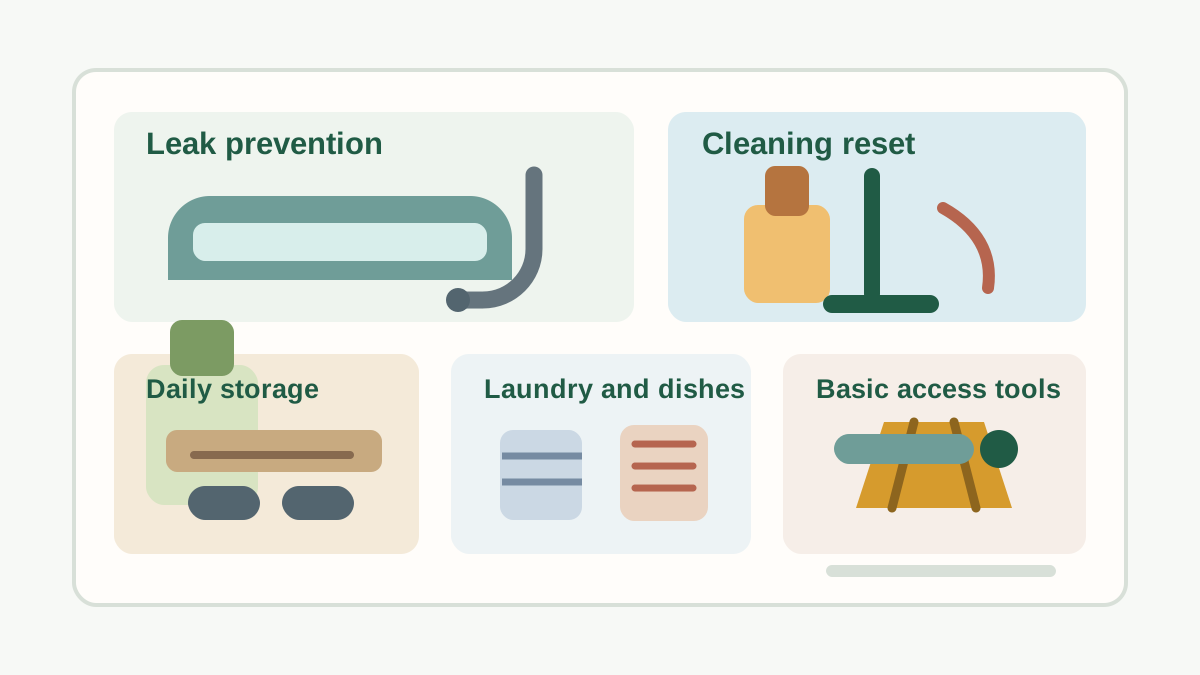
Water-control helpers: Under-sink alarms, drip trays, and cabinet liners are small products that help you notice or contain messes early. Start with the home leaks and moisture prevention guide if you are deciding where alarms, trays, or humidity checks belong.
Daily storage systems: Shoe racks, under-bed bins, closet organizers, and over-the-door organizers work best when they match a real drop zone. Choose the spot first, then use the small-home organization systems guide to connect entryway, closet, under-bed, and laundry storage instead of buying separate bins for every mess.
Laundry and kitchen cleanup setups: A compact drying rack, breathable hamper, sink caddy, or right-care cutting board can prevent routine chores from turning into extra work. If the sink edge is the daily clutter zone, compare a small-kitchen sink caddy. Before moving dishes above the basin, decide whether an over-sink rack fits the sink geometry and routine; otherwise use the dish drying rack versus mat comparison to choose between upright support and a flexible surface that stores away. For food prep, the plastic versus wood cutting board guide compares dishwasher convenience with hand-maintained wood. If food-scrap collection is the recurring friction, first decide whether a countertop compost bin fits the local route, counter space, and emptying habit.
Sink food-scrap cleanup: For the small remnants left after plates and cookware are scraped, compare removable kitchen sink strainers by measured drain fit, hole pattern, basket depth, emptying, cleaning, and disposal compatibility. A strainer is a collection aid, not a clog-prevention guarantee or a plumbing repair.
Dryer accessories: Compare wool dryer balls with reusable dryer sheets by materials, load fit, noise, ingredients, care, and skip conditions before adding either to the routine.
Laundry drying decision: Compare a freestanding drying rack with a retractable clothesline when the main constraint is floor space versus permitted wall mounting. In an apartment where drilling is off the table, compare an over-the-door rack with a freestanding rack by door operation, floor footprint, load shape, and storage.
Plant-care tools: For apartment repotting without a dedicated bench, compare compact and larger foldable potting mats by usable work area, raised edges, cleanup, drying, storage, and surface limits. For routine houseplant and balcony-plant trimming, compare precision snips, compact bypass pruners, and ratcheting pruners by stem fit, grip span, lock, cleaning, and safe storage rather than buying an oversized tool bundle.
Basic access tools: A stable step stool, flashlight, tape measure, painter's tape, and a small screwdriver set are often more useful than a large kit with pieces you never touch. Keep the measured kit contained with the compact tool-bag guide for renters, and use the magnetic parts tray guide when compatible loose hardware needs a measured, visible work zone. Buy for the work you can safely do yourself, and leave electrical, plumbing, structural, gas, and other safety-sensitive work to qualified help.
Bathroom routine: For routine toilet-bowl care, compare a reusable toilet brush with a disposable-head wand by reach, used-head handling, holder care, refill supply, storage, and label compatibility. First decide whether an electric spin scrubber justifies its charging, control, attachment-care, and storage tradeoffs. If powered rotation fits, compare corded and cordless spin scrubbers by outlet access, cord route, runtime, charging, and upkeep. Also check whether a handheld steam cleaner has a verified compatible task that earns its setup, cooling, and upkeep. For broad shower walls and tubs, compare manual long-handle shower scrubbers by head type, reach, surface fit, and drying. A scrub brush chosen for a textured shower floor can reach shallow grooves when the surface maker permits brushing; use a grout brush or squeegee instead when joint cleaning or water removal is the actual job.
Delicate-laundry containment: For machine-washable delicates and small loose pieces, compare mesh laundry bags by garment fit, usable dimensions, mesh, closure, seams, and care. A bag manages an approved wash load; it does not override the garment label or washer manual.
Must-have features
- Easy storage: If the product is awkward to put away, it will probably live in the wrong room or stop getting used.
- Low maintenance: Choose washable, wipeable, or replaceable parts you can realistically keep clean.
- Right-size capacity: Oversized bins, racks, and tools can create clutter in small homes.
- Clear fit: Measure cabinets, closets, doors, counters, and laundry routes before ordering anything bulky.
- Renter-friendly setup: Prefer freestanding, no-drill, or removable products when lease rules are unclear.
Nice-to-have features
Labels, collapsible frames, removable liners, washable pads, and modular parts can make a product easier to live with. Treat smart features, premium finishes, and large bundles as extras. They are only worth paying for when the basic fit, storage, and maintenance needs are already solved.
What to avoid
Skip products that only solve one rare problem unless that problem is expensive, urgent, or hard to recover from. Avoid bundles where half the pieces duplicate what you already own. Be careful with adhesive products on delicate paint, heavy organizers on hollow doors, and any product that blocks valves, drains, vents, outlets, or appliance access.
Who should skip a weekend home kit
Skip the kit mindset if your problem is really one specific decision. A damp cabinet needs leak prevention, not a basket of random tools. A crowded entryway needs shoe and bag storage, not another all-purpose bin. Buying the category that matches the actual bottleneck is usually cheaper than collecting a closet full of almost-useful products.
Pick your next guide by the bottleneck
For container-plant chores, compare soil scoops for container gardening by the exact bag and pot openings, sidewall height, loaded control, cleanup, and storage. A dedicated scoop earns its place only when it makes a recurring transfer easier.
If the weekend chore is water-related, use the home leaks and moisture prevention guide before buying alarms, trays, liners, or humidity monitors. If the problem is clutter that keeps returning, start with the small-home organization systems guide so storage choices fit the room instead of creating more containers to manage.
For routine reset chores, compare the narrow guide that matches the actual task: a microfiber mop system for a small home, a small-kitchen dish drying rack, or a laundry hamper system for a small home. Those guides cover measurements, cleaning effort, storage, and who should skip each setup.
A simple buying checklist
- Name the repeat chore or home problem first.
- Measure the space where the product will live and where it will be used.
- Check whether it needs drilling, replacement parts, washing, batteries, or filters.
- Choose the smallest product that solves the job comfortably.
- Confirm it will not block access to plumbing, outlets, vents, doors, or walkways.
Related guide: If hidden water damage is one of the chores on your mind, see our renter-friendly under-sink leak alarm guide before buying a larger home kit.
Bathroom next step: If routine wiping is not enough, compare a handheld steam cleaner with a manual scrub brush before adding a more specialized cleaning tool.
Textile-care next step: If upholstery is collecting loose fibers or developing attached pills, start with the fabric-shaver-versus-lint-roller comparison to identify the right tool category. If recurring pills are confirmed, decide whether a fabric shaver fits the textile, then use the fabric-shaver buying framework to compare guard control, head size, power, and maintenance. These tools are not general cleaners or repairs for worn fibers.