Spin Mop vs Flat Mop for Tile Floors
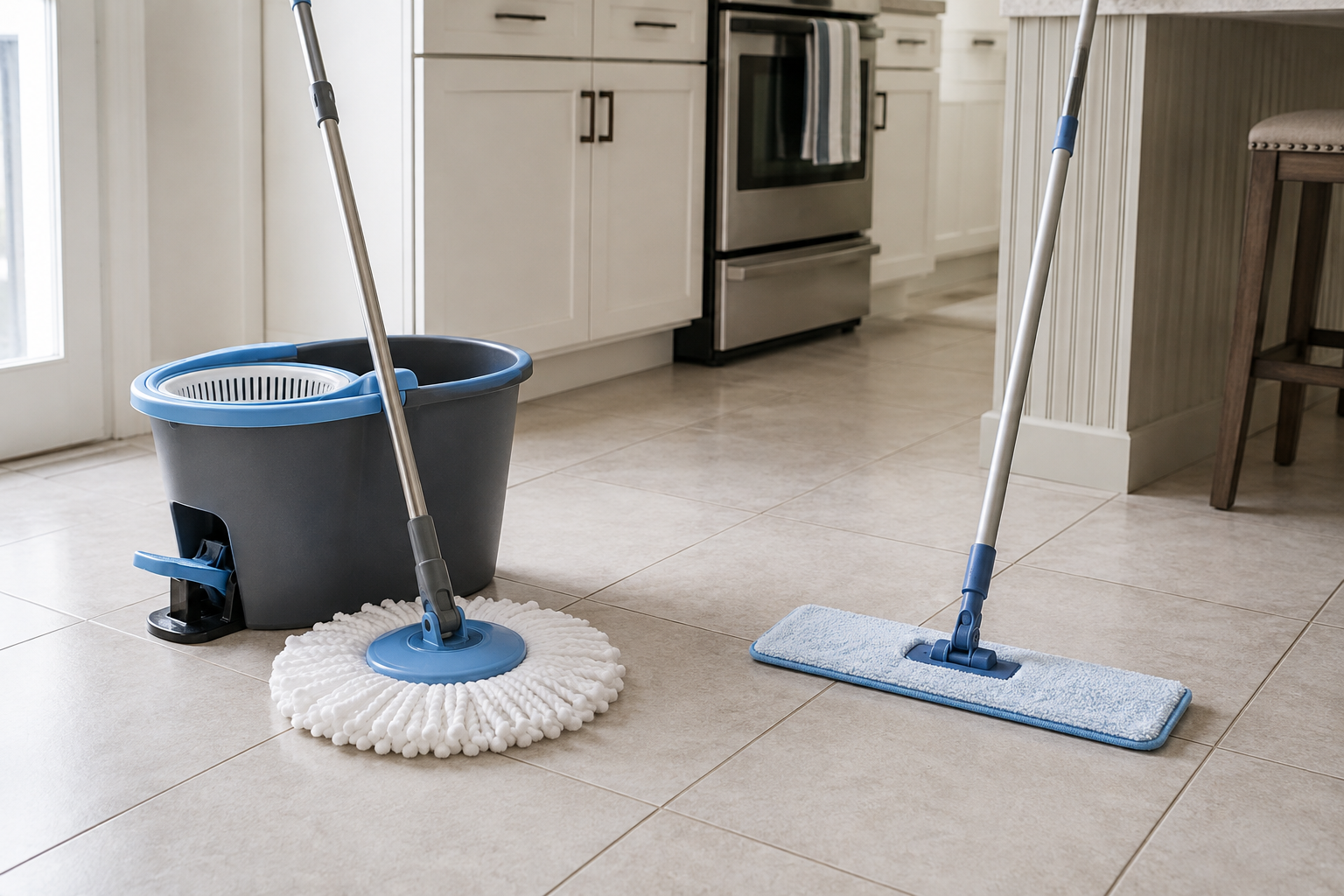
A spin mop usually fits messier whole-room cleaning when you want a bucket that rinses and wrings the mop as you work. A flat mop is usually easier for quick passes, tight storage, and controlled damp cleaning. The right choice depends less on the word “tile” than on the tile maker's care instructions, the condition of the grout, and how much water your routine really needs.
As an Amazon Associate, The Good Home Doc may earn from qualifying purchases.
Quick decision before shopping
First measure the available space, identify the setup or surface constraints, and decide who will maintain the item. Skip the category if it blocks access, conflicts with the manufacturer's instructions or lease, or adds more upkeep than the problem justifies.
Compare the two formats after checking your floor: These category links are shopping starting points, not tested winners. Confirm the exact floor-care instructions, mop dimensions, replacement-pad supply, bucket design, and return terms.
- Browse category: Compare spin mop and bucket systems on AmazonStart here for a bucket-based rinse-and-wring workflow and larger wet-cleaning jobs.
- Browse category: Compare flat microfiber mops on AmazonStart here for controlled damp cleaning, low-profile reach, and compact storage.
Do not assume every tile, grout, sealant, or cleaner tolerates the same moisture. Follow the floor and cleaning-product instructions, and test an allowed method in an inconspicuous area.
This is a workflow comparison, not a universal cleaning rule. For a broader chore-kit plan, use the low-effort home maintenance tools guide. If compact storage is the main constraint, the microfiber mop system guide explains pad and handle choices. For a bucket-specific shortlist, compare mop bucket sets for small closets.
Quick comparison
| Decision | Spin mop | Flat mop |
|---|---|---|
| Best fit | Messier or larger wet-cleaning sessions | Routine dust, spots, and controlled damp passes |
| Water control | Wringer controls the mop, but a bucket encourages a wetter workflow | Pad can be lightly dampened, though saturation still depends on the user |
| Edges and grout | Flexible strands can conform around legs and uneven joints | Broad rectangular head covers open tile quickly and reaches under low furniture |
| Storage | Needs room for the bucket, handle, and drying parts | Usually needs only a narrow hanging or upright space |
| Upkeep | Rinse mop head, bucket, wringer, and splash-prone parts | Remove and launder or rinse pads; wipe the head and handle |
Choose a spin mop for a rinse-and-wring workflow
A spin system pairs a round microfiber head with a bucket-mounted wringer. That separation between dirty floor contact and wringing can be useful when cleaning a larger tiled kitchen, mudroom, or multiple bathrooms in one session. The flexible head can move around pedestal bases and chair legs, but it is not automatically better at cleaning grout.
The tradeoff is setup. You must carry, fill, move, empty, rinse, and dry the bucket. A full bucket is heavier than it appears, and splashing or an unstable carry route can create extra work. Compare the bucket's filled weight, handle, balance, drain feature, wringer operation, and stored footprint—not just the mop head.
Choose a spin mop if:
- You regularly clean several tiled areas in one session.
- Your floor instructions permit the damp-cleaning method you plan to use.
- You have a practical fill, carry, empty, and drying route.
- You want to rinse the mop head during the job without hand-wringing it.
- The bucket and handle fit a ventilated storage space after drying.
Skip a spin mop if:
- Lifting or carrying a filled bucket is awkward for you.
- Your home has no safe place to fill, empty, rinse, and fully dry the system.
- You mainly clean crumbs, dust, or a few small spots.
- The wringer requires a motion or foot pressure you cannot use comfortably.
- Your floor needs minimal moisture or has damaged, loose, or uncertain grout.
Choose a flat mop for quick, controlled passes
A flat mop uses a thin rectangular head with a removable pad. Its broad face works efficiently across open tile, while the low profile often reaches under cabinet toe kicks, beds, and furniture. You can keep separate pads for dry dusting and permitted damp cleaning, which makes it easier to match the tool to a small job.
A flat pad does not rinse itself. On a dirty floor, pushing one loaded pad farther can redistribute grime. Plan enough washable pads to switch during the job, or rinse according to the pad instructions. A flat head also bridges deep or uneven grout lines, so stubborn joint soil may need a separate surface-compatible brush rather than more downward force.
Choose a flat mop if:
- You value quick setup and compact storage.
- You clean small zones frequently instead of doing one large wet session.
- You want washable pads for separate dry and damp tasks.
- Low furniture clearance and straight edges matter.
- You can keep enough clean pads for the area being cleaned.
Skip a flat mop if:
- You expect one pad to handle a heavily soiled whole floor.
- Your tile or grout is very uneven and the head cannot maintain useful contact.
- You do not have a workable pad-washing and drying routine.
- The attachment sheds pads when turning or scrubbing.
- You actually need detail cleaning for joints, corners, or damaged areas.
Check the tile, grout, and cleaner first
“Tile floor” can mean glazed ceramic, porcelain, natural stone, resilient tile, or another material with different care limits. Grout may be sealed, unsealed, worn, cracked, or repaired with a product that has its own instructions. Look up the floor manufacturer's guidance before choosing water temperature, cleaner, pad texture, or cleaning frequency.
Do not combine cleaners or improvise stronger concentrations. Avoid steam unless every relevant floor and appliance instruction explicitly permits it. If tiles are loose, the floor feels soft, grout is crumbling, stains return after drying, or moisture appears to come from below or behind the surface, stop routine mopping and have the cause assessed by the property manager or a qualified professional.
Compare setup and everyday handling
For a spin mop, map the route from the tap to the floor and then to the drain. Avoid stairs, clutter, and surfaces that become slippery when splashed. Check whether the wringer can be used without the bucket sliding and whether the handle length keeps your posture comfortable.
For a flat mop, measure the lowest furniture clearance and the storage location. Check swivel resistance, handle length, pad attachment, and whether replacement pads are sold in a useful size. If you already own the frame, compare washable microfiber replacement pads by exact fit and laundry care. An onboard spray bottle changes this comparison; if instant dispensing is the feature you want, use the spray mop guide instead.
Maintenance and drying
Rinse a spin-mop head and bucket as directed, clear debris from the wringer, and let every part dry before enclosed storage. Confirm whether the head is machine washable and whether replacements use a standard or proprietary connection. A bucket that nests neatly but traps damp parts is not a storage win.
Remove flat-mop pads after use rather than leaving them wet against the head. Follow their wash instructions, and avoid fabric softener or high heat unless allowed because these can change microfiber performance. Wipe the head, inspect attachment strips or pockets, and replace pads that no longer stay secure or rinse clean.
When neither mop is the right tool
Neither format replaces dry debris pickup before damp cleaning. Grit can scratch some finishes or turn into muddy residue, so vacuum or sweep with a floor-compatible tool first. Neither mop is ideal for a small grout-only problem; a correctly selected grout brush may offer more control. Large spills, contaminated material, renovation dust, damaged flooring, and persistent moisture call for a different cleanup plan and, when appropriate, professional help.
Bottom line
Choose a spin mop when you have enough tiled area and mess to justify a bucket, want to rinse and wring during the job, and have safe storage and carrying routes. Choose a flat mop when quick setup, measured moisture, under-furniture reach, and compact storage matter more. Whichever format fits, the floor's care instructions and a realistic cleaning-and-drying routine should decide the final purchase.
Next step: Put this decision in context with the home-product buying framework guide.