Handheld Steam Cleaner vs Manual Scrub Brush for Bathroom Grime
Choose a manual scrub brush when the surface permits brushing and you want direct control over pressure, moisture, and a small area. Consider a handheld steam cleaner only when both the surface maker and the appliance instructions allow steam, you have a safe cord and cooling plan, and heat plus added moisture suits the residue. Neither tool fixes damaged finishes, failed caulk, leaks, or persistent dampness.
As an Amazon Associate, The Good Home Doc may earn from qualifying purchases.
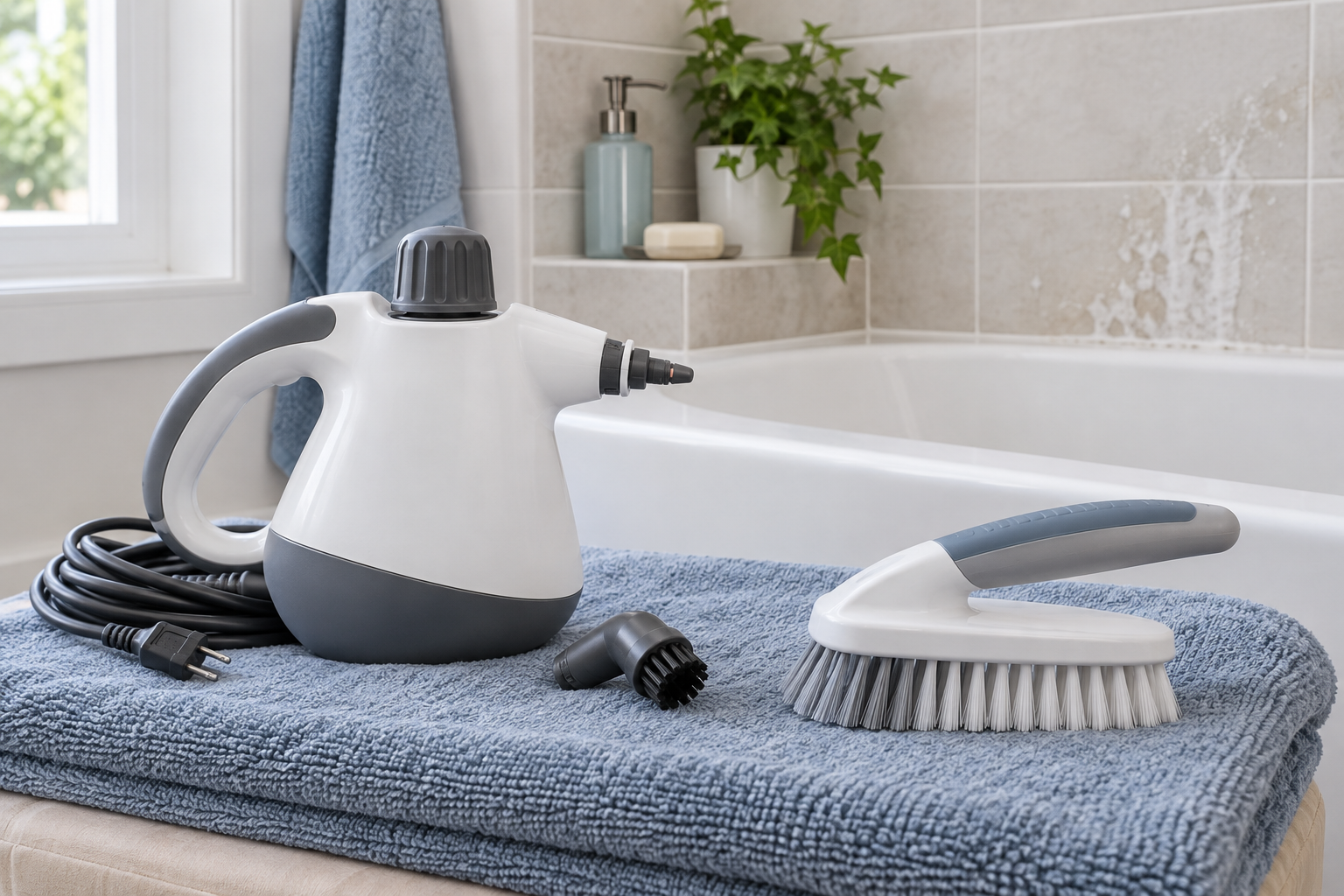
Quick decision before shopping
First measure the available space, identify the setup or surface constraints, and decide who will maintain the item. Skip the category if it blocks access, conflicts with the manufacturer's instructions or lease, or adds more upkeep than the problem justifies.
Check the surface before choosing the tool: These affiliate category links are comparison starting points, not tested winners or claims that either method suits every bathroom.
- Browse category: Compare handheld steam-cleaner formatsCheck approved surfaces, attachments, cord reach, tank and warm-up instructions, operating position, refill procedure, cooling, and storage.
- Browse category: Compare manual bathroom scrub brushesCheck bristle material, head size, covered edges, grip, hanging or drying design, and the surface maker's care rules.
Do not use steam or a brush until the surface and its care limits are known. Never mix cleaners, direct steam toward people, outlets, fixtures, glazing edges, seals, or damaged material, or use an electrical appliance contrary to its wet-area instructions.
Quick comparison
| Decision point | Handheld steam cleaner | Manual scrub brush |
|---|---|---|
| Cleaning action | Applies heat and moisture through a directed nozzle | Applies mechanical action through bristles and hand pressure |
| Control | Depends on nozzle, distance, dwell, and appliance instructions | Immediate feedback through grip, pressure, and bristle contact |
| Setup | Water fill, cord route, warm-up, attachments, and cooldown | Compatible brush and cleaner, if the surface permits one |
| Main risk | Burns, electrical misuse, heat or moisture damage | Scratching, dulling, coating wear, or excessive pressure |
| Storage work | Larger appliance, dry tank and parts, coiled cord | Rinse, drain, and air-dry the bristle base |
| Best first choice | A verified steam-compatible task where heat is useful | A small, intact, brush-compatible surface needing controlled agitation |
Start with the surface, not the grime
Bathroom surfaces can include glazed tile, grout, acrylic, fiberglass, stone, laminate, coated metal, sealants, painted finishes, plastics, and plated fixtures. Appearance alone does not establish whether heat, moisture, a cleaner, or a particular bristle is allowed. Find the care instructions for the tub, shower pan, enclosure, tile or stone, fixture, and sealant before selecting a tool.
Do not assume steam is chemical-free care or that a soft-looking brush is nonabrasive. Heat and moisture can reach seams and edges; bristles can concentrate pressure and move loose grit. Test each permitted method in an inconspicuous area and inspect the dry result before expanding the job.
Choose a manual brush for direct, bounded control
A manual brush is usually the simpler tool for a small patch when the surface permits brushing. You can begin with light pressure, stop instantly, change angle around edges, and see whether the bristles are reaching the residue. A compact head also avoids sending heat or moisture beyond the exact area you intend to clean.
A brush is the better fit when:
- The care instructions permit the bristle material and cleaner.
- The residue is limited to an accessible, intact area.
- You need to work around corners or hardware with precise pressure.
- You want minimal setup and have a place for the brush to dry completely.
Skip or change the brush when:
- The surface is unknown, delicate, peeling, cracked, loose, or already dulling.
- The hard head or exposed edge can strike the finish.
- The grip forces awkward wrist pressure or unsafe kneeling.
- Residue persists despite the approved cleaner and light technique.
Choose steam only for a documented compatible task
A handheld steamer adds heat, water, pressure, a cord, and a hot appliance to the workflow. That can be useful for some manufacturer-approved hard surfaces and residue, but it is not an automatic upgrade from scrubbing. Confirm every intended surface, attachment, operating angle, fill level, water type, distance, exposure time, and cooling step in the appliance instructions.
Steam may fit when:
- The surface maker explicitly allows steam and the appliance instructions include the task.
- The work area is intact and away from excluded seams, finishes, fixtures, and electrical components.
- A suitable outlet and cord route keep connections away from water and walking paths.
- You can manage hot attachments, cooldown, draining, drying, and storage exactly as directed.
Skip steam when:
- Surface compatibility is unclear or steam is excluded.
- Material is damaged, unsealed, loose, painted, laminated, heat-sensitive, or moisture-sensitive.
- The cord, outlet, users, children, pets, or cramped space make the setup unsafe.
- You are trying to diagnose or remedy persistent dampness, odor, discoloration, leaking, or material failure.
Compare the complete routine
For a brush, measure the head against corners, grout spacing, and fixture clearance. Check whether the handle stays controlled with wet hands and whether bristles extend beyond the hard body at the working angle. Plan a ventilated place where it can hang without dripping onto a vulnerable surface.
For a steamer, compare the appliance's full dimensions and weight when filled, usable cord reach without an extension cord unless expressly allowed, attachment access, tank and cap design, specified refill method, and cooled storage footprint. A longer accessory list is not useful if the approved attachment cannot reach the area without tilting the unit contrary to instructions.
Count cleanup time. A brush needs rinsing and drying. A steamer may require cooling, depressurizing, draining, wiping, drying attachments, and managing mineral buildup as directed. The tool that saves effort during contact may still create more work before and after.
Safety and repair boundaries
Keep both feet on a stable, dry surface. Do not work in pooled water or improvise a platform. With steam, keep skin clear of the nozzle and hot attachments, unplug before filling or servicing when the instructions require it, and let the unit cool fully before opening, changing parts, or storing. Follow the appliance's bathroom, outlet, grounding, extension-cord, and residual-water instructions exactly.
Stop cleaning and escalate when you find recurring moisture, a soft wall or floor, loose tile, failed caulk, a leak, damaged wiring or outlet, persistent odor, or discoloration that returns. Renters should document the condition and notify the property manager. Homeowners should use an appropriate qualified professional when the source or repair is unclear. Cleaning tools do not diagnose mold, plumbing, waterproofing, electrical, or structural problems.
Who should skip both
Skip both tools until you have instructions when the material is unknown. Also skip a new purchase if a maker-approved cloth, pad, cleaner, or brush you already own handles the routine job. If reach, grip, balance, heat, or lifting creates a personal limitation, choose a safer compatible method or get help rather than forcing either format.
Bottom line
A manual scrub brush is the practical first choice for many small, intact, brush-compatible bathroom areas because it offers direct control and little setup. A handheld steam cleaner earns its storage and maintenance only for a documented steam-compatible task with a safe electrical, handling, and cooldown plan. Let the surface instructions decide first; then compare residue, control, effort, cleanup, and risk.
If you have not decided whether steam belongs in the routine at all, start with the handheld steam-cleaner buy-or-skip guide.
Next step: Put this decision in context with the home-product buying framework guide.