Is a Handheld Steam Cleaner Worth It for Bathroom Cleaning?
A handheld steam cleaner can be worth it for a recurring, documented steam-compatible bathroom task when you can manage filling, a safe cord route, controlled handling, cooldown, drying, and storage. It is usually a poor buy when surface guidance is missing, the job is occasional, or a surface-matched brush and cleaner already solve the problem with less setup.
As an Amazon Associate, The Good Home Doc may earn from qualifying purchases.
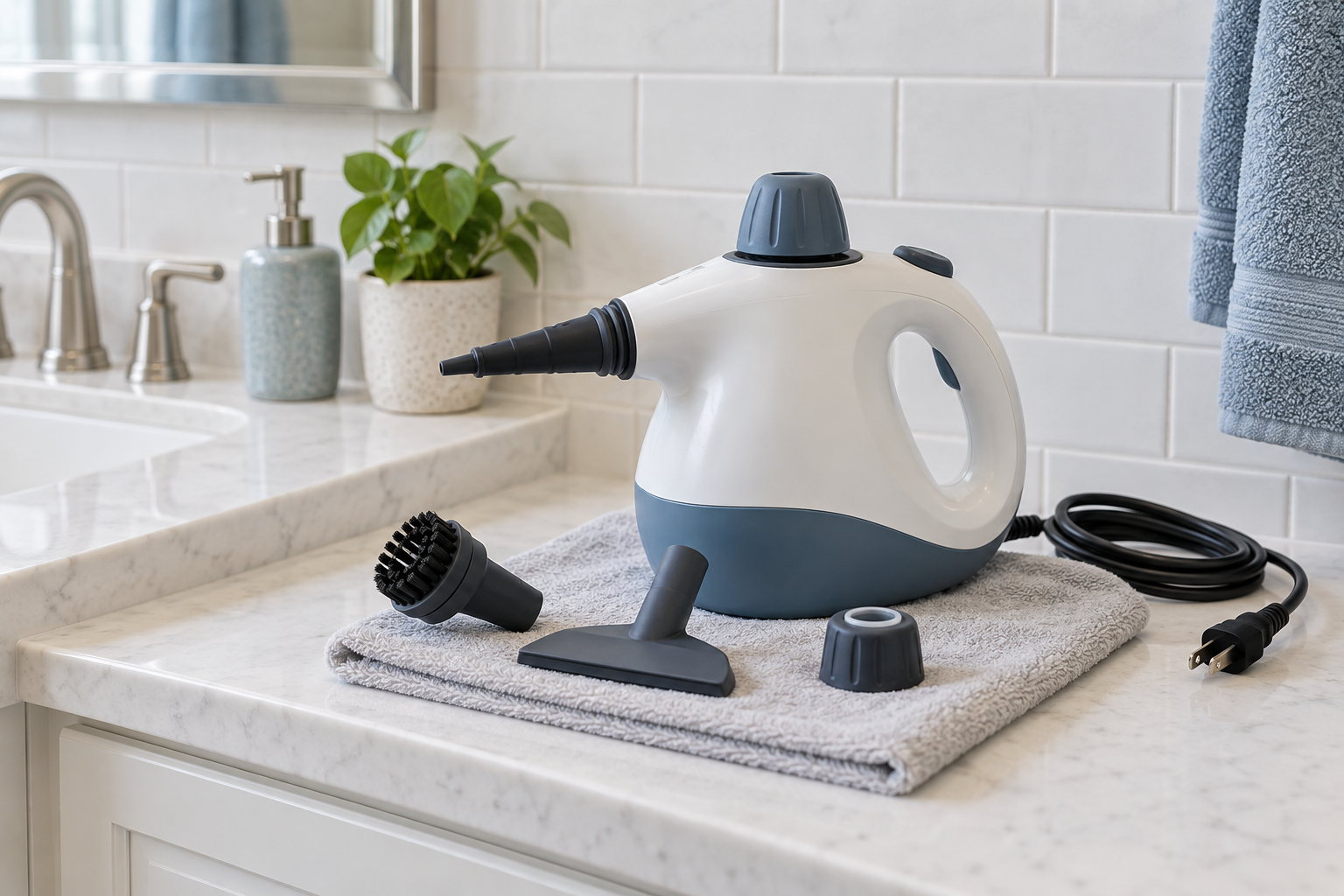
Quick decision before shopping
First measure the available space, identify the setup or surface constraints, and decide who will maintain the item. Skip the category if it blocks access, conflicts with the manufacturer's instructions or lease, or adds more upkeep than the problem justifies.
Verify the task before shopping: This affiliate category link is a starting point, not a tested ranking or a claim that steam suits every bathroom surface.
- Browse category: Compare handheld steam-cleaner formatsCheck current approved surfaces, exclusions, tank and fill instructions, operating position, cord reach, attachments, cooling, descaling, and storage.
This is a buy-or-skip framework, not a product test. Steam output, tank design, pressure, attachments, approved surfaces, fill and refill rules, cord requirements, cooling, and maintenance vary by model. The exact appliance manual and the bathroom-surface care instructions both control.
Quick answer
It may be worth it when one or more recurring tasks are expressly approved for steam, the attachments match those tasks, and the full setup-to-storage routine is realistic.
Delay the purchase until you identify each surface and seal, find its care guidance, and map a cord route and dry staging area.
Skip it when the surface is unknown, damaged, heat- or moisture-sensitive; the appliance would be awkward to hold; or the expected benefit depends on unverified sanitizing or restoration claims.
The five-minute fit check
- Name the exact job. Faucet buildup, shower-door residue, grout lines, corners, and broad tile are different tasks and may need different approved care.
- Inventory the materials. Identify tile, stone, grout, caulk, acrylic, fiberglass, glass, laminates, coatings, plastics, and plated finishes.
- Read both sets of instructions. Confirm that the surface maker permits steam and that the appliance manual permits the working angle, attachment, and location.
- Map the whole routine. Include filling, outlet and cord placement, warm-up, safe setting-down, cooling, emptying, drying, descaling, and storage.
- Compare the simpler method. If a permitted cleaner and surface-matched brush handle the recurring job, steam may add more chores than value.
When the category earns its space
The strongest case is a repeated, limited task on intact materials whose current care instructions allow steam. The correct attachment must reach the area without forcing an unsafe angle, and the user must be able to keep the hot nozzle controlled while following the maker's distance and dwell guidance.
Frequency matters. A tool that needs filling, warm-up, cooldown, emptying, drying, and periodic mineral maintenance is harder to justify for a tiny job performed a few times a year. Compare the entire routine, not just active cleaning time.
Surface compatibility comes first
Heat and moisture can affect seams, adhesives, sealants, coatings, stone treatments, damaged grout, glazing edges, and nearby materials. A surface looking like tile or glass does not establish compatibility. Do not infer permission from a general retailer description or from an attachment name.
Use the current care documents for the installed material. If they do permit steam, follow any limits for temperature, distance, exposure, and drying, and test the permitted method in an inconspicuous area. Stop if a finish changes, a joint moves, or moisture reaches a damaged edge.
Handling and refill rules are purchase criteria
Compare the filled working weight, grip, control placement, cord length, hose behavior, nozzle angle, and where the hot appliance can rest. A compact body can still become tiring or hard to aim once filled. The cord must remain away from water, traffic, and the hot nozzle, using only the outlet arrangement the manual allows.
Refilling is not an improvisation step. Some designs require shutdown, unplugging, depressurizing, and cooling before the cap can be opened. Follow the exact sequence and never force a cap or add water while the manual prohibits it.
Attachments help only when their jobs are documented
A focused nozzle, small brush, fabric accessory, or window tool is useful only if the manual approves the attachment, surface, and operating method together. More pieces do not make a better kit when they duplicate tasks, lack replacement paths, or are difficult to clean and dry.
Check whether brushes are consumable, how cloth covers are washed, and where small parts will air-dry. Do not move an attachment directly between unrelated bathroom surfaces without following the maker's cleaning directions.
Must-haves versus nice-to-haves
Must-haves: explicit surface and use limits, readable fill and cooling instructions, a controllable grip, a secure cap and attachments, a workable cord route, parts that can be cleaned and dried, and a realistic maintenance plan.
Nice-to-haves: clearly organized accessories, a stable dry resting position allowed by the manual, useful status indicators, replacement brushes or cloths, and cord storage. Large tanks and long accessory lists are not advantages if they make the tool unwieldy.
Who should skip a handheld steam cleaner?
- Anyone who cannot verify that the target surface and adjacent seals permit steam.
- Households dealing with cracked surfaces, failed caulk, loose grout, leaks, or recurring dampness.
- People who would struggle to keep the hot nozzle, cord, and filled appliance controlled throughout use and cooldown.
- Bathrooms without a dry preparation, operating, cooling, and storage arrangement that follows the manual.
- Anyone expecting the tool to prove a surface sanitary, remove mold safely, repair damage, or replace appropriate cleaning products.
- Occasional users whose approved manual method already works and stores with less upkeep.
Know when cleaning is not the real problem
Stop routine cleaning when caulk is separated, grout is crumbling, a finish is lifting, water escapes an enclosure, or odor and discoloration return after ordinary care. Renters should report leaks and material damage to property management. Persistent moisture, suspected mold, electrical concerns, or repairs involving the building call for an appropriately qualified professional.
Bottom line
A handheld steam cleaner is worth considering only when a frequent task, verified surface approval, controllable setup, and a complete maintenance routine all line up. For many bathrooms, a compatible cleaner and manual brush remain simpler and easier to control. Decide whether the category belongs in the routine first; if it does, compare models using the exact manual rather than broad marketing claims.
For the next decision, use the steam-cleaner-versus-scrub-brush comparison to weigh heat and moisture against direct mechanical control.
Next step: Put this decision in context with the home-product buying framework guide.