How to Choose Microfiber Mop Pads for Washable Reuse
A replacement mop pad is only useful when it stays attached to your exact frame, suits the floor-care method you are allowed to use, and survives the laundry routine you can maintain. Start with fit—not color, pile, or the size of the multipack.
As an Amazon Associate, The Good Home Doc may earn from qualifying purchases.
Quick decision before shopping
First measure the available space, identify the setup or surface constraints, and decide who will maintain the item. Skip the category if it blocks access, conflicts with the manufacturer's instructions or lease, or adds more upkeep than the problem justifies.
Match the attachment before shopping by texture: These affiliate category links are starting points, not named winners or claims of universal compatibility.
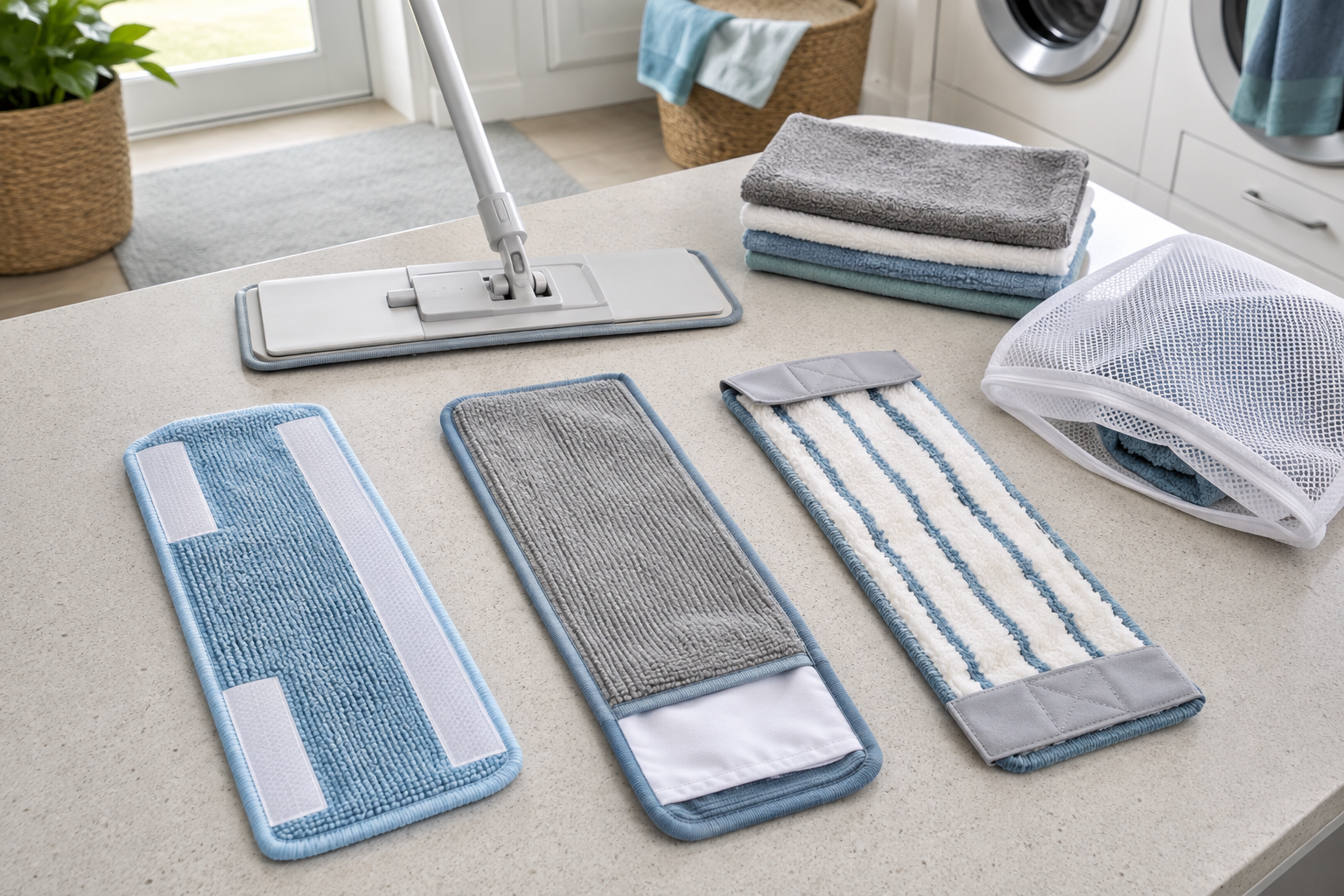
- Browse category: Hook-and-loop microfiber mop padsCompare pad and frame dimensions, strip placement, edge coverage, and the maker's compatibility list.
- Browse category: Pocket-style microfiber mop padsCheck frame length, end-cap shape, pocket depth, and whether the pad can be fitted without forcing seams.
- Browse category: Tab and wraparound mop padsVerify tab position, clamp clearance, working-face size, and secure attachment while turning.
Confirm compatibility with the mop maker, exact measurements, floor guidance, fiber blend, wash and dry instructions, and replacement-pad availability before buying.
Quick Picks by Attachment and Job
- Best first choice for a branded flat frame: the maker-listed replacement pad with matching dimensions and attachment points.
- Best for hook-and-loop frames: a pad whose loop backing fully meets the frame strips without leaving hard edges exposed.
- Best for pocket-end frames: a pad with pockets deep enough to stay seated without stretching the seams.
- Best for separate dry and damp jobs: clearly distinguishable pads whose care instructions cover both intended uses.
- Best for repeat washing: the compatible pad whose seams, backing, and permitted wash method fit your real laundry routine.
Measure the Frame, Not the Old Pad Alone
Used microfiber can relax, curl, or shrink, so measure the mop frame's length and width as well as the old pad. Note rounded corners, hinges, spray openings, clamps, tabs, and hook-and-loop strip positions. Then compare those details with the replacement maker's dimensions and compatibility list.
“Universal” should be treated as a claim to verify, not a guarantee. A pad that is slightly short may expose the frame at the leading edge; an oversized pad can bunch, drag, or interfere with the swivel. If the mop maker requires a particular pad to preserve function or warranty coverage, follow that documentation.
Compare the Three Common Attachment Styles
Hook-and-loop backing
This format is quick to press on and peel off. It works best when the pad backing aligns with clean, intact frame strips. Check whether the laundering instructions require closing exposed fasteners or using a mesh bag so hooks do not catch other textiles.
Skip it when: the frame strips are worn, the backing only touches in a few places, or the pad shifts during turns.
Pocket ends
Fabric pockets slip over the short ends of a rectangular frame. They avoid exposed hook material and can stay secure when properly sized, but fitting them may require folding or releasing the mop head.
Skip it when: you cannot fit the pockets without pulling hard on seams, or the frame has controls or projections the pocket would cover.
Tabs, flaps, or clamps
Wraparound fabric and clamp-held pads can fit frames designed to grip cloth at specific points. Check that every tab reaches its attachment without covering a hinge or leaving loose fabric near the edge.
Skip it when: the frame has no matching clamp layout or a loose flap can trail and collect debris.
Choose Texture for the Cleaning Job
A low, even pile is a practical place to start for routine damp passes on a compatible smooth hard floor. A plusher pad may hold more loose dust for dry use but can need more rinsing and take longer to dry. Pads with scrub zones add texture, yet that does not make them suitable for every finish. Check both the floor maker's care guidance and the pad maker's intended use before contact.
Microfiber construction alone does not prove that a pad disinfects, removes a stated percentage of germs, or is safe for every wood, laminate, stone, tile, or resilient floor. Results depend on the complete cleaning method. Do not improvise strong cleaner concentrations or use steam unless the relevant floor and appliance instructions permit it.
Plan the Pack Size Around One Cleaning Cycle
Count how many pads you realistically use before laundry day. A small home may only need a few: one for dry dust, one or more for permitted damp cleaning, and a clean spare. Larger multipacks only help when every pad fits and you have somewhere to dry and store them.
Separate pads by task when cross-use would be unpleasant, and change a loaded pad instead of pushing collected grit through more rooms. Loose debris should usually be swept or vacuumed with a floor-compatible tool before damp mopping.
Read the Entire Wash-and-Dry Label
Check permitted water temperature, detergent guidance, bleach restrictions, dryer setting, and whether the pad should air-dry. Fabric softener and dryer sheets can coat some microfiber, but the product's own instructions should decide the routine. A mesh bag can keep small pads together and reduce snagging when the maker allows machine washing.
Rinse out heavy debris as directed before laundry, avoid washing pads with lint-shedding items when practical, and let them dry fully before enclosed storage. Replace a pad when the attachment no longer holds, seams open, the working face remains loaded after correct washing, or hard backing can contact the floor.
Who Should Skip Replacement Pads
Skip a third-party multipack when compatibility cannot be confirmed or the old frame is cracked, warped, or no longer holds pads securely. Replacing the whole mop may be the clearer choice when correct pads are unavailable, the swivel or handle is failing, or the system is awkward enough that you avoid using it.
Also skip microfiber as a default answer when the floor maker calls for a different applicator or method. Loose flooring, swelling, persistent stains, soft spots, or moisture returning after the surface dries are not pad-selection problems; stop routine cleaning and ask the property manager, floor maker, or a qualified professional about the underlying condition.
Bottom Line
The best washable microfiber mop pad is the one documented to fit your frame, cover its hard edges, suit the permitted floor-care method, and tolerate the laundry routine you will actually follow. Verify dimensions and attachment first, choose texture second, and buy only enough pads to maintain a clean rotation.
Next step: Put this decision in context with the home-product buying framework guide.