Shower Squeegee vs Microfiber Cloth for Daily Tub-Shower Drying
Choose a shower squeegee when most of the job is broad, smooth glass or tile and you want to push visible water toward the tub or drain. Choose a washable microfiber cloth when fixtures, seams, ledges, and small irregular areas matter more than long straight passes. Neither tool fixes a leak, failed seal, weak ventilation, or persistent dampness.
As an Amazon Associate, The Good Home Doc may earn from qualifying purchases.
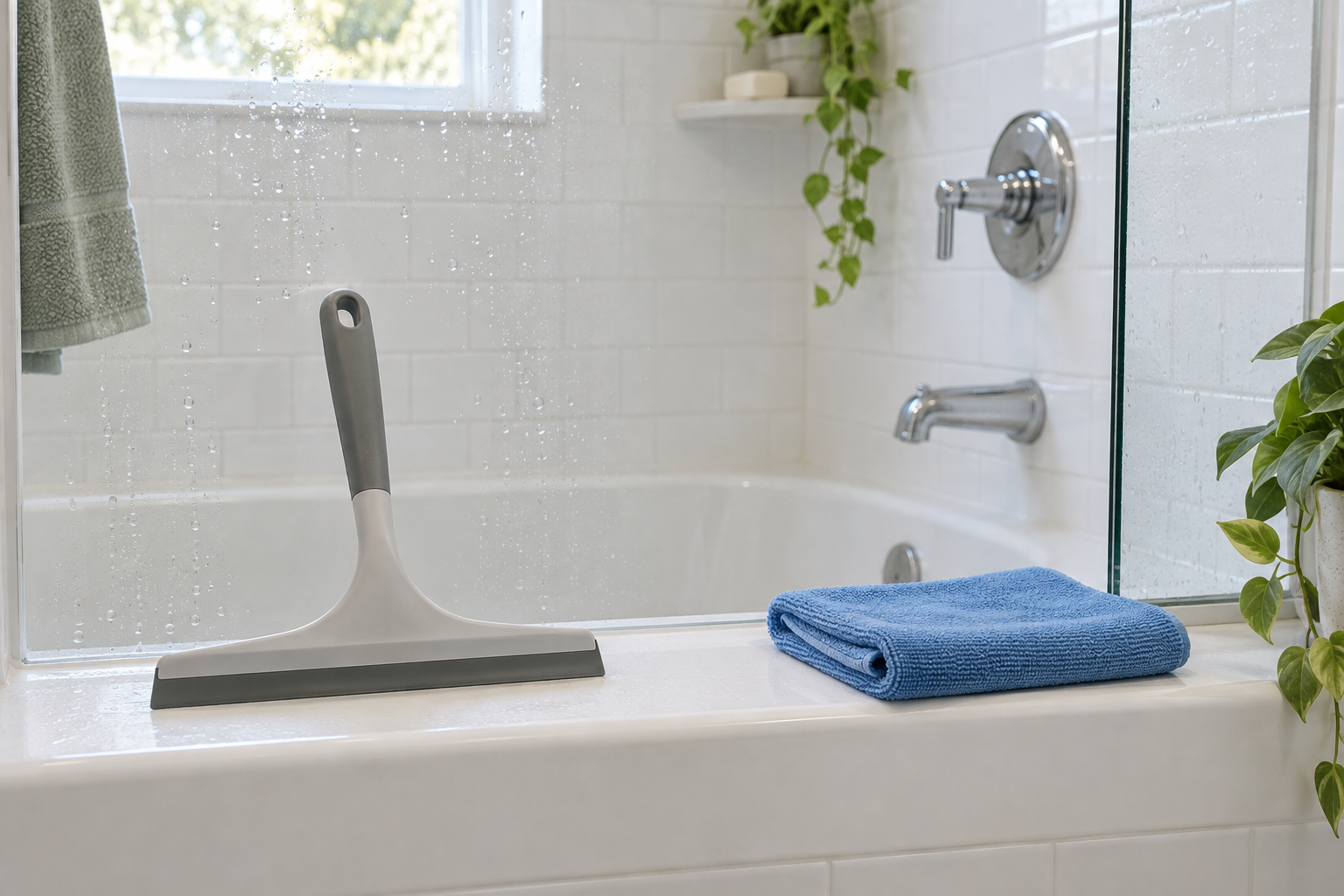
Quick decision before shopping
First measure the available space, identify the setup or surface constraints, and decide who will maintain the item. Skip the category if it blocks access, conflicts with the manufacturer's instructions or lease, or adds more upkeep than the problem justifies.
Compare the two tool formats: Browse category: shop silicone shower squeegees with storage hooks or Browse category: shop washable microfiber bathroom cloths.
These are category searches, not tested winners. Verify approved surfaces, complete dimensions, materials, care instructions, hanging or drying method, replacement guidance, and all manufacturer warnings.
The short answer
- Choose a squeegee for uninterrupted smooth panels when a straight blade can stay in contact and the water has a sensible place to go.
- Choose a microfiber cloth for corners, trim, ledges, fixtures, and uneven details when you can launder and fully dry the cloth between uses.
- Use both only when the routine stays simple: broad passes first, then a small cloth for remaining edges. Two tools are not better if neither gets cleaned or stored to dry.
- Skip both as a “solution” when water returns from a leak, caulk has separated, surfaces stay damp, or staining, softness, peeling, or odor suggests a larger moisture problem.
Side-by-side comparison
| Decision point | Shower squeegee | Washable microfiber cloth |
|---|---|---|
| Best fit | Broad, smooth, maker-approved glass, tile, or wall panels. | Small areas, curves, seams, ledges, trim, and compatible fixtures. |
| Water handling | Moves water across the surface; it does not absorb it. | Absorbs a limited amount before it must be wrung out or replaced. |
| Working pattern | Long overlapping passes toward a safe collection point. | Wiping and blotting with clean sections of cloth. |
| Routine upkeep | Rinse the blade, inspect the edge, and hang the tool to dry. | Launder as directed, avoid unsuitable additives, and dry fully. |
| Main limitation | Skips recesses, texture, grout lines, and tight hardware. | Can smear or become saturated and creates recurring laundry. |
Start with the surface instructions
Check the care guidance for the shower door, coating, tile, grout, acrylic or fiberglass surround, stone, metal finish, and sealant before using either tool. A soft-looking blade or cloth is not automatically approved for every surface. Test a small inconspicuous area when the maker recommends it, and stop if the tool drags, catches, marks, or changes the finish.
A squeegee needs a reasonably flat path. The blade width should fit between frames, handles, shelves, and corners without striking them. A cloth conforms to details more easily, but seams and rough edges can snag it. Neither tool should be forced over loose grout, cracked sealant, sharp trim, or damaged coatings.
Water movement versus absorption
A squeegee moves water rather than holding it. Plan the final edge of each pass so water returns to the tub or shower base instead of collecting on a floor, sill, vulnerable trim, or track. Overlap strokes rather than pressing harder when the blade leaves narrow lines; excess pressure can make control worse and is not a substitute for replacing a damaged edge.
A microfiber cloth picks up water until its usable area is saturated. Fold it into sections, expose a fresh section as needed, and wring it only where the water can drain safely. A small cloth may suit fixtures and tracks but be inefficient on a full glass enclosure. More cloths increase absorbent capacity, but they also increase washing, drying, and storage work.
Setup and storage
Before buying a squeegee, measure blade width, handle length, hanging-hole or hook fit, and clearance at the chosen storage spot. Store it securely where it can dry without falling onto a person, glass panel, tub, or floor. Follow the mounting accessory's surface and load directions; renters should also consider lease restrictions before applying an adhesive hook.
For cloths, reserve a clear drying location outside standing water and away from the toilet or cleaning chemicals. A damp bundle in a basket is not a workable daily system. Confirm that the cloth count fits the laundry cycle and that everyone knows which cloths are for bathroom surfaces.
Maintenance and replacement
Rinse a squeegee after use and inspect the blade for nicks, waviness, hardened areas, residue, or separation from the handle. Clean it only by the maker's method and replace the blade or tool when it no longer makes controlled contact. Check hooks and mounts too; a good blade paired with an unreliable hanger is a poor bathroom fit.
Launder microfiber cloths according to their labels. Product guidance may restrict heat, bleach, softener, or mixing with lint-producing textiles because those choices can affect the cloth. Retire a cloth if it stays rough, holds residue or odor after proper care, frays, transfers color, or no longer absorbs as expected.
Who should skip each option?
Skip a squeegee when most of the shower is textured or interrupted, the documented surface care excludes the tool, there is no safe drainward stroke, or the household will not hang it securely. A compatible cloth may cover details with less awkward tool movement.
Skip microfiber cloths when there is no reliable laundering and drying routine, the fabric catches on the surface, or a large enclosure would require repeated wringing and several cloths. A correctly sized squeegee may make broad smooth panels faster.
Skip the daily-drying purchase when the real need is ventilation, cleaning, seal repair, or leak diagnosis. Recurring dampness, staining, loose material, failed caulk, soft trim, or unexplained odor deserves attention from the property owner or an appropriately qualified professional rather than a stronger drying claim.
If the floor outside the wet area also needs a repeatable drying routine, compare washable bath-mat formats for small bathrooms by door clearance, backing, floor fit, and laundry care.
Bottom line
A squeegee is the simpler choice for large smooth surfaces and a clear path back to the wet area. A microfiber cloth is more adaptable around fixtures, edges, and irregular details, provided laundering and complete drying are realistic. Match the tool to current surface guidance, plan its storage and care before buying, and treat after-shower drying as one cleanup step—not proof that a moisture problem has been prevented.
Next step: Put this decision in context with the home-product buying framework guide.