Fabric Shaver vs Lint Roller for Upholstery Maintenance
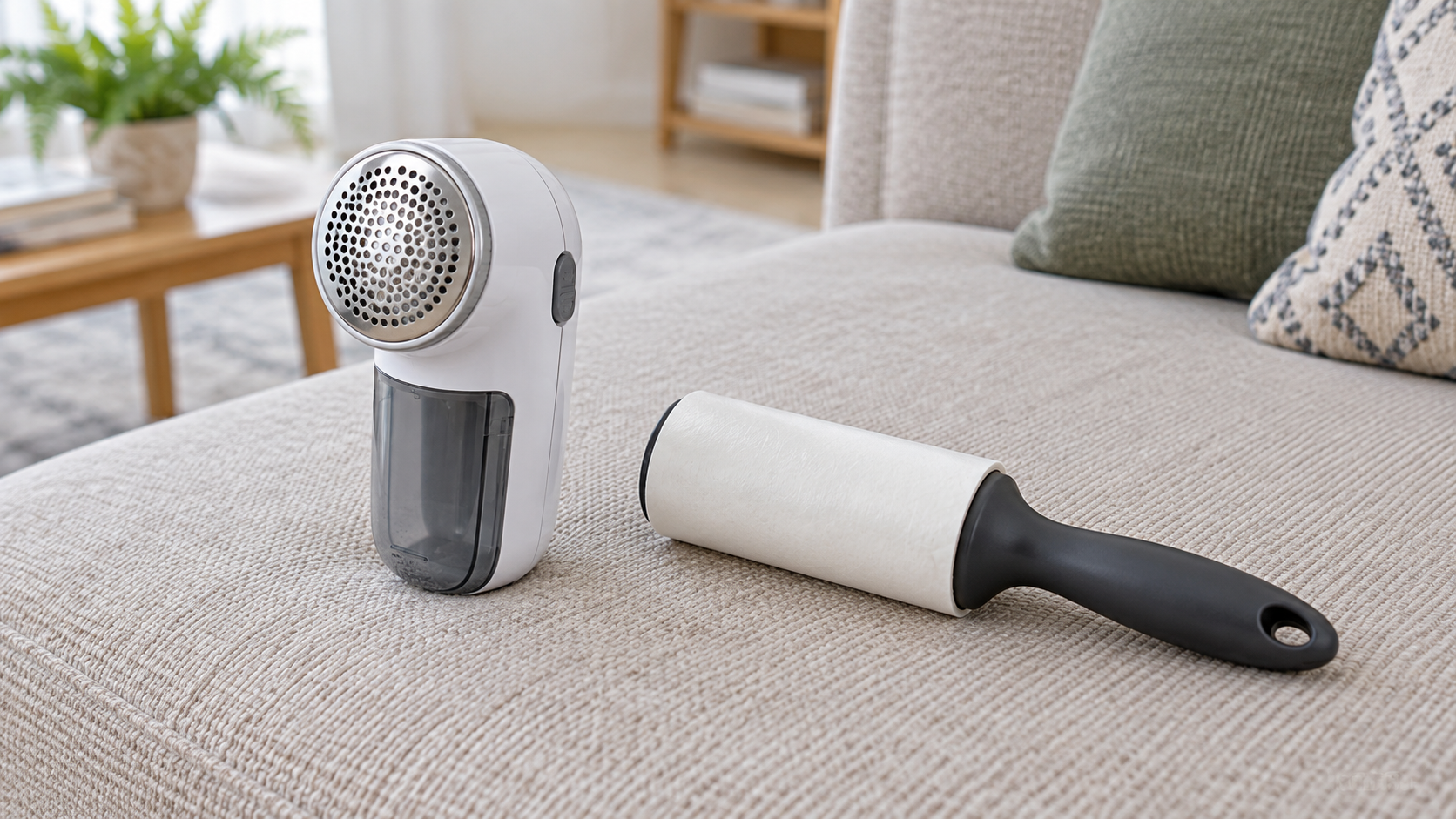
A lint roller is the lower-risk first choice for loose hair, lint, and surface debris on compatible upholstery. A fabric shaver has a narrower job: cutting attached pills from an intact textile that both the furniture maker and tool instructions allow. If you cannot identify the problem or verify the fabric, skip both rather than experimenting on the chair or sofa.
As an Amazon Associate, The Good Home Doc may earn from qualifying purchases.
Quick decision before shopping
First measure the available space, identify the setup or surface constraints, and decide who will maintain the item. Skip the category if it blocks access, conflicts with the manufacturer's instructions or lease, or adds more upkeep than the problem justifies.
Match the tool to what is actually on the fabric: Browse category: compare fabric shavers with adjustable guards or Browse category: compare reusable upholstery lint rollers.
These are category shortcuts, not tested winners. Verify approved textiles, exclusions, test-patch directions, guard or roller design, cleaning, replacement parts or refills, storage, and every manufacturer warning.
The short answer
- Choose a lint roller for loose lint, hair, and light surface debris when the upholstery instructions allow that roller or adhesive method.
- Choose a fabric shaver only for attached pills on intact, documented compatible fabric when you can keep the surface stable and work away from seams and details.
- Skip both for stains, odors, wet messes, snags, pulled loops, thinning fabric, open seams, delicate trim, unknown textiles, or any surface the maker excludes.
First decide: loose debris or attached pills?
Loose debris rests on the surface and can usually be lifted or brushed away. Pills are small fiber tangles still attached to the textile. Inspect the area in good light. If fibers trail from the upholstery, sit beside a snag, or expose thinning beneath them, treat the issue as textile damage rather than a cleaning job.
A lint roller does not repair pills. A shaver does not deep-clean upholstery, remove stains, sanitize fabric, or restore worn yarn. Choosing by tool popularity instead of the actual problem adds effort and can add damage.
Side-by-side comparison
| Decision point | Fabric shaver | Lint roller |
|---|---|---|
| Primary job | Cuts attached pills from permitted, intact textiles. | Lifts loose hair, lint, and surface debris from permitted textiles. |
| Contact | A guarded cutting head passes close to the fabric. | An adhesive sheet or reusable pickup surface contacts the fabric. |
| Main risk | Snagging, thinning, or cutting yarn when fit, pressure, or positioning is wrong. | Residue, surface distortion, or pulled fibers when tack or technique is unsuitable. |
| Recurring upkeep | Empty debris, clean and inspect the head, and replace approved cutting parts as directed. | Peel refills or clean and fully dry a reusable roller as directed. |
| Best fit | Recurring pilling on ordinary, replaceable, verified compatible upholstery. | Routine pickup of loose debris on a verified compatible surface. |
Who a fabric shaver fits
A shaver can fit a household with obvious recurring pills, usable furniture-care documentation, and a low-consequence hidden area for testing. Look for instructions that name allowed and excluded textiles, explain guard or height settings, and show how to clean and inspect the cutting head. An adjustable guard can improve control, but it cannot make an incompatible fabric safe.
Stable positioning matters. Upholstery curves, piping, tufts, buttons, zippers, seams, folds, and hard structure beneath the cover change the blade-to-fabric distance. If you cannot create the flat, controlled contact the instructions require, do not use the shaver there.
Who a lint roller fits
A lint roller is useful when pet hair, clothing fibers, or other loose debris returns between ordinary vacuuming or maker-approved cleaning. Compare roller width with the areas you need to reach, confirm the pickup surface is allowed, and check whether a reusable model must be rinsed, air-dried, or covered between uses.
Adhesive is not automatically harmless. Strong tack can pull at loose weaves or leave residue, and rolling hard does not make a mismatched tool work better. Test an inconspicuous area exactly as the furniture and roller instructions direct. Stop if the surface changes texture, sheds fibers, distorts, or feels sticky.
Setup and technique
Before using either tool
- Read the furniture care label or manufacturer documentation and the tool instructions.
- Remove cushions only if the furniture guidance permits it, and place the work area in a stable position.
- Inspect for holes, thinning, loose yarn, open seams, trim, fasteners, and hard structure beneath the cover.
- Test the least visible permitted area and examine it in good light before continuing.
For a fabric shaver
Start with the least aggressive allowed setting, light pressure, and short controlled passes. Keep the head away from seams, piping, folds, buttons, zippers, and any raised or damaged area unless the instructions explicitly address them. Stop immediately at a catch, change in sound, or unexpected resistance.
For a lint roller
Use only the pressure and direction the maker specifies. Replace a disposable sheet when debris reduces pickup rather than pressing harder. For a reusable roller, clean and dry it exactly as directed; a wet or dirty pickup surface can move residue back onto the upholstery.
Maintenance and ongoing cost
A shaver needs more mechanical care. Isolate power before opening it, empty the collector, clean with approved tools, inspect the guard and blade, and reassemble it correctly. Do not use bent, chipped, loose, corroded, or damaged parts. Before buying, check whether the maker still offers the required foil, blade, or battery support.
A disposable lint roller creates refill cost and waste. A reusable one trades refills for washing, drying, and storage. Confirm that debris releases without handling you find unpleasant and that the roller will be ready when needed. A reusable label is not useful if its required cleaning routine does not fit your household.
Who should skip each option?
Skip the fabric shaver for loose debris, delicate or loose weaves, velvet or specialty finishes without explicit approval, damaged areas, valuable or irreplaceable upholstery, or a surface that cannot lie stable beneath the head. Also skip it if you will not inspect and maintain the cutting parts.
Skip the lint roller when the issue is attached pilling, staining, odor, embedded grit, or textile damage. Skip adhesive rollers when the furniture maker excludes adhesive contact, and skip reusable rollers whose washing or drying needs you cannot meet.
Skip both when documentation is missing or conflicting, the fabric is wet, the problem involves bodily fluids or hazardous material, or the furniture needs repair. Use the maker’s approved cleaning route or a qualified upholstery-care professional instead of improvising.
Bottom line
Use a lint roller for permitted loose surface debris and a fabric shaver only for permitted attached pilling. Neither tool is a universal upholstery cleaner, and neither can repair worn fabric. Identify the problem, verify both sets of instructions, test out of sight, and stop when the textile—not the tool—sets a limit.
Next step: Put this decision in context with the home-product buying framework guide.