How to Choose Reusable Cleaning Gloves for Kitchen and Bathroom Chores
The useful glove is not the thickest pair or the one with the longest list of vague protection claims. It is a pair that fits your hands, stays manageable when wet, matches the cleaner and task instructions, and can be washed and dried before the next chore.
As an Amazon Associate, The Good Home Doc may earn from qualifying purchases.
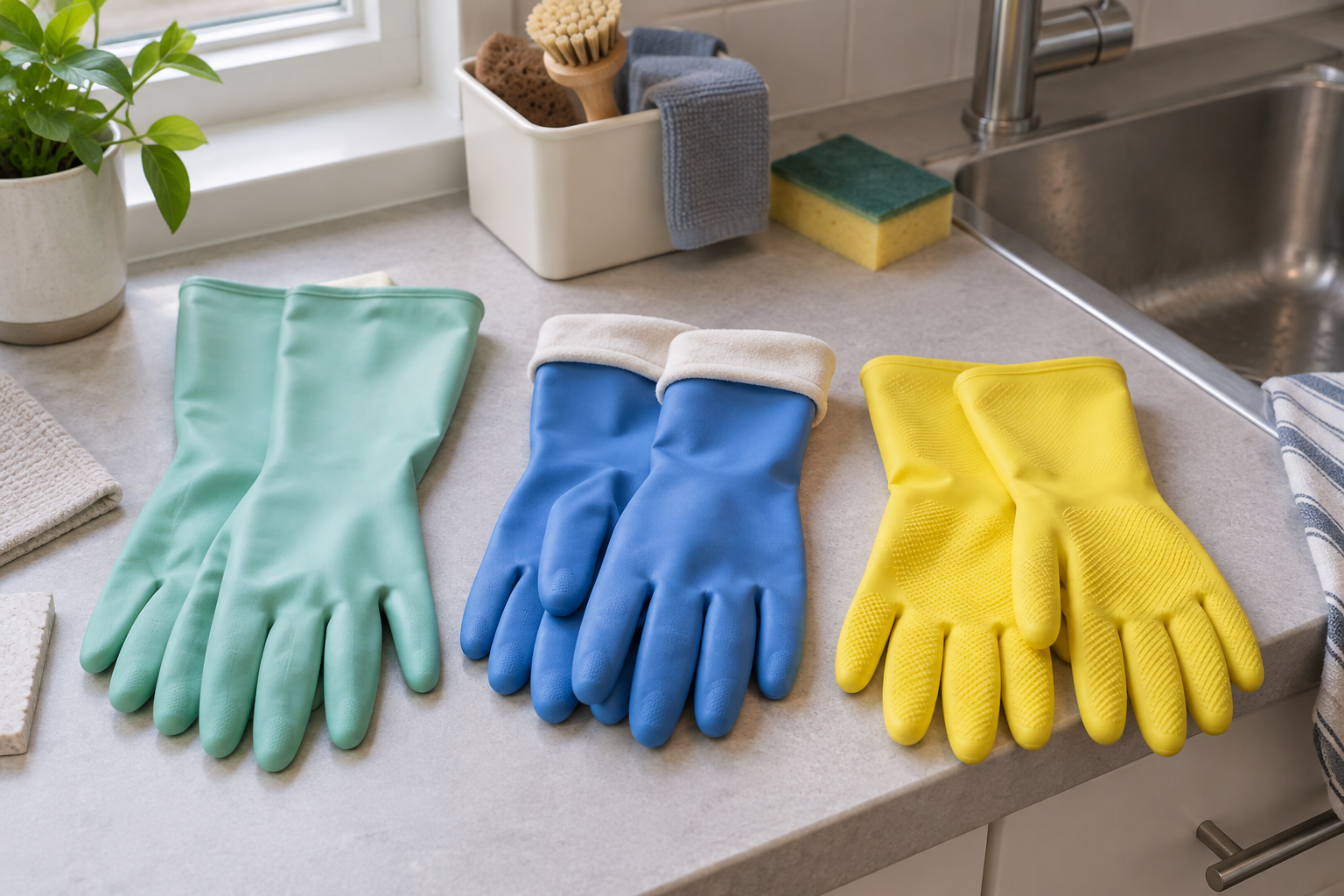
Quick decision before shopping
First measure the available space, identify the setup or surface constraints, and decide who will maintain the item. Skip the category if it blocks access, conflicts with the manufacturer's instructions or lease, or adds more upkeep than the problem justifies.
Start with the task and the maker's size chart: These category links are shopping starting points, not tested winners.
- Browse category: Compare long-cuff household cleaning glovesCheck hand measurements, complete cuff length, material disclosure, texture, stated uses, and care instructions.
- Browse category: Compare lined reusable dishwashing glovesCheck lining material, fit when dry, washing directions, turn-out guidance, and a realistic drying routine.
- Browse category: Compare textured-grip cleaning glovesCheck where texture is placed, whether it reduces control, and whether every groove can be cleaned and dried.
Confirm the exact glove's current materials, intended household uses, exclusions, cleaner compatibility, warnings, cleaning, drying, and replacement guidance. Household cleaning gloves are not a substitute for task-specific protective equipment.
Quick comparison by format
| Format | Useful when | Main check | Reason to skip |
|---|---|---|---|
| Long unlined cuff | Splash coverage matters and quick rinsing is practical | Cuff opening, forearm fit, material, and drying position | The cuff collapses, catches, or restricts movement |
| Soft-lined glove | Comfort during longer routine chores matters | Lining material, interior drying, odor, and care | The lining stays damp or is hard to inspect |
| Textured-grip glove | Wet bottles, tools, or dishes are the main handling problem | Texture location, dexterity, and cleanable grooves | The texture feels bulky or traps residue |
Fit comes before cuff length or grip
Use the current size chart and measure where it directs rather than relying on a familiar letter size. A glove that is too small can restrict finger movement and strain seams; one that is too loose can bunch at the palm and reduce control. Check finger length, palm width, wrist opening, and whether rings or long nails change the fit.
Try the normal motions of the chore without holding a sharp, hot, or breakable item: close the hand, pinch a cloth, hold an empty spray bottle, and reach into the sink. If fingertips fold over, the palm twists, or the cuff limits the elbow route, choose another size or format.
Choose material from documented compatibility
Material names alone do not establish protection. Latex, nitrile, vinyl, neoprene, and blended household gloves can differ by formulation, thickness, construction, and stated use. Read both the glove instructions and every cleaner label. If either source does not permit the combination—or the substance is unknown—do not use the glove as a guess.
If latex sensitivity is a concern, look for a complete material disclosure and choose an appropriate documented alternative. Stop using any glove that causes skin irritation and seek medical guidance when symptoms are significant or persistent. A “latex-free” label does not answer every material-sensitivity question.
Cuffs manage splashes only when they fit the motion
A longer cuff can cover more wrist and forearm, but it is useful only if it stays clear of the work and follows the product directions. Measure from the wrist to the stated cuff end, and check the opening around clothing. Folding or rolling a cuff can change how liquid collects, so do it only when the manufacturer permits it.
For separate kitchen and bathroom routines, color coding can help keep pairs assigned to different chores. That is an organization system, not a hygiene guarantee: clean, dry, inspect, and store each pair according to its instructions.
Lining trades easier donning for slower drying
A soft lining may make a glove more comfortable to put on and wear, especially if hands tend to feel clammy. The tradeoff is an interior that can take longer to dry and may be harder to inspect. Check whether the glove can be turned partly or fully inside out without damaging the lining, and follow the stated wash and dry method.
Choose unlined gloves when fast rinsing and visible interior condition matter more than softness. Choose lined gloves only when you have a ventilated drying spot and will wait until the inside is fully dry before storage.
Grip should improve control, not create bulk
Texture across the palm and fingers may help with wet household items, but pattern and placement matter more than an unsupported “non-slip” claim. The glove still needs enough dexterity to control the object. Deep texture also adds grooves that need cleaning.
Never treat household gloves as protection from knives, broken glass, hot cookware, electricity, punctures, unknown chemicals, or trade work. Stop the chore and use the task-specific instructions and equipment instead.
Care and replacement are part of the cost
After each permitted task, follow the maker's cleaning directions for the exterior and interior. Rinse away residue when directed, hang or place the gloves where air reaches them, and keep them away from heat or direct sun if the instructions require it. Do not seal a damp pair in a caddy.
Inspect before reuse. Replace gloves according to their instructions when you find tears, holes, cracking, sticky areas, seam separation, degraded lining, persistent odor, or a fit that has changed. Reusability means multiple maintained uses—not indefinite service.
Must-haves and nice-to-haves
Must-have features
- A size range with usable hand measurements.
- Clear material and intended-use information.
- Cleaner and task compatibility you can verify.
- A cuff and grip that preserve control.
- Cleaning, drying, storage, and replacement instructions.
Nice-to-have features
- Different colors for clearly separated chore zones.
- A hanging loop when the maker supports hanging storage.
- A lining when you can dry it completely.
- Texture limited to the areas where you need it.
Who should skip reusable cleaning gloves?
Skip a pair when the material is undisclosed, the size chart does not match your hand, the cleaner label calls for different equipment, or the inside cannot dry in your space. Skip lined gloves if damp interiors are likely to sit between chores, and skip bulky textured gloves when they reduce control.
Do not buy a household pair for professional, medical, food-service, high-heat, sharp-object, electrical, or unknown-chemical work. Use the instructions and qualified workplace or professional guidance appropriate to that task.
Buying checklist
- Name the exact chores and products the gloves will contact.
- Read the cleaner labels and glove exclusions.
- Measure the hand using the maker's size method.
- Check cuff length and opening against the work motion.
- Choose lined or unlined based on your drying setup.
- Check texture placement without sacrificing dexterity.
- Plan separate storage for clean, fully dry pairs.
- Know the inspection and replacement signs.
Bottom line
For routine splashy chores, start with a correctly sized long-cuff household glove whose material and intended use match the cleaner labels. Add lining only when comfort outweighs the extra drying work, and choose pronounced texture only when it improves control without adding awkward bulk. Skip any pair that relies on broad protection language instead of specific materials, uses, exclusions, and care instructions.
Next step: Put this decision in context with the home-product buying framework guide.