Reusable Cleaning Cloths vs Paper Towels for Everyday Messes
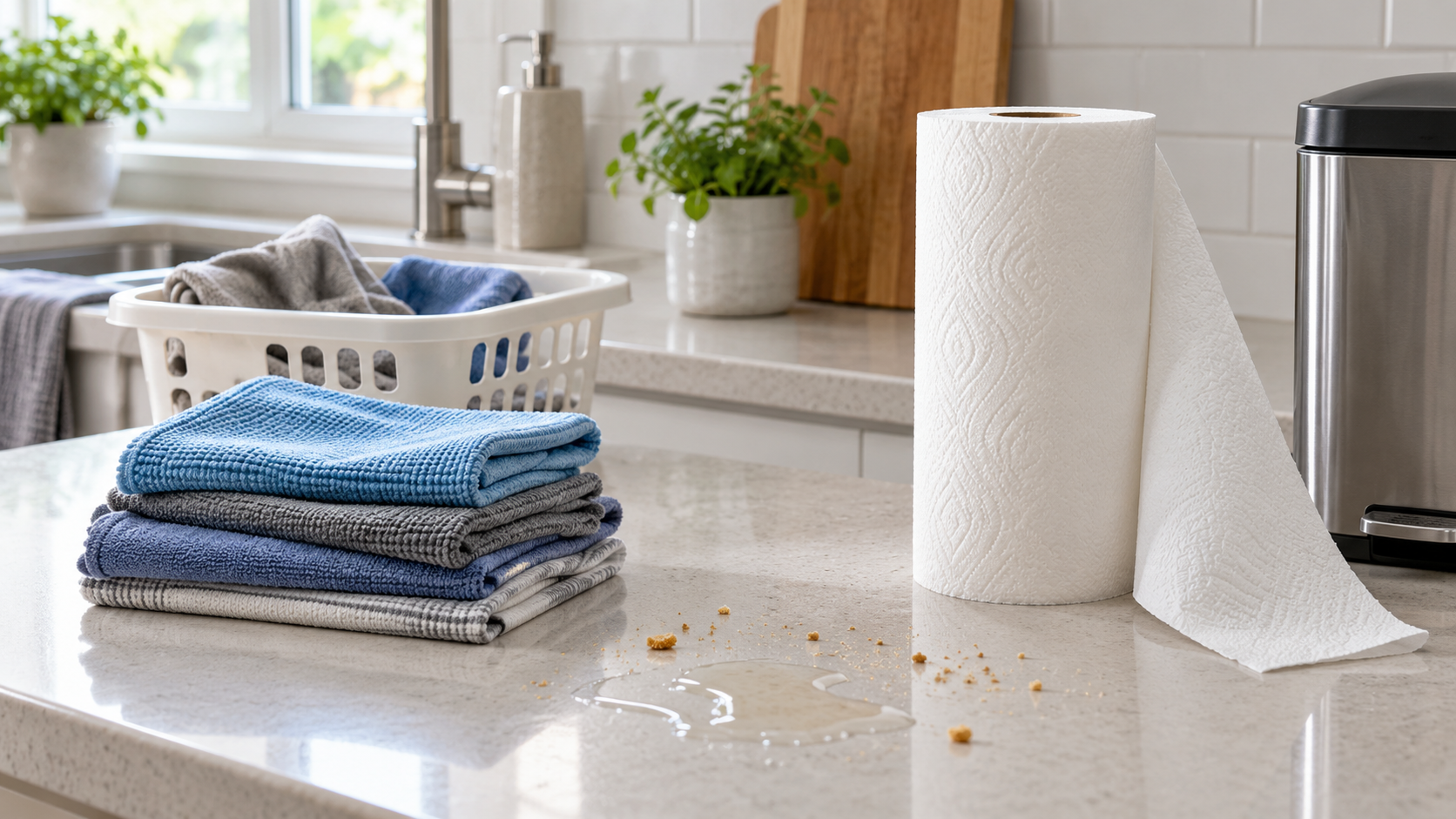
Reusable cloths make sense when a routine mess can enter a dependable wash-and-dry cycle. Paper towels make sense when quick containment and disposal matter more than reuse. Most homes do not need an absolute winner: they need a default for ordinary jobs and a small disposable supply for exceptions.
As an Amazon Associate, The Good Home Doc may earn from qualifying purchases.
Quick decision before shopping
First measure the available space, identify the setup or surface constraints, and decide who will maintain the item. Skip the category if it blocks access, conflicts with the manufacturer's instructions or lease, or adds more upkeep than the problem justifies.
Compare the cleanup format that fits your routine:
- Browse category: Compare reusable cleaning clothsCheck material, dimensions, surface guidance, wash and dry instructions, and how many cloths fit your rotation.
- Browse category: Compare select-a-size paper towelsCheck sheet size, roll dimensions, dispenser fit, storage footprint, and disposal guidance.
These are category shopping routes, not tested winners. Follow the surface maker, cleaner label, appliance, textile, and local disposal instructions that apply to the job.
Quick Decision
Choose reusable cleaning cloths as the default for routine dust, crumbs, water, and maker-approved wipe-downs when you can separate jobs, hold used cloths, and wash and dry them promptly.
Choose paper towels for occasional jobs you do not want entering the household laundry, or when there is no realistic place to hold and dry a used cloth. Use the smallest sheet that completes the job.
Use both when reusable cloths cover predictable daily work and a modest paper supply handles exceptions. A mixed system is often easier to maintain than forcing one material onto every mess.
Cloths vs Paper Towels at a Glance
| Decision point | Reusable cleaning cloths | Paper towels |
|---|---|---|
| Best routine | Repeated compatible jobs with planned laundry | Infrequent jobs followed by disposal |
| Setup | Needs clean stock plus a used-cloth holding spot | Needs a roll and dry replacement storage |
| After use | Sort, wash, dry fully, and return to service | Dispose according to the mess and local rules |
| Surface fit | Depends on material, weave, soil, and care guidance | Depends on wet strength, texture, soil, and care guidance |
| Supply pattern | Upfront set with eventual replacement | Ongoing replenishment |
Start with the Mess and Surface
Neither format is universally safe or effective. Check the surface maker's directions and the cleaner label before wiping a finish, screen, appliance, stone, coated fixture, or other material you care about. Remove gritty debris without dragging it across the surface, and do not assume a soft-looking cloth or towel cannot scratch.
For ordinary dry dust, crumbs, and small water spills, a job-matched reusable cloth can become the household default. Fold it into several working faces and change to a clean section as it picks up soil. Paper towels are useful when the job is isolated and immediate disposal is the more manageable routine. Neither material, by itself, disinfects a surface or proves that a job is sanitary.
When Reusable Cloths Fit Better
Cloths earn their storage space when the same types of cleanup happen every week. A small color or storage system can reserve one group for kitchen counters, another for bathroom surfaces, and a smooth low-lint group for glass, subject to the relevant care instructions. The purpose is simple separation, not a claim that color coding prevents contamination.
Count the whole rotation. You need enough clean cloths to reach the next laundry cycle, a breathable place for used damp cloths before washing, and room to dry them fully. A giant pack is not a bargain if half the cloths have no assigned job or the used pile stays wet.
Skip reusable cloths as the default if used items will sit crumpled without a wash plan, if your laundry instructions conflict with the soil or cleaner involved, or if the cloth material is not approved for the surface. Do not put an unknown substance into a normal laundry load.
When Paper Towels Fit Better
Paper towels reduce the after-use routine to appropriate disposal. That can be useful for isolated messes, travel, move-in cleaning, or a household without a convenient used-cloth holding and laundry setup. Select-a-size sheets can reduce the temptation to take a full sheet for a small spot.
The tradeoff is replenishment. Record where spare rolls will fit, whether the roll clears the holder or cabinet, and how quickly the household actually uses them. Buying a large package without dry storage simply moves the clutter problem.
Skip paper towels as the everyday default when most jobs are predictable, surface-compatible wipe-downs and the recurring supply regularly runs out or crowds storage. Also skip them when their texture, lint, or wet strength does not suit the finish or task.
Build a Reusable System That Actually Works
- Assign jobs: Keep cloth groups for clearly separated uses instead of treating every cloth as interchangeable.
- Choose a clean home: Store washed, fully dry cloths near the work without exposing them to new soil.
- Create a used-cloth route: Give damp cloths airflow until wash time; do not seal wet textiles in a container unless their care instructions specifically support that routine.
- Follow care labels: Wash and dry according to the cloth maker and the substances involved. Fabric softener, bleach, heat, and mixed loads may be restricted.
- Retire worn pieces: Replace cloths that stay soiled, shed, develop rough edges, or no longer suit their assigned surface.
Plan the Paper-Towel Supply
Choose sheet size and roll dimensions before pack quantity. A roll that binds in a holder or blocks an under-cabinet door makes the daily setup worse. Store the reserve away from splashes and leaks, and keep only enough on the counter to support the actual routine.
Disposal depends on what the towel picked up and local waste rules. Do not flush paper towels. Do not assume used sheets belong in recycling or compost; product composition, cleaners, food residue, oils, and local programs all affect the answer.
Maintenance and Recurring Cost
A cloth system shifts effort into sorting, laundering, drying, and eventual replacement. A paper system shifts effort into monitoring supply, buying, storing, and disposing. Compare the routines over a realistic month, not only the shelf price of one pack.
A practical trial is more useful than a sweeping cost claim: start with enough reusable cloths for one or two assigned jobs, keep a small paper reserve, and notice what is washed, discarded, or left unused. Then adjust the ratio without buying a large inventory first.
Who Should Skip Each Option?
Skip a cloth-only system if the household cannot keep used items separate, washed, and fully dried, or if some recurring jobs should not enter the normal textile routine. Skip a paper-only system if predictable low-risk wipe-downs consume rolls quickly and compatible washable cloths could move cleanly through the laundry.
Skip both for a job when the surface instructions call for a dedicated applicator, specialty pad, or professional care, or when the substance is unknown or hazardous. Isolate the area and follow authoritative product or local guidance instead of improvising with an everyday wipe.
Bottom Line
Reusable cleaning cloths are the stronger default for repeat, compatible household jobs when a clean-to-used-to-laundry loop is easy to maintain. Paper towels are the stronger exception tool when disposal is appropriate and laundering is impractical. Set up the reusable route first, keep a restrained disposable backup, and let the actual mess, surface, and after-use routine decide.
Next step: Put this decision in context with the home-product buying framework guide.