Fabric-care tool buying guide
How to Choose Fabric Shavers for Sweaters and Upholstery Touch-Ups
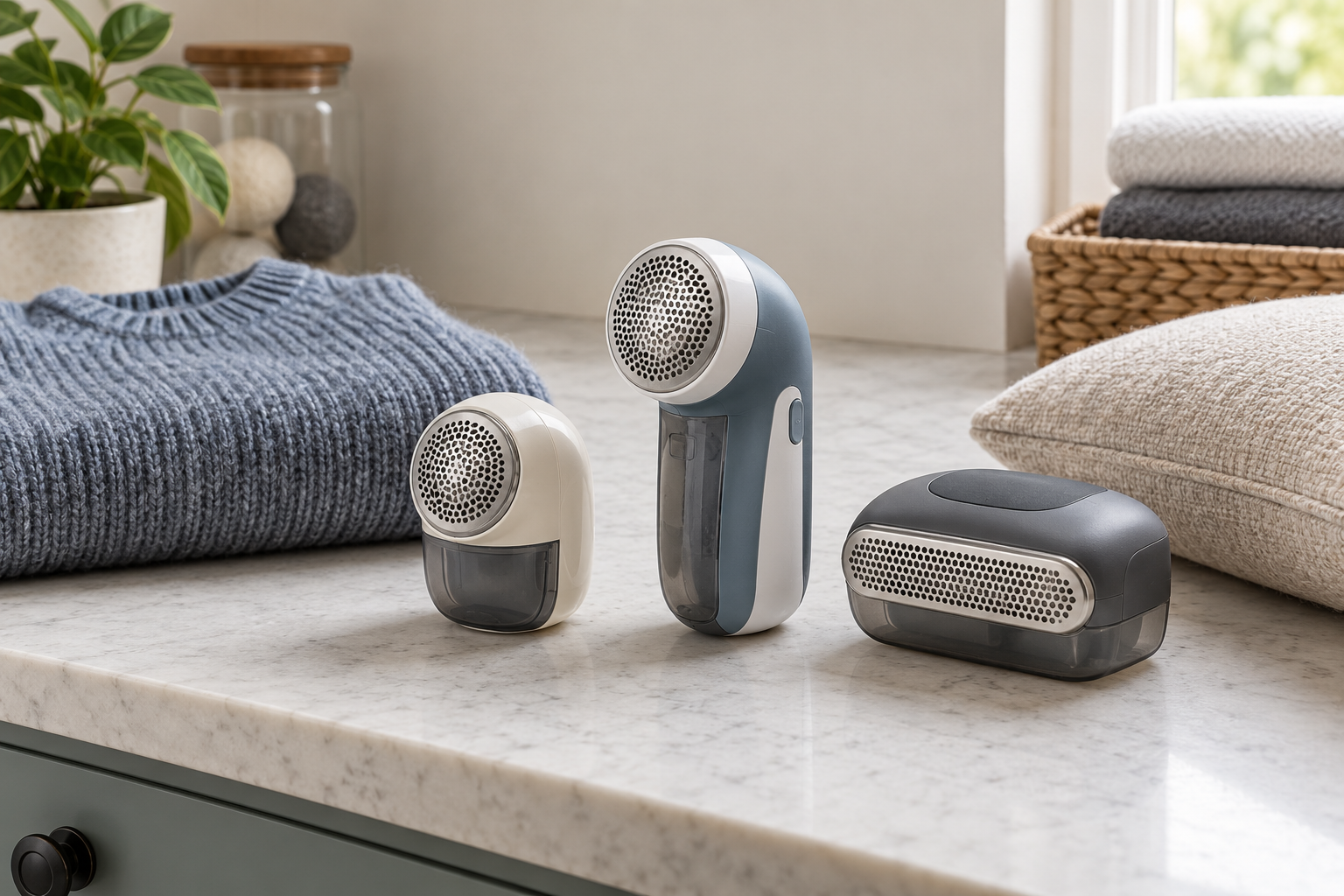
The best fabric shaver is not the most aggressive one. It is the format that gives you enough control for a verified compatible textile, makes the cutting head easy to inspect, and suits the amount of pilling you actually handle. Start with an adjustable-guard handheld model for mixed household use; choose a compact shaver for occasional garment touch-ups or a wider head only for larger, flat, approved surfaces.

As an Amazon Associate, The Good Home Doc may earn from qualifying purchases.
Shop by the Job, Not by a Claimed Ranking
- Browse category: Fabric shavers with adjustable guardsA practical starting point when verified garments vary in texture and you want documented height control.
- Browse category: Compact fabric shavers for sweatersCompare for occasional small-area work when easy handling and storage matter more than speed.
- Browse category: Wide-head fabric shaversConsider only for broad, flat upholstery or garments whose maker permits shaving.
These category searches are shopping starting points, not tested winners. Verify approved and excluded textiles, guard settings, head and foil condition, power instructions, debris-cup access, cleaning, replacement blades, warranty, and return terms for the exact model.
Quick Comparison
| Format | Best fit | Main tradeoff |
|---|---|---|
| Compact handheld | Small sweater panels and occasional touch-ups | Easy to control and store, but a small head and cup slow larger jobs |
| Adjustable-guard handheld | Several documented compatible textiles | More control options, but only if the instructions clearly explain each setting |
| Wide-head shaver | Large, flat, approved fabric areas | Faster coverage can be harder to control near seams, curves, and details |
| Corded format | Longer sessions near a practical outlet | Continuous power, but the cord must stay clear of the fabric and walking path |
| Rechargeable format | Portable work around the home | No working cord, but runtime, charging, battery care, and replacement support matter |
Confirm That a Shaver Is the Right Tool
A fabric shaver cuts pills—small tangles of fibers still attached to the surface. It is not the right tool for loose pet hair, lint, stains, odors, snags, pulled loops, holes, thinning cloth, or open seams. A lint roller or maker-approved brush handles some loose debris; damaged or valuable textiles may need professional care.
Read the textile label or furniture-care documentation and the shaver instructions before shopping. A generic “works on most fabrics” claim is not enough. If either source excludes the material, if the construction is loose or embellished, or if you cannot verify the textile, do not use a blade-based tool.
Selection Criteria That Matter
Guard and Height Control
An adjustable guard changes the distance between the fabric and cutting head. That can improve control across permitted textile types, but it does not turn an incompatible surface into a safe one. Prefer a model whose instructions name the settings, show installation, and identify excluded materials.
Head Size and Handling
A smaller round head is easier to position on garment panels and around gradual curves. A wider head covers more area but can bridge folds or concealed structure. Check whether the handle lets you keep the foil flat without pressing hard, and avoid seams, buttons, piping, zippers, embroidery, and edges unless both makers explicitly permit the approach.
Foil, Blades, and Replacement Parts
The perforated foil or guard separates the blade from the textile. It should be easy to inspect for dents, looseness, corrosion, and damage. Confirm how the head opens, whether approved blades and foils are available, and whether replacement requires tools. A low purchase price is less useful if a worn cutting part cannot be replaced.
Debris Cup and Cleanup
A visible, removable cup makes it easier to stop before lint crowds the head. Compare the release method, opening size, and cleaning instructions. Small cups suit small jobs; larger cups reduce interruptions but may make the body bulkier. Never open the head or cup until power is isolated as the manual directs.
Power Format
For rechargeable models, verify the stated operating basis, charging connector, charge indicator, storage instructions, and whether the battery is replaceable. For corded models, confirm cord length and routing. For replaceable-battery models, check the battery type and compartment closure. Do not assume one power format shaves better; control and textile fit come first.
Measure the Real Job
- Count the surfaces: one sweater a few times a year needs less capacity than recurring care across several garments.
- Map obstacles: note seams, cuffs, ribbing, buttons, embroidery, piping, tufts, folds, zippers, and firm structure beneath upholstery.
- Find a test patch: identify an inconspicuous, permitted area large enough to reveal texture or color change.
- Plan a stable work zone: garments should rest as directed on a clean surface; never shave clothing while it is worn.
- Account for upkeep: allow time to empty the cup, clean the head, inspect parts, recharge, and store the tool safely.
Must-Haves Versus Nice-to-Haves
Must-haves: usable textile guidance, a sound foil or guard, clear power-isolation and cleaning steps, a controlled grip, available maintenance instructions, and a return path if the documented fit is wrong.
Nice-to-haves: several clearly explained guard heights, a transparent debris cup, a protective cap, an included cleaning brush, charge status, and supported replacement heads. Extra speeds and accessories are not substitutes for textile approval or careful technique.
A Safer First-Use Routine
- Confirm that the textile and shaver instructions permit the combination.
- Inspect the textile for damage and the tool for a dented foil, loose head, damaged blade, or power fault.
- Position the fabric exactly as directed and keep children and pets away from the work zone.
- Test an inconspicuous area using the least aggressive permitted setting and light pressure.
- Check for snagging, fuzz loss, thinning, texture change, or color change before expanding the area.
- Use short, controlled passes and stop when the cup fills, the sound changes, or resistance increases.
- Isolate power before opening, cleaning, or inspecting the head; then store the dry tool with its cap if supplied.
Who Should Skip a Fabric Shaver
- Skip one if the textile or tool maker does not clearly permit the material and construction.
- Skip delicate, loose-knit, sheer, lace, embroidered, embellished, damaged, heirloom, valuable, or irreplaceable textiles.
- Skip upholstery when curves, seams, piping, tufts, buttons, or concealed hard structure prevent flat, controlled contact.
- Skip the category when the problem is loose debris, staining, odor, holes, snags, or structural wear rather than attached pills.
- Skip models without understandable maintenance, power, guard, replacement-part, or textile guidance.
- Skip a wide head if the real work is mostly cuffs, narrow panels, corners, and detailed areas.
Bottom Line
For most households with several verified compatible textiles, an adjustable-guard handheld shaver offers the best balance of control and coverage. A compact model makes more sense for occasional sweater touch-ups, while a wide head earns its size only on broad, flat, approved surfaces. Whatever the format, choose documented textile fit and maintainable cutting parts over speed claims, and stop rather than experiment on uncertain fabric.
Next step: Put this decision in context with the home-product buying framework guide.