Corded vs Cordless Electric Spin Scrubber for Bathroom Cleaning
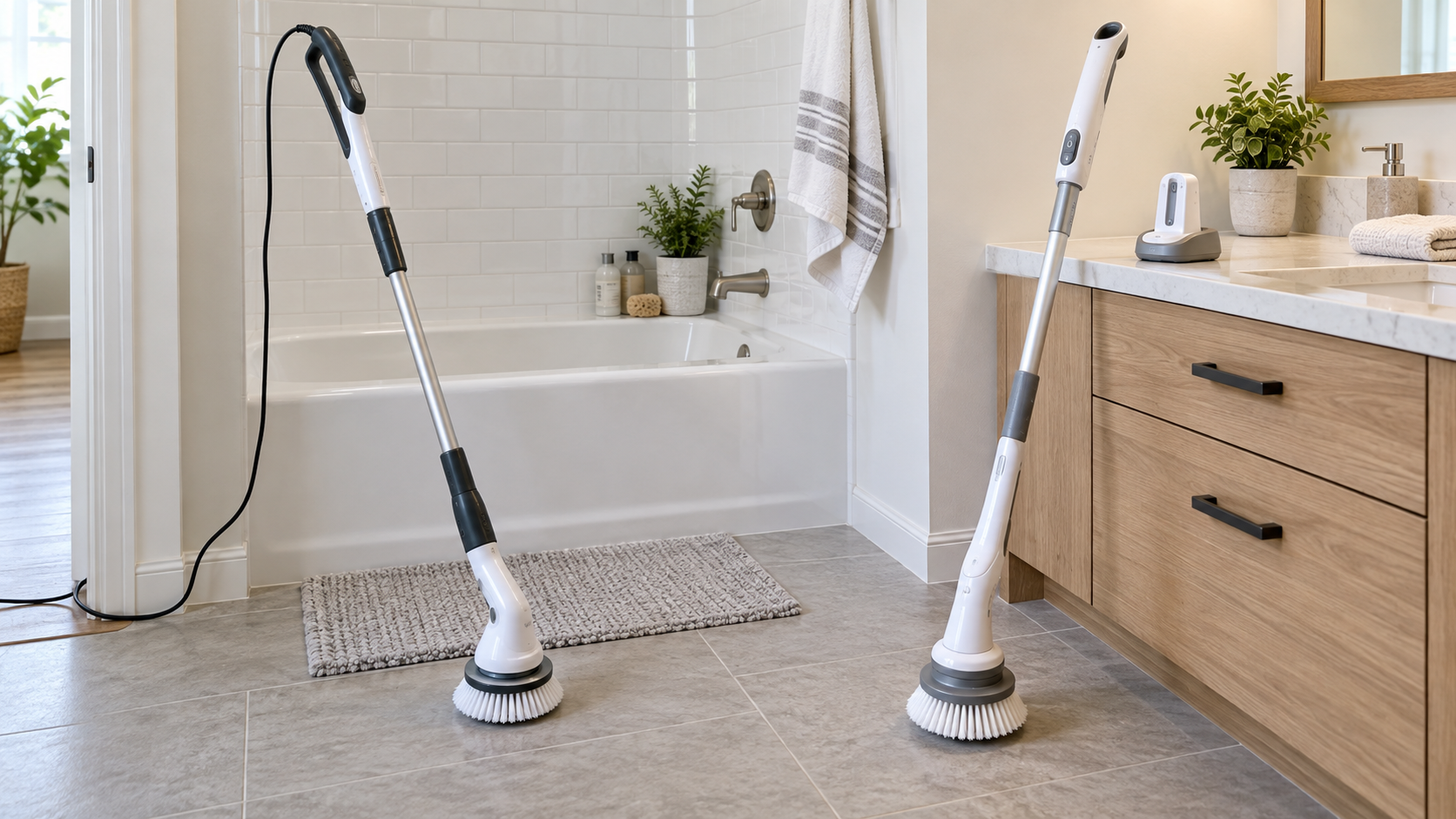
Choose a corded electric spin scrubber when a suitable dry outlet, a safe cord route, and longer uninterrupted sessions all line up. Choose cordless when easier movement around a tub or shower matters more than managing charging, finite runtime, and eventual battery aging. The power format does not decide whether the brush is safe for your surface.
As an Amazon Associate, The Good Home Doc may earn from qualifying purchases.
Quick decision before shopping
First measure the available space, identify the setup or surface constraints, and decide who will maintain the item. Skip the category if it blocks access, conflicts with the manufacturer's instructions or lease, or adds more upkeep than the problem justifies.
Compare only after checking the room and surfaces:
- Browse category: Shop corded electric spin scrubbersStart here only when the manual permits the intended bathroom use and a dry, code-compliant outlet and safe cord route are available.
- Browse category: Shop cordless electric spin scrubbersStart here when free movement matters and the documented runtime, charge time, battery policy, and charger location fit the routine.
These are category shopping routes, not tested rankings. Verify the exact model's electrical listing, approved surfaces, water-exposure limits, charger instructions, runtime basis, attachments, replacement parts, and warranty before buying.
Quick Decision
Choose corded when cleaning sessions regularly outlast common battery runtimes, the manufacturer permits the intended use, and the cord can remain dry, visible, and outside every walking path.
Choose cordless when the bathroom layout requires frequent repositioning, no suitable outlet is available, or a cord would cross a doorway, route around fixtures, or approach a wet area.
Skip both when the surface maker prohibits powered brushing, grout or caulk is loose, the only charging or plug location conflicts with the manual, or a manual brush already handles the limited job with better control.
Corded vs Cordless at a Glance
| Decision point | Corded scrubber | Cordless scrubber |
|---|---|---|
| Working time | Continuous while safely connected and permitted | Limited by documented battery runtime |
| Movement | Cord length and route constrain reach | No operating cord; easier room-to-room movement |
| Setup | Requires a suitable outlet and deliberate cord management | Requires charging in the maker-approved dry location |
| Long-term upkeep | Inspect cord, plug, strain relief, and housing | Inspect tool and charger; plan for battery aging and replacement policy |
| Storage | Cord needs loose, dry storage without sharp bends | Tool and charger need dry storage; battery instructions may govern long idle periods |
When a Corded Spin Scrubber Fits Better
Corded power fits a repeat cleaning route that stays within reach of one suitable outlet and takes long enough that stopping to recharge would be disruptive. It can also simplify ownership when you do not want to track battery charge or replacement availability.
The tradeoff is the cord itself. Measure from the actual outlet to the farthest intended surface along a route that does not cross the tub, shower, sink edge, doorway, or main walking path. Do not treat an extension cord as an automatic solution; use only the power setup the manufacturer permits. Never defeat a grounded plug or protective device, and stop using a tool with cord, plug, housing, or strain-relief damage.
Corded fits: longer sessions in a predictable layout with a compliant dry connection point and a cord route that stays visible and controlled.
Skip corded: when reaching the work requires stretching the cord, routing it near water, creating a trip line, or using connections the manual does not approve.
When a Cordless Spin Scrubber Fits Better
A cordless tool removes the operating cord from the room, which can make it easier to work around a toilet, tub apron, shower door, and multiple walls. It is usually the more practical format when the nearest outlet is badly placed or when the scrubber moves between bathrooms.
That freedom shifts the planning to charging. Compare runtime only on the manufacturer's stated test basis; speed, pressure, attachment, surface, temperature, and battery age may change real use. Confirm whether the battery is replaceable, how the maker handles a battery that no longer holds useful charge, and where the charger may be used and stored. “Cordless” does not mean the charging equipment belongs in a wet area.
Cordless fits: shorter or divided sessions, awkward layouts, and households with a reliable dry charging spot.
Skip cordless: when remembering to charge is unrealistic, the documented runtime leaves no margin for the normal job, or battery and charger replacement information is unclear.
Six Checks Before Either Format
- Confirm surface permission. Read the care guidance for tile, grout, acrylic, fiberglass, glass, stone, coatings, and fixtures. Use only a brush material and cleaner both the surface maker and tool maker permit.
- Verify wet-use limits. A water-resistant head does not make the handle, controls, plug, battery compartment, or charger submersible. Follow the model's exact exposure and drying directions.
- Check listing and instructions. Look for a current manual, identifiable maker, applicable electrical certification claims, and clear warnings—not just marketplace bullet points.
- Measure the working tool. Compare total weight, handle range, head angle, brush diameter, and the smallest corner. A long handle can increase leverage and feel less controllable at an edge.
- Price the upkeep. Confirm compatible replacement brush heads, cord or charger service rules, battery policy, warranty process, and supply availability.
- Plan drying and storage. Wet heads need ventilation. The motor unit, cord or charger, and attachments need the separation and storage conditions stated in the manual.
Control and Surface Risk Do Not Change with Power Source
Neither format should be chosen by maximum speed alone. Start with the least aggressive approved head and setting, test an inconspicuous spot, and use only enough pressure to keep the head stable. Stop if the finish dulls, scratches, lifts, or changes texture, or if the spinning head becomes difficult to steer.
Powered brushing is a poor substitute for repair. Loose grout, failed caulk, cracked tile, water entering a wall, a damaged electrical component, or recurring moisture needs the appropriate property manager or qualified professional—not harder scrubbing. Do not open, modify, or improvise repairs to a powered bathroom tool.
Setup and Maintenance Routine
Before each session, inspect the housing, controls, handle locks, head connection, and the cord and plug or battery and charger. Set out only the attachments needed for approved surfaces. Keep cords, chargers, and dry electrical components out of splash zones and away from pooled water according to the manual.
After cleaning, switch off and disconnect or power down the tool as directed before removing a head. Rinse only components the maker says may be rinsed, clear trapped debris, and let everything dry before storage. Do not wrap a power cord tightly around the handle, put a damp tool onto its charger, or seal wet brushes in a bin.
Bottom Line
Corded is the better fit for long, predictable cleaning sessions only when the bathroom provides a safe manufacturer-approved connection and cord route. Cordless is the better fit for easier movement and awkward layouts only when runtime, charging, battery aging, and dry storage are acceptable. If either setup feels forced, use a manual long-handle brush or smaller detail tool instead.
The power decision comes after the category decision. Use the electric spin scrubber worth-it guide to check whether powered rotation solves a real recurring problem, then compare current manuals rather than assuming all corded or cordless models share the same limits.
Next step: Put this decision in context with the home-product buying framework guide.