Robot Mop vs Spray Mop for Routine Hard-Floor Cleaning
Choose a robot mop when compatible open floors need frequent light maintenance and you can clear the route, supervise early runs, maintain the machine, and reserve dock space. Choose a spray mop when you want immediate control over where moisture goes, need to work around furniture or edges, and do not mind pushing the tool yourself. Neither format replaces dry debris pickup, spill response, deep cleaning, or repairs.
As an Amazon Associate, The Good Home Doc may earn from qualifying purchases.
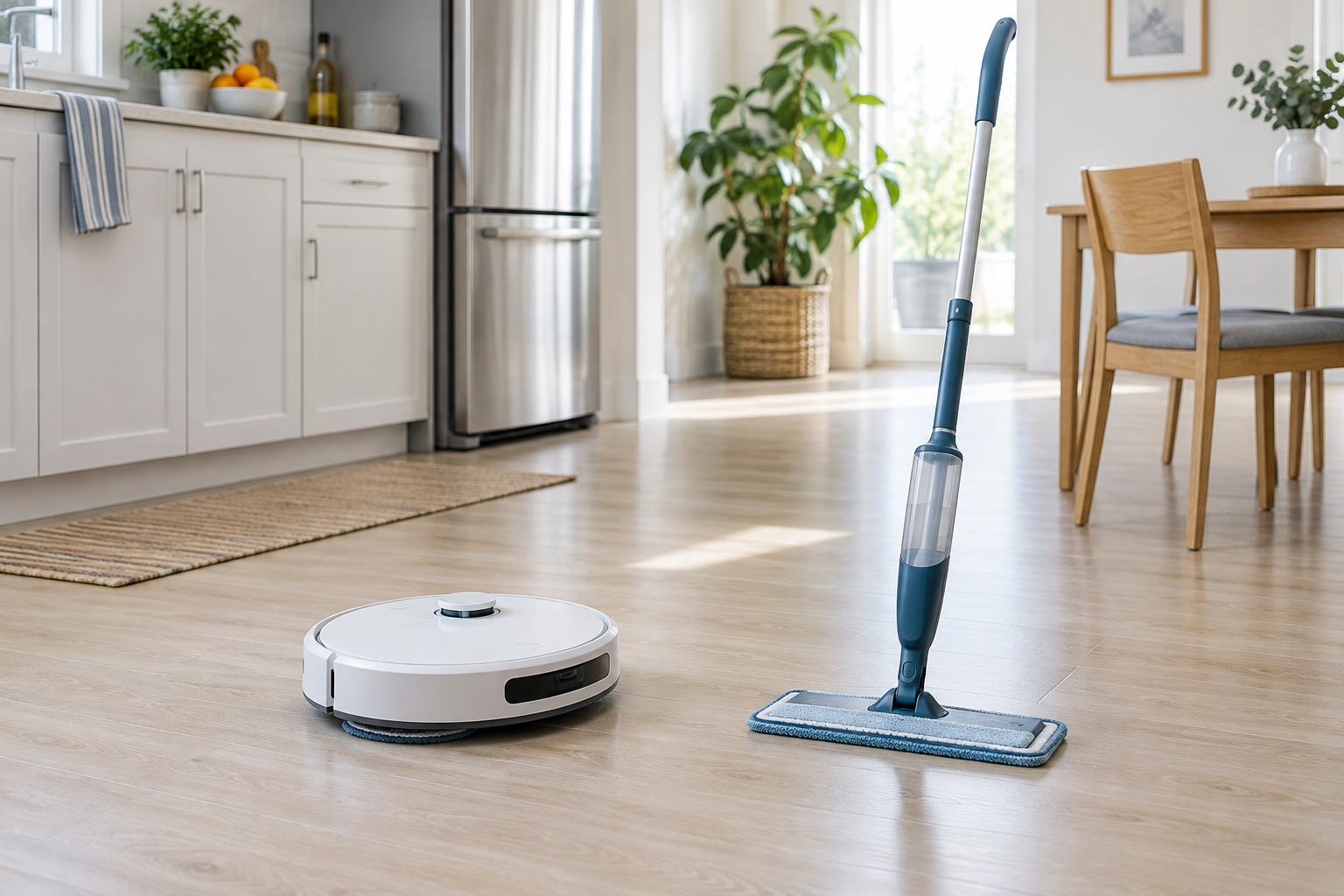
Quick decision before shopping
First measure the available space, identify the setup or surface constraints, and decide who will maintain the item. Skip the category if it blocks access, conflicts with the manufacturer's instructions or lease, or adds more upkeep than the problem justifies.
Compare the full routine, not just the mop head: These affiliate category routes are starting points for current formats, not tested winners or promises that either method suits every hard floor.
- Browse category: Compare robot mops for hard floorsCheck approved floor types and solutions, obstacle and threshold guidance, mapping or app requirements, tank and pad care, dock clearance, and replacement supplies.
- Browse category: Compare refillable spray mopsCheck floor compatibility, spray control, bottle rules, washable-pad fit, head dimensions, handle length, and stored footprint.
Follow the flooring maker's care instructions and the mop maker's liquid, cleaner, charging, and maintenance rules. A product listing's broad “hard floor” label does not override either set of instructions.
Quick comparison
| Decision point | Robot mop | Spray mop |
|---|---|---|
| Cleaning route | Moves through a prepared area using its navigation system | Goes exactly where the user directs it |
| Up-front room work | Clear cords, small objects, unsuitable rugs, and problem zones | Move only what blocks the area being cleaned |
| Moisture control | Depends on settings, pad condition, route, and model instructions | User controls each spray and can stop immediately |
| Edges and tight spots | Limited by body shape, navigation, and clearance | Low-profile heads can reach selected edges and narrow gaps |
| After-cleaning work | Empty or rinse tanks, wash pads, clean sensors and wheels, tend the dock | Empty the bottle if directed, wash the pad, wipe the head, and air-dry parts |
| Best fit | Recurring light maintenance across compatible, uncluttered floor area | Fast spot work and controlled cleaning in mixed or crowded layouts |
Start with the floor and the mess
Confirm that the flooring manufacturer permits damp mopping, then use only the liquid and cleaner allowed by both the floor and the appliance or mop instructions. Wood, laminate, cork, stone, resilient flooring, tile, grout, and specialty finishes can have different moisture and cleaner limits. Do not assume a floor is sealed or compatible from appearance alone.
Both formats are for routine surface cleaning, not pooled liquid, sharp debris, heavy soil, sticky material that needs prompt hand cleanup, or a damaged floor. Pick up dry crumbs, grit, pet items, and other loose debris first unless the machine specifically combines dry pickup and wet cleaning according to its instructions. Stop adding moisture if boards are swollen, seams are lifting, tiles are loose, or the floor feels soft.
Choose a robot mop for repeatable open-floor maintenance
A robot mop can reduce the hands-on pushing time, but it shifts work into preparation, setup, monitoring, and machine care. It is most useful when a meaningful amount of compatible hard flooring is open enough for the device to navigate and when the household will actually clear the route and clean the pad after a run.
A robot mop may fit when:
- The floor and intended liquid are explicitly approved.
- Chair legs, thresholds, rug edges, cords, pet bowls, and low furniture match the device's documented limits.
- You can supervise initial routes and create reliable no-go areas where needed.
- There is a permitted dock location with the required clearance, power access, and floor protection.
- Tank, pad, brush, wheel, sensor, filter, and dock maintenance fit the household routine.
Skip or delay the robot when:
- The cleanable area is small, crowded, split by thresholds, or full of items that must be moved every time.
- Mixed floors or rugs make wet-area control uncertain.
- The required app, account, wireless connection, or mapping data does not suit your preferences.
- You need precise pressure or immediate attention on a small spill or stuck-on spot.
- Replacement pads and other required supplies are unclear or hard to store.
Choose a spray mop for direct control
A spray mop keeps navigation and liquid placement in your hands. It can be faster for one kitchen path, a dining-area spill after dry pickup, or a crowded room where guiding a robot would take longer than cleaning. The tradeoff is that you provide all of the movement and must manage reach, grip, and pressure.
A spray mop may fit when:
- You clean smaller zones or need to target visible marks.
- You want to decide exactly when and where to spray.
- A slim swivel head reaches the edges, toe kicks, and furniture gaps that matter.
- A washable pad and permitted refill routine fit your laundry and storage habits.
Skip or change the spray mop when:
- The handle, trigger, bending, or repeated pushing is uncomfortable or difficult.
- The spray pattern is hard to control or leaves too much liquid for the floor.
- The bottle system requires an unsuitable cleaner or creates unwanted recurring supplies.
- The cleaning area is large enough that manual passes routinely get postponed.
Measure the route and storage before buying
For a robot, measure the narrowest passages and thresholds on the intended route, the clearance beneath furniture, and the full dock area—not just the round body. Note rug borders, floor transitions, stairs, cords, fringe, mirrored surfaces, dark areas, and other conditions the maker says affect navigation. Confirm whether the device can save the needed zones without an app or account if that matters to you.
For a spray mop, measure the head against cabinet toe kicks, chair spacing, and the lowest furniture you intend to reach. Check the handle's working and storage height, bottle removal clearance, and whether the wet pad can be carried to a sink or laundry area without touching vulnerable surfaces.
Plan dry storage. A robot may need a permanent powered dock and room to approach it. A spray mop needs a stable place where the handle cannot fall, the bottle is stored as directed, and washed pads can dry fully.
Compare maintenance and recurring costs
Robot-mop upkeep may include filling and emptying tanks, removing hair and grit from wheels or brushes, cleaning sensors, washing or replacing pads, tending a wash tray or dock, and installing software updates. Models with more dock automation can still require dirty-water handling and periodic cleaning. Read the exact manual rather than assuming “self-cleaning” means maintenance-free.
A spray mop is mechanically simpler, but bottles, seals, triggers, hook-and-loop surfaces, and pads still wear or collect residue. Confirm whether the bottle is refillable, what cleaner is permitted, how pads should be laundered, and whether replacements use a stable attachment size. Never mix cleaners or put a product into a tank or bottle unless the instructions allow it.
Privacy, pets, children, and supervision
If a robot uses cameras, microphones, cloud mapping, voice assistants, or an app account, review the current privacy controls and decide whether they fit the home before purchase. Secure the account using the options the maker provides and remove stored data according to its instructions before resale or disposal.
Follow the maker's guidance around stairs, pets, children, charging, and unattended operation. Pick up pet waste and liquids before any run; a moving device can spread a mess. Keep cleaning liquid and removed dirty parts out of reach, and do not let a robot or manual mop create a wet route where someone may slip.
Who should skip both
Skip both until you know the floor's care requirements. A compatible microfiber flat mop, cloth, or existing tool may be enough if cleaning is occasional. If the real problem is recurring water, buckling, loose material, staining from an unknown source, or a floor that remains damp, address the cause rather than buying another mop. Renters should document damage and contact property management; homeowners should use an appropriate qualified professional when the source or repair is unclear.
Bottom line
A robot mop earns its larger setup and maintenance burden when it can cover a substantial, compatible, routinely prepared floor area often enough to save hands-on effort. A spray mop is the stronger default for precise moisture control, small zones, mixed layouts, and quick response. Choose by the complete route—floor approval, debris pickup, obstacles, liquid control, pad care, storage, privacy, and supervision—not by automation alone.
Next step: Put this decision in context with the home-product buying framework guide.