How to Choose Tool Bags for Apartment Maintenance Kits
For most renters, the best tool bag is a compact container that fits the few hand tools they actually use, closes for a move, and stores without marking a floor or swallowing a closet shelf. Start with the longest tool and the storage spot—not a giant tool bundle.
As an Amazon Associate, The Good Home Doc may earn from qualifying purchases.
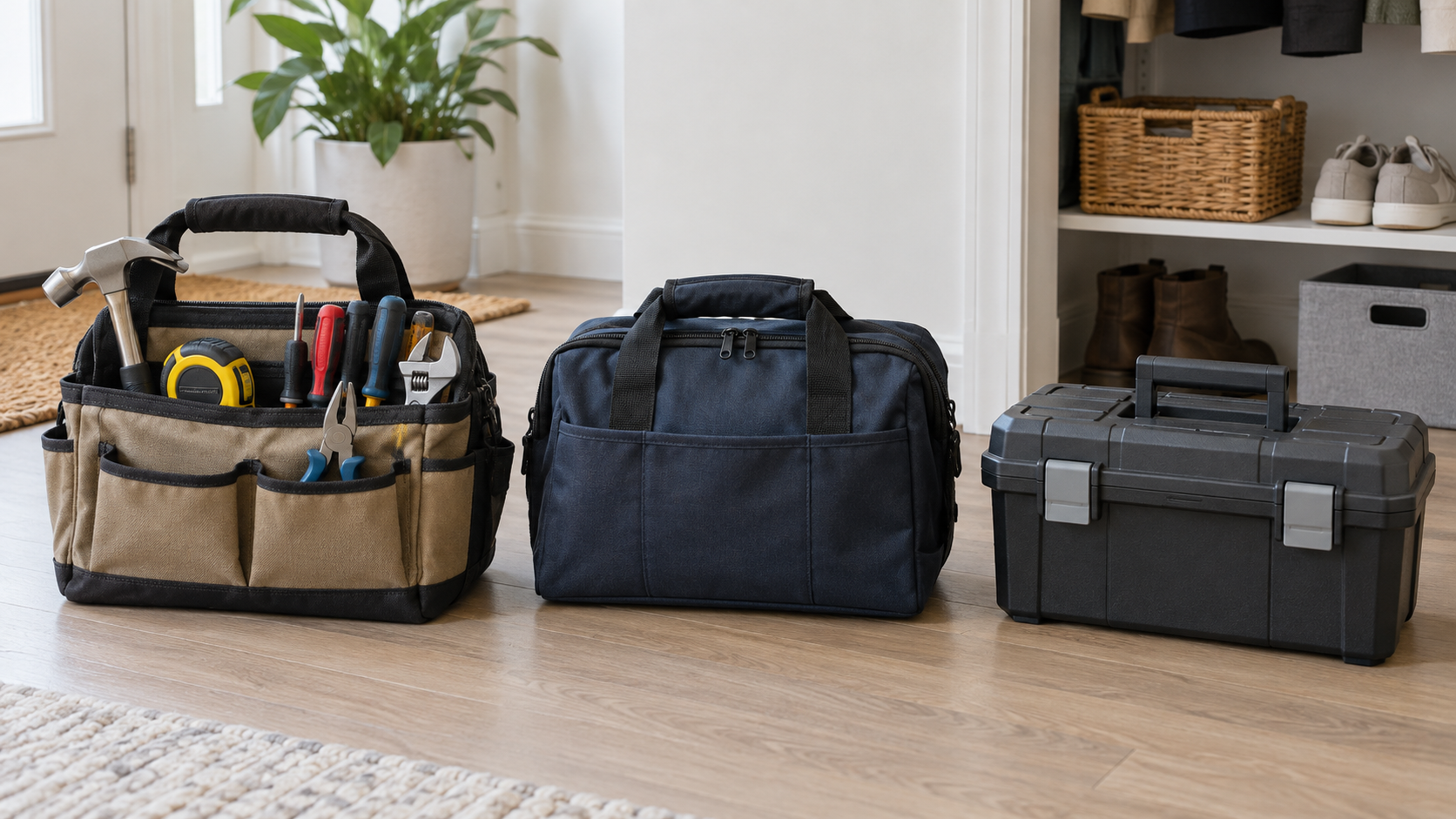
Quick decision before shopping
First measure the available space, identify the setup or surface constraints, and decide who will maintain the item. Skip the category if it blocks access, conflicts with the manufacturer's instructions or lease, or adds more upkeep than the problem justifies.
Choose the container after measuring your tools and storage space: These category routes are comparison starting points, not tested winners.
- Browse category: Compare compact open tool totesPrioritize visible pockets, a stable base, handle clearance, and a footprint that fits the shelf.
- Browse category: Compare small zippered tool bagsCheck usable interior length, opening shape, pocket dimensions, closure, and carrying options.
- Browse category: Compare small portable toolboxesConsider rigid storage when crush protection or easier wipe-down matters more than flexible packing.
Confirm current dimensions, materials, closure, base construction, maker load guidance, care, and included parts on the exact listing. A storage bag does not make electrical, plumbing, gas, structural, fire, or other safety-sensitive work appropriate for DIY.
Quick comparison
| Format | Useful when | Main tradeoff | Skip when |
|---|---|---|---|
| Open soft tote | Often-used hand tools need quick visibility | Fast access, little containment | Children, pets, dust, or moving make an open top impractical |
| Zippered soft bag | A kit moves between rooms or homes | Good containment; small items can hide | The opening is too narrow for the longest tool |
| Small rigid toolbox | Crush protection or wipeable walls matter | Fixed walls use more space | The box is heavy, noisy, or too tall for its shelf |
Measure the kit before the bag
If this is your first measuring tool, compare tape measures for renters and first-home toolkits by practical span, readable markings, control, and storage rather than defaulting to a bulky trade model.
Lay out only the hand tools with a permitted, realistic use: perhaps a tape measure, screwdrivers, pliers, small adjustable wrench, flashlight, painter's tape, and compact hammer. Measure the longest tool, widest rigid item, and height of anything that must stand in a pocket. Usable interior dimensions matter more than a generous exterior number.
Measure the shelf or closet opening, including width, depth, height, door clearance, and the hand space needed to lift the bag out. If it slides beneath furniture, measure the lowest obstruction along the full route. Leave room for the handles to fold or stand as designed.
Open tote or zippered bag?
An open tote makes tools visible and keeps upright pockets available. It suits a small kit moving between a closet and ordinary, permitted tasks. The weakness is containment: exposed tools can collect dust, catch clothing, tip in transit, or remain accessible to children and pets.
A zippered bag is the stronger default when tools travel during a move or share a closet with linens. Check whether the opening exposes the full interior; a wide bag with a short zipper can still frustrate. Favor pockets sized for actual tools over a high pocket count.
When a rigid toolbox is better
Choose a small rigid box when the container needs crush protection, a wipeable shell, or a barrier against tool edges pressing through fabric. Check latch clearance, hinge travel, tray depth, handle position, and whether the base sits flat. Skip it when it bangs against walls, wastes shelf space around an irregular kit, or becomes too heavy when full.
Surface compatibility and removal risk
Inspect the base for grit-catching texture, exposed hardware, dye-transfer warnings, and moisture limits. Keep it clean and dry before setting it on finished wood, resilient flooring, carpet, or a painted shelf. A washable shelf mat may help, but verify its material against the surface first. Never assume a “rubberized” base is mark-free.
Tool storage should require no building alteration. Do not mount a rack or bracket without written permission where required, and do not place the kit where it blocks a panel, shutoff, vent, appliance, or emergency route.
Portability, noise, and moving day
Check handle clearance with your hand around it and follow the maker's load guidance. A shoulder strap frees one hand, but a swinging bag can strike doors or walls. Fitted pockets can reduce metal-on-metal rattling without overpacking the bag.
Before moving, close the bag and carry it through the actual route. Remove loose or pointed items that could strain a zipper or pierce fabric. A compact kit is easier to inventory at move-out and store in the next home.
Setup and maintenance
Give each often-used tool a place, and keep loose fasteners in a separate closed organizer. For a permitted task where compatible steel hardware must stay visible beside the work, use the magnetic parts tray guide to compare tray geometry, base protection, magnet warnings, and storage. Cover cutting edges according to their instructions and store the kit away from children and pets. Empty dust, clean only as directed, and let the container dry before returning tools. Check handles, seams, zipper tracks, latches, and the base; retire a damaged container that no longer retains its contents.
Rental and safety limits
A portable kit can support measuring furniture, assembling permitted items, and other low-risk household tasks. It does not mean a repair or alteration is allowed. Ask the landlord or property manager before changing walls, doors, fixtures, finishes, appliances, or building systems.
Do not open electrical panels, modify wiring or plumbing, work on gas equipment, disturb suspected hazardous material, or attempt structural, fire-safety, mold, pest, or code-related work. Report building problems and use a qualified professional when work is concealed, safety-sensitive, unfamiliar, or outside the lease.
Who should skip a tool bag?
Skip an open tote if contents cannot be kept from children or pets. Skip soft bags when tools have exposed sharp edges, require crush protection, or will be stored where the fabric cannot stay dry. Skip the category if two or three small tools already fit safely in a closed drawer organizer. Choose a larger approved system for long saws, heavy power tools, liquids, or batteries with specific storage instructions.
Buying checklist
- Remove duplicate and jobless tools.
- Measure the longest, widest, and tallest item.
- Measure the shelf, opening, and carry route.
- Choose open access, zippered containment, or rigid protection.
- Verify pocket sizes, closure travel, handles, and load guidance.
- Check the base against the storage surface.
- Plan child- and pet-inaccessible storage.
- Confirm cleaning and inspection steps.
- Check the lease before any alteration or repair.
Bottom line
For a modest renter toolkit, a small zippered bag is the best default because it contains tools during storage and moving without the fixed bulk of a rigid box. Choose an open tote when quick visibility matters and access is controlled; choose a rigid toolbox when protection and wipeability matter more. The right size is the smallest container that fits the measured kit without strain.