Laundry Drying Rack vs Retractable Clothesline for Small Homes
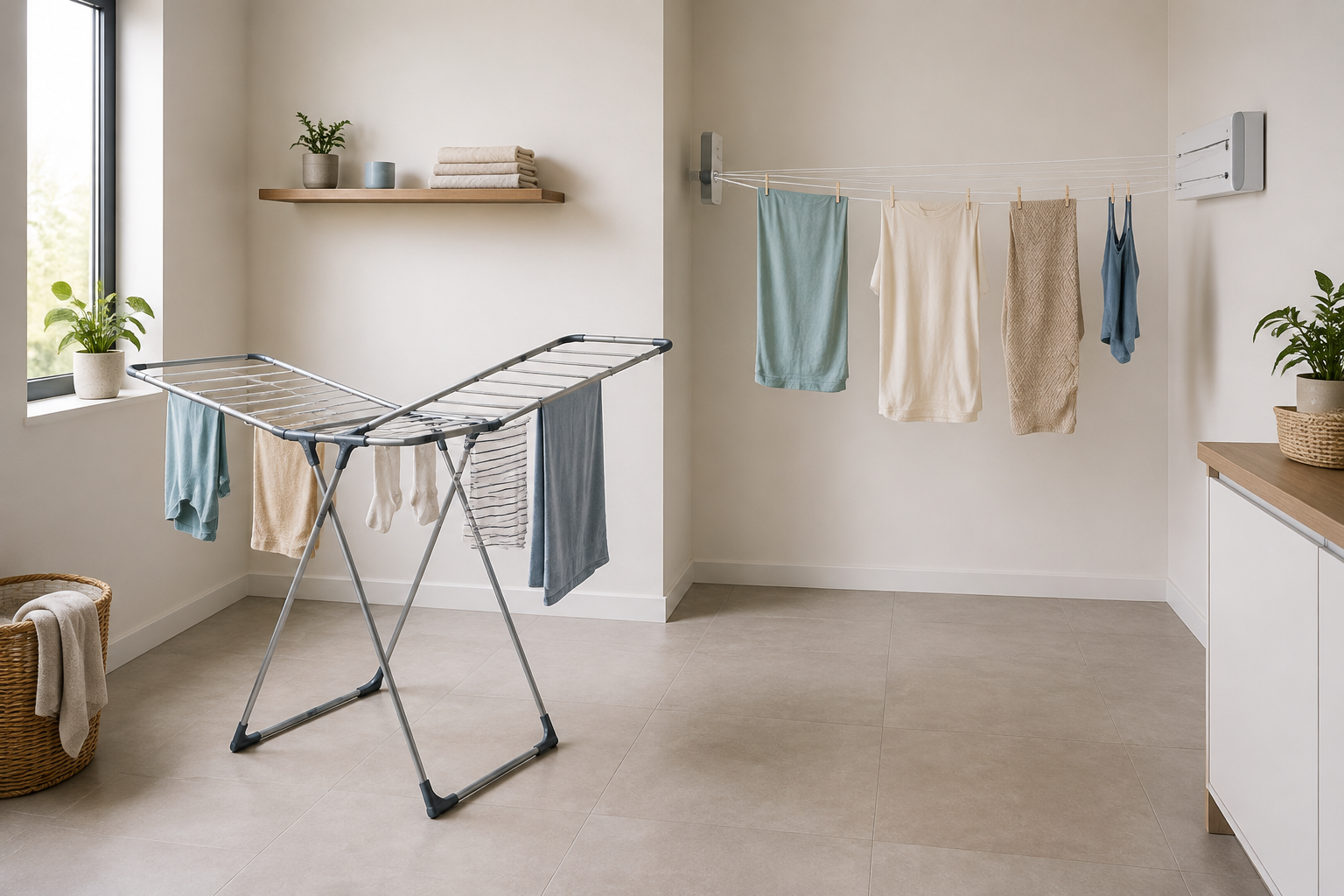
A freestanding drying rack is the easier default when you cannot alter walls or need to move wet laundry between rooms. A retractable clothesline can return the floor to daily use, but only when you have two appropriate mounting points, permission to install it, and a clear span that can stay blocked while clothes dry. Choose by the space the laundry occupies when wet—not by how compact the product looks when stored.
As an Amazon Associate, The Good Home Doc may earn from qualifying purchases.
Quick decision before shopping
First measure the available space, identify the setup or surface constraints, and decide who will maintain the item. Skip the category if it blocks access, conflicts with the manufacturer's instructions or lease, or adds more upkeep than the problem justifies.
Compare only after measuring the open setup: These category links are shopping starting points, not tested winners. Confirm open and folded dimensions, documented load limits, mounting requirements, included hardware, garment-care instructions, and return terms.
- Browse category: Compare freestanding folding drying racks on AmazonStart here for tool-free setup, movable placement, and mixed garment loads.
- Browse category: Compare indoor retractable clotheslines on AmazonStart here only after checking the mounting surfaces, clear span, installation permission, and documented capacity.
Do not exceed a maker's stated load or improvise mounting hardware. Wet fabric is heavier than dry fabric, and a line under tension needs the wall structure and fasteners specified by its instructions.
This comparison is for choosing between a movable floor setup and a fixed tensioned line. If drilling is off the table and a door-mounted option is on your shortlist, compare an over-the-door rack with a freestanding rack for apartments. For a broader look at rack shapes, use the small-home laundry drying rack guide. For a repeatable chore setup, continue to the low-effort home maintenance tools guide.
Quick comparison
| Decision | Freestanding drying rack | Retractable clothesline |
|---|---|---|
| Best fit | Renters, changing drying spots, and mixed garments | Homes with an approved permanent span and scarce floor space |
| Installation | Usually opens without tools | Typically needs secure mounting at both ends |
| Space while drying | Uses a measured floor footprint | Uses wall-to-wall airspace and may block circulation |
| Load control | Garments distribute across bars and wings | Load, tension, span, and sag all affect use |
| Storage | Folds flat but still needs a tall or wide slot | Line retracts into a wall-mounted housing |
| Flexibility | Can move toward airflow or a drip-safe floor | Drying position is fixed after installation |
Choose a freestanding rack for flexible, tool-free setup
A folding rack is usually the lower-commitment choice. It can stand on tile for drip-prone items, move closer to permitted ventilation, and fold away when dry. Winged racks suit longer garments; tower racks trade width for height; and low mesh racks support knits that should dry flat.
The cost is floor space. Measure the rack fully open with garments hanging beyond its bars, then preserve a comfortable walking route, door swing, cabinet access, and appliance clearance. A rack that technically fits an empty room may be awkward once towels and sleeves extend from it.
Choose a freestanding rack if:
- You rent or do not want to make holes in a wall.
- The best drying spot changes with the load or season.
- You dry a mix of flat, draped, clipped, and hanging garments.
- You have a safe floor area that can remain occupied for several hours.
- You can store the folded dimensions without trapping the rack while damp.
Skip a freestanding rack if:
- Every possible location narrows a required walking route.
- The feet rock, slide, or could mark the intended floor.
- You need to keep pets or children away from an easy-to-tip setup.
- Your normal load would crowd every bar and reduce airflow.
- You cannot leave the rack open long enough for laundry to dry fully.
Choose a retractable line when the wall span is truly usable
A retractable clothesline stores its cord inside a compact housing, leaving the floor clear after the laundry is removed. It can work well across a laundry alcove, bathroom, or other suitable space where the line can remain extended without crossing a doorway or busy route.
The important question is not whether the housing is small. It is whether both mounting points, the extended line, and the wet load fit the product instructions and the home. Long spans can sag, garments can slide toward the middle, and multiple lines still need enough spacing to keep fabric from bunching.
Choose a retractable clothesline if:
- You own the home or have clear permission for the specified installation.
- Both endpoints can accept the maker's required fasteners and load.
- The extended line stays clear of doors, heaters, appliances, and circulation paths.
- Your typical garments fit the documented line length and capacity.
- You prefer a fixed drying location and will retract the line after use.
Skip a retractable clothesline if:
- You are unsure what is behind either wall or which fastener is required.
- Your lease or property manager does not permit the installation.
- The only span crosses a doorway, exit path, cooking area, or stair.
- You mainly dry heavy, dripping, or flat-dry-only items.
- The installation instructions exceed your tools or comfort level.
Measure the whole drying zone
For a rack, record open width, depth, and height plus garment overhang. Check the floor for slope and the route used to carry a loaded basket. For a line, measure the exact anchor-to-anchor span, the lowest likely sag, clearance below hanging garments, and access to each mounting point. Do not use trim, doors, furniture, plumbing, or appliance housings as substitute anchors.
Capacity numbers are not interchangeable. A maker may state a total load, per-line load, or maximum span under particular mounting conditions. Follow the exact manual for the product and wall construction. If secure mounting is uncertain, ask the property manager or use a qualified installer rather than guessing at anchors.
Plan for airflow and indoor moisture
Neither format makes laundry dry by itself. Leave space between garments, follow fabric-care labels, and use normal room ventilation where permitted. Avoid packing wet fabric against walls or furniture. If windows repeatedly collect condensation, the room smells musty, or surfaces remain damp, reduce the indoor drying load and address the moisture source instead of adding more line space.
Do not block required vents or place wet laundry against a heater to speed drying. If persistent dampness, visible growth, or a leak is present, stop treating it as a product-choice problem and contact the property manager or an appropriate qualified professional.
Maintenance and routine
Wipe a rack's bars, feet, and hinges as directed, inspect locking joints, and let the frame dry before enclosed storage. On a retractable line, keep the cord clean, retract it slowly, and inspect the housing, receiver, fasteners, and line for looseness or damage. Stop using either system if the frame bends, the line frays, or mounting points move.
Air-drying works best when the household can repeat the setup without improvisation. Leave room to load and unload each garment, keep a basket nearby, and choose a storage location that does not turn the next laundry day into a search for parts.
Bottom line
Choose a freestanding drying rack when flexibility, renter compatibility, mixed garment support, and tool-free setup matter most. Choose a retractable clothesline when floor space is scarce and you have a verified, permitted mounting span that can stay clear while laundry dries. Measure both options in their fully deployed state, respect documented loads, and let the room's airflow and safe circulation decide the final fit.
Next step: Put this decision in context with the home-product buying framework guide.