How to Choose Carpet Rakes for Pet Hair on Area Rugs
The best carpet rake for pet hair is the least aggressive tool that gathers fur from your rug without snagging loops, pulling fibers, or shifting the rug. Start with the rug maker's care guidance and construction, then choose the contact material, tooth depth, width, and handle that fit a small test area.
As an Amazon Associate, The Good Home Doc may earn from qualifying purchases.
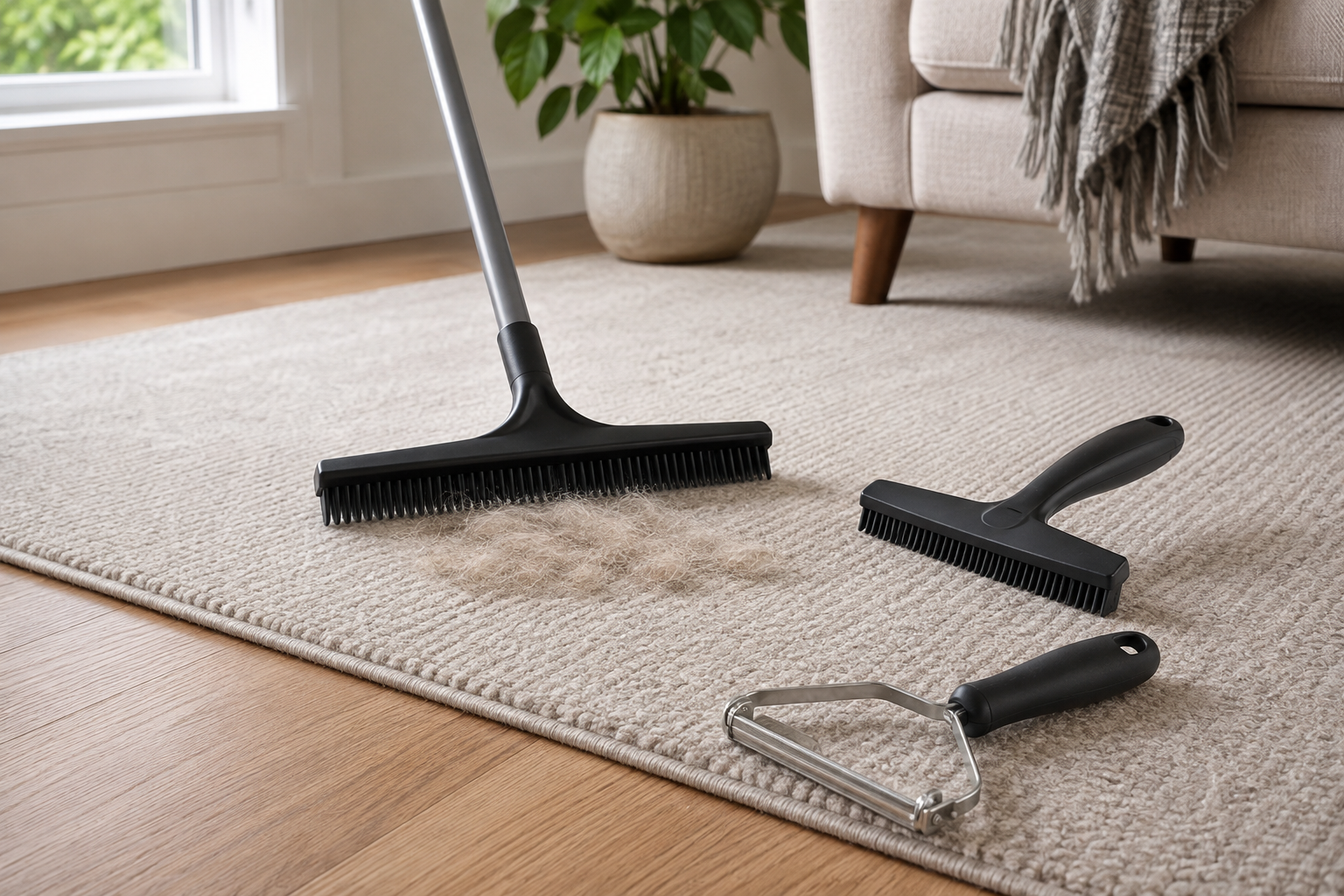
Quick decision before shopping
First measure the available space, identify the setup or surface constraints, and decide who will maintain the item. Skip the category if it blocks access, conflicts with the manufacturer's instructions or lease, or adds more upkeep than the problem justifies.
Match the tool to the rug first: These affiliate category links are shopping starting points, not tested product rankings.
- Browse category: Rubber carpet rakes for pet hairFor compatible low- or medium-pile rugs and broad floor-level passes.
- Browse category: Handheld rubber rug rakesFor small rugs, edges, and more deliberate pressure control.
- Browse category: Manual carpet lint scrapersUse only where both tool and rug guidance permit the edge material.
Confirm the head material, tooth or edge depth, working width, handle length, cleaning method, and surface exclusions. Test gently in an inconspicuous spot.
A carpet rake is a manual pre-cleaning or between-vacuuming tool. It can gather visible hair, but it does not remove the full mix of dust and debris or replace the rug maker's approved cleaning routine. Tool names are inconsistent, so judge the actual contact surface rather than the word “rake.”
Check the Rug Before the Tool
Find the rug label or care instructions and identify the fiber and construction if documented. A sturdy cut-pile synthetic rug may tolerate a soft rubber head that would catch a loop-pile, shag, hand-knotted, fringed, antique, or loosely woven rug. Do not assume a tool is safe merely because a seller calls it suitable for carpet.
When the construction is unclear, the rug is valuable, fibers already pull loose, or the maker excludes brushing or scraping, skip the rake. Use the approved vacuum setting or ask a qualified rug cleaner.
Quick Picks by Use Case
- Broad passes on a compatible low- or medium-pile rug: a long-handled soft rubber rake with short, flexible contact points.
- Small rugs, edges, and concentrated patches: a handheld rubber head that makes pressure easier to control.
- Dense hair on a clearly compatible durable surface: a firmer edge tool used lightly after an inconspicuous test.
- Looped, shag, delicate, fringed, or uncertain construction: skip rake teeth and scraper edges unless the rug maker explicitly permits them.
- Several rooms of carpet: prioritize a suitable vacuum rather than a small manual tool.
Compare the Main Formats
Long-Handled Rubber Rakes
A standing handle gives reach and covers a larger rug without repeated kneeling. A wide head speeds broad passes, but it is less controlled near fringe, furniture legs, and rug edges. Look for flexible rubber contact points, a secure joint, and a handle length that lets you work without excessive force.
Handheld Rubber Rakes
A compact rubber head is slower but easier to test and steer. It fits spot cleanup, runner edges, and hair gathered near furniture. Choose a grip you can hold lightly; an awkward handle can encourage harder scrubbing than the rug needs.
Metal-Edge and Firm Scraper Tools
Firm edges may collect embedded hair quickly on some robust surfaces, but they leave less margin for error. Exposed metal, sharp teeth, and rigid blades can catch loops or abrade fibers. Treat these as surface-specific tools, not universal rug cleaners.
Must-Have Features
- Clear surface guidance: the maker should describe compatible rug or carpet types and exclusions.
- Appropriate contact depth: teeth or edges should not dive beneath the pile and catch the construction.
- Pressure control: the head and handle should allow short, light passes.
- A secure working head: avoid loose joints, exposed fasteners, cracked rubber, or sharp unfinished edges.
- Simple hair release: collected fur should come off without a second difficult cleaning job.
Nice-to-Have Features
- An adjustable or removable handle for standing work and compact storage.
- A moderate head width that balances coverage with edge control.
- A hanging loop or slim stored profile.
- A washable head with clear drying instructions.
A Careful First-Pass Routine
- Read the rug and tool care instructions and inspect for loose fibers, damaged backing, or unstable fringe.
- Vacuum loose grit first if that matches the rug's approved care.
- Test one short, hidden section with very light pressure and a single direction.
- Check the tool and rug for pulled loops, fuzzing, color transfer, or fiber shedding.
- If unchanged, work in short sections and gather hair rather than repeatedly scrubbing one spot.
- Remove hair from the tool and clean it as directed before storage.
Who Should Skip a Carpet Rake
Skip this category if the approved vacuum already handles the visible hair, you need whole-room debris removal, or you are unlikely to clean the rake after each session. It is also a poor fit for rugs that slide under light pressure unless they can be stabilized without creating a trip or floor-finish problem.
Do not experiment on looped, shag, silk, viscose, antique, hand-knotted, damaged, fringed, or otherwise delicate rugs without explicit care guidance. Persistent odor, staining, pest residue, unknown contamination, or damage needs the appropriate cleaning or professional path rather than harder raking.
Bottom Line
For a documented, durable low- or medium-pile area rug, start with a soft rubber rake and the lightest pressure that gathers hair. Choose long-handled for broad coverage and handheld for control. Avoid firm teeth and scraper edges unless both tool and rug guidance support them, and use a suitable vacuum for the larger cleaning job.
Next step: Put this decision in context with the home comfort and setup guide.