How to Choose Microwave Splatter Covers for Small Kitchens
Once you know a splatter cover fits your reheating routine, the useful comparison is not a made-up ranking. It is whether a rigid, collapsible, or handled format clears your usual dishes and microwave interior, vents as directed, washes without hidden residue, and fits the storage space you actually have.
As an Amazon Associate, The Good Home Doc may earn from qualifying purchases.
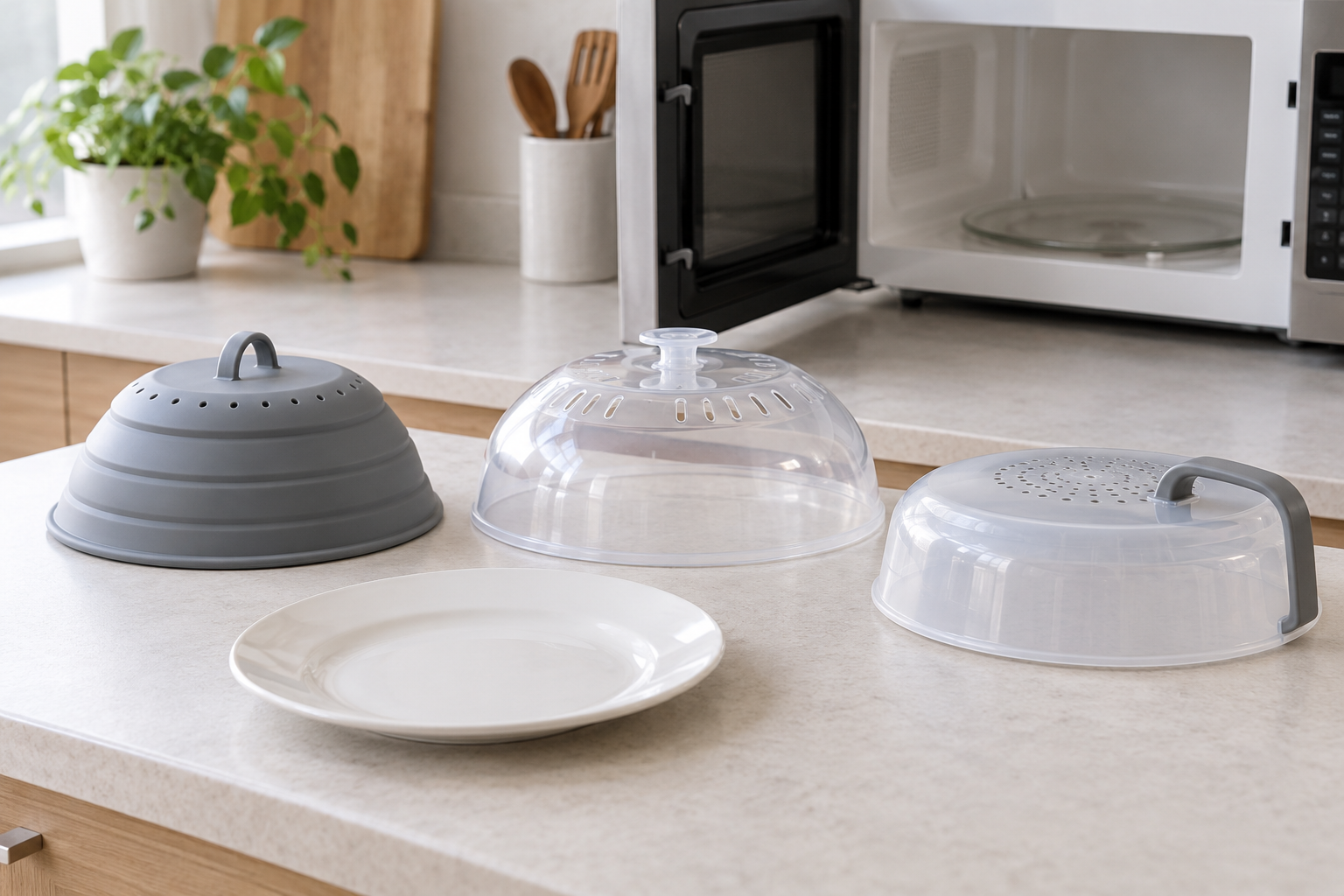
Quick decision before shopping
First measure the available space, identify the setup or surface constraints, and decide who will maintain the item. Skip the category if it blocks access, conflicts with the manufacturer's instructions or lease, or adds more upkeep than the problem justifies.
Measure the complete working shape before shopping: These affiliate category links are starting points, not tested winners.
- Browse category: Compare collapsible vented coversCheck open diameter and height, collapse mechanism, vent position, material documentation, cleaning access, and drying instructions.
- Browse category: Compare rigid clear coversCheck full exterior dimensions, usable interior space, grip guidance, visibility, dishwasher directions, and fixed storage volume.
- Browse category: Compare handled low-profile coversCheck whether the handle changes total height, how it is meant to be lifted, vent placement, plate clearance, and cleaning around joints.
Confirm the exact product's current microwave-use, material, vent, handling, cleaning, drying, and excluded-mode instructions. A “universal” label does not replace measurements or appliance guidance.
Quick comparison by format
| Format | Best fit | Main check | Reason to skip |
|---|---|---|---|
| Collapsible dome | Tight cabinets or drawers where reduced stored height matters | Full open dimensions, locked working shape, folds, and drying access | The seams trap residue or the cover is easy to leave partly collapsed |
| Rigid clear dome | Frequent use with enough fixed storage space | Dish clearance, complete exterior size, vents, grip, and wash method | The full-size dome has nowhere clean and dry to live |
| Low handled cover | Shallow dishes and users who prefer a defined grip | Total height with handle, permitted lifting method, and steam guidance | Tall bowls or plated food crowd the underside |
Measure the dish, food, and microwave as one setup
Measure the widest plate or bowl you routinely reheat and its height with a normal portion. Then compare those dimensions with the cover's usable interior—not only its outside diameter. Food should not be crowded against the underside unless the product and food instructions specifically permit contact.
Next measure the microwave's usable width and height at the turntable. Include the cover's handle, raised vents, hinges, or rim. The assembled cover and dish need to rotate without touching the door, walls, rack, sensors, or fittings. If the listing omits either exterior dimensions or usable interior clearance, keep looking.
Collapsible covers trade storage height for more seams
A collapsible design can make sense when drawer or cabinet height is the binding constraint. Compare its fully open and collapsed dimensions, and verify how the maker indicates that it is completely deployed. A smaller stored shape is useful only if setup is obvious and the cover stays in its intended working position.
Inspect every fold, groove, and transition around the vents. These areas must be reachable for washing and able to dry fully before collapse or storage. Skip the format when the folds remain greasy, turn inside out unpredictably, or require more care than wiping the microwave would.
Rigid covers simplify inspection but keep their full volume
A one-piece rigid dome is usually easier to inspect because there are fewer moving seams. Transparency can help you see the food without lifting the cover, but it does not establish material quality, microwave compatibility, or resistance to staining. Use the maker's documentation for those questions.
The tradeoff is permanent bulk. Map a storage location before buying and keep the cover away from heat and any ventilation space required around the appliance. Do not assume that the microwave cavity is a storage cabinet; follow the appliance instructions and remove stored items before operation.
Handles help only when the lifting instructions are clear
A top or side grip may make placement more controlled, but it can also add height or create joints that collect residue. Check whether the handle folds, detaches, or stays fixed, then include that configuration in the clearance measurement. Look for current instructions explaining where to grip and how to lift.
No handle guarantees a cool surface or protection from hot vapor. Follow standing-time and removal guidance, keep hands and face out of the vapor path, and use any protection specified by the maker. Skip designs whose handle placement would require an awkward reach into the appliance.
Venting must match the documented use
Visible holes do not prove that a cover is suitable for every dish, food, power level, or appliance mode. Confirm the required vent position and any time, power, food, or temperature limits. Never block the vents or use a cover with convection, grill, browning, combination, or other modes unless both the cover and microwave instructions explicitly permit it.
More vent holes are not automatically better, and an adjustable vent is not automatically safer. Favor instructions you can follow consistently over an elaborate control that is easy to mis-set.
Cleaning and drying are part of the product decision
Check whether the underside, rim, vents, handle joints, and collapsible seams are reachable. “Dishwasher safe” still requires the correct rack, cycle, and drying method. If the product is hand-wash only, confirm that an ordinary cloth or brush can clean every food-contact surface without damaging it.
Choose a format that can dry fully in your kitchen. A flat dish rack slot may suit a low cover; a rigid dome may need open shelf space; a collapsible version should not be closed while moisture remains in its folds. Replace a warped, cracked, damaged, or permanently soiled cover according to its instructions.
Must-haves and nice-to-haves
Must-have features
- Current microwave-use and material documentation.
- Complete exterior and usable interior dimensions.
- A vent design with clear operating instructions.
- A documented lifting method and realistic grip location.
- Cleaning access to every vent, seam, rim, and joint.
- A dry storage plan that fits the complete stored shape.
Nice-to-have features
- A clear body when visibility matters.
- A shallow stored profile that does not complicate cleaning.
- A simple color or surface that makes residue easy to see.
- Dishwasher directions that match your available rack space and cycles.
Who should skip each format?
Skip collapsible covers if you are unlikely to open them fully, inspect the folds, or let them dry before storage. Skip rigid domes when there is no dedicated full-size storage spot. Skip low handled covers when your normal bowls or plated portions need more vertical room.
Skip the entire category if your usual dish cannot rotate freely beneath a documented compatible cover, you mostly use excluded appliance modes, an approved cover you already own works, or occasional residue is easier to wipe promptly. Stop using a damaged or malfunctioning microwave and follow its service guidance rather than adding an accessory.
Buying checklist
- Measure the widest and tallest everyday dish with a normal portion.
- Measure usable microwave clearance and the turntable path.
- Verify complete exterior and usable interior cover dimensions.
- Read microwave-use, vent, material, mode, time, power, and food restrictions.
- Check the documented grip and removal method.
- Inspect every surface for realistic washing and drying access.
- Measure the stored shape and assign a clean, dry location.
Bottom line
A collapsible cover is the practical starting point when stored height is the real constraint and its folds are easy to clean and dry. A rigid clear dome suits frequent use when cabinet space is available. A low handled cover can work for shallow dishes when its total height and removal method fit the appliance. Choose by measured clearance, documented venting, maintainable construction, and daily storage—not by a universal-fit claim or an unsupported ranking.
Next step: Put this decision in context with the home-product buying framework guide.