How to Choose Portable Carpet Cleaners for Small Pet Messes
The best portable carpet cleaner is the one approved for the surface, small enough to reach the mess promptly, and simple enough to rinse and dry after every use. Compare formats by tank handling, hose reach, tool width, stored footprint, and the complete cleanup routine—not by promises that every stain or odor will disappear.
As an Amazon Associate, The Good Home Doc may earn from qualifying purchases.
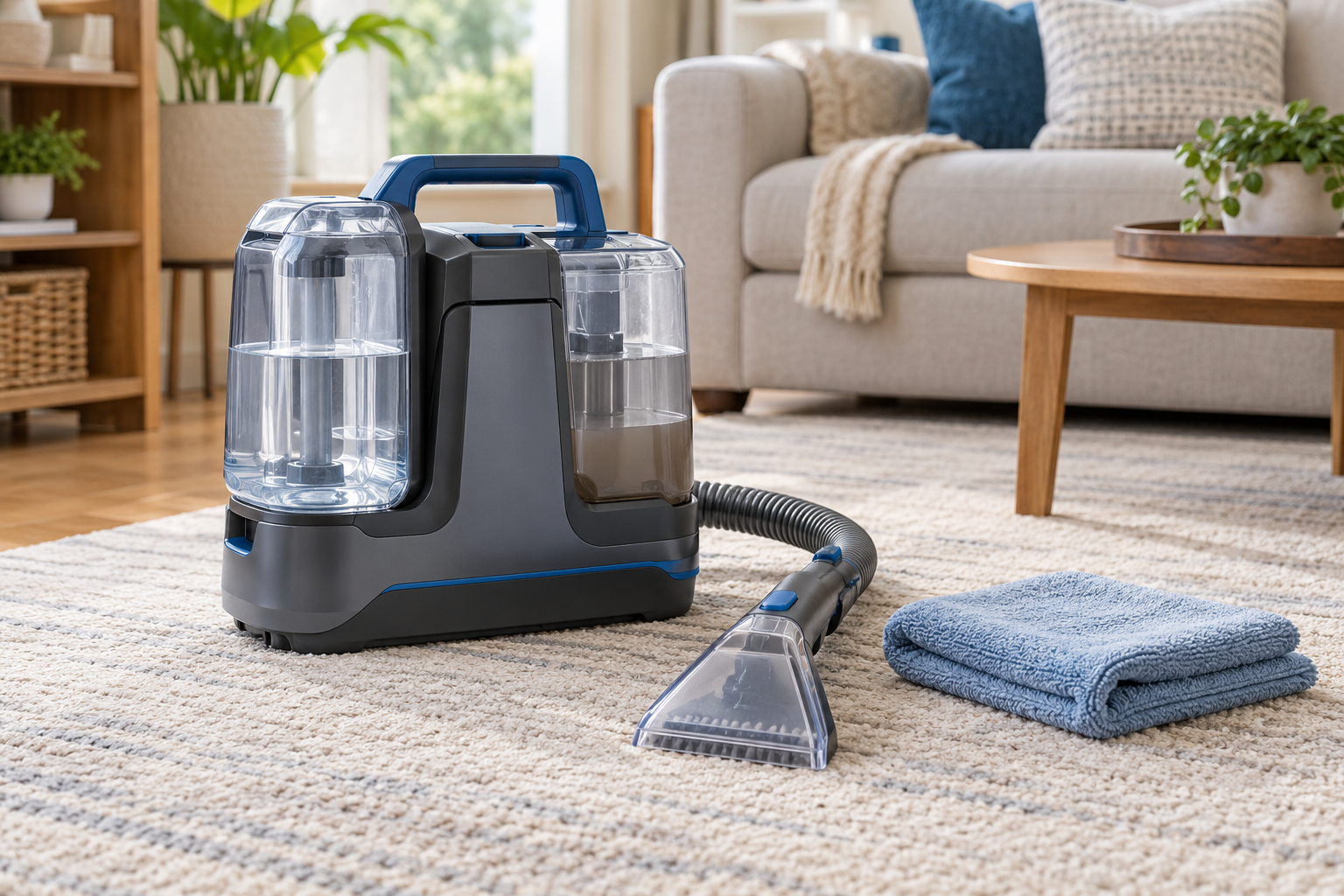
Quick decision before shopping
First measure the available space, identify the setup or surface constraints, and decide who will maintain the item. Skip the category if it blocks access, conflicts with the manufacturer's instructions or lease, or adds more upkeep than the problem justifies.
Compare the category only after checking the surface care label:
- Browse category: Compare portable carpet spot cleanersCheck approved surfaces and solutions, machine and filled-tank weight, tank openings, hose and cord reach, extraction-tool width, after-use rinsing, and stored dimensions.
This is a category search, not a tested ranking. Confirm current specifications, compatible surfaces and solutions, complete instructions, warranty terms, and return policy before buying.
Choose by the job, not a claimed winner
| Format | Best fit | Main tradeoff to check |
|---|---|---|
| Compact basic spot cleaner | Small recurring spots near an outlet | Smaller tanks are easier to carry but may require more refilling and emptying |
| Long-hose portable cleaner | Stairs, upholstery, and awkward furniture edges when approved | Extra reach adds hose volume that must be rinsed, drained, dried, and stored |
| Wide-tool portable cleaner | Localized areas larger than a single spot | A wider head can be less precise on narrow steps, corners, and small cushions |
| Minimal manual cleanup kit | Rare fresh incidents on surfaces with an approved blotting method | Lower storage burden, but without powered liquid recovery |
These are formats, not ranked products. A household treating an occasional small rug spot needs a different setup from one regularly cleaning carpeted stairs. If the likely task is broad room cleaning, widespread saturation, or an unknown material, a compact consumer spot cleaner may be the wrong category.
Surface compatibility is the first gate
Read the carpet, rug, or upholstery care label and the cleaner maker's current approved-surface list before comparing power, tanks, or attachments. Wet extraction is not automatically suitable for wool, silk, viscose, jute, natural-fiber backing, loose weaves, velvet, leather, antique textiles, or unidentified materials. Follow the surface maker when its instructions are more restrictive.
Check the permitted solution as carefully as the machine. Do not assume a general household cleaner, homemade mixture, or extra detergent is compatible. Test the approved method in a hidden area, let it dry fully, and look for color transfer, texture change, rings, shrinkage, or backing problems before treating a visible spot.
Compare tanks by handling, not capacity alone
Separate clean-water and recovery tanks make the workflow easier to understand, but openings, lids, seals, fill lines, and grips determine whether the tanks are practical at your sink. Compare the machine's documented weight both empty and with the clean tank filled. A larger tank reduces refills but adds carrying weight and takes more room to rinse.
- Openings: Make sure a hand or permitted cleaning tool can reach the areas the manual says to clean.
- Fill and empty route: Check whether the tank fits below the faucet and can be carried without an awkward tilt.
- Seals and latches: Look for clear instructions for seating, inspecting, and replacing them.
- Drying: Confirm that lids and removable parts can stay open in a ventilated place until fully dry.
Measure hose, cord, tool, and storage together
Use the stated hose and cord lengths to map a real route from an appropriate outlet to the likely cleaning area. Do not plan on stretching the hose, trapping a cord beneath furniture, or leaving a trip path through the room. For stairs, consider where the machine can sit securely without being pulled by the hose.
Tool width affects both coverage and access. A broad head can suit an open patch of carpet, while a narrower head may fit stair treads and cushion edges better when those surfaces are approved. Count the hose, tool, wrapped cord, tanks, and approved solution in the stored footprint; the appliance body alone is not the whole storage requirement.
Must-haves before buying
- A current manufacturer list that includes the materials you expect to clean.
- Clear solution, filling, operating, rinsing, and drying instructions.
- Tanks you can fill, carry, empty, and rinse at the available sink.
- Enough documented hose and cord reach without unsafe placement or extension improvisation.
- A tool that fits the spot, stair tread, or upholstery panel without forcing the machine into an unstable position.
- A ventilated storage plan for the machine and completely dried parts.
Nice-to-haves
- A removable nozzle cover when the manual provides a clear cleaning method.
- Visible tank fill and recovery lines.
- Onboard storage that does not sharply kink the hose.
- A small second tool only when it serves a verified surface and can be cleaned easily.
- Replacement parts that the maker currently documents and sells.
Bundles are not automatically better. Every brush, nozzle, and hose section adds another part to rinse, inspect, dry, and store. Prefer the smallest set that matches a known task.
Cleanup and drying are part of every use
Read the complete after-use section of the manual before purchasing. The recovery tank, lid, seals, extraction nozzle, brush area, hose path, and any filter may have different rinse and drying requirements. Leaving residue inside or closing damp parts in a cabinet can create a maintenance problem.
Extraction still leaves moisture in the textile. Follow the surface and machine instructions for passes and ventilation, keep people and pets away as directed while the area is wet, and do not replace furniture or cover the area prematurely. Stop if liquid reaches flooring, padding, wiring, walls, or another place the machine is not designed to treat.
What this category cannot promise
No portable cleaner should be selected on an unsupported promise of guaranteed stain removal, odor elimination, sanitation, disinfection, or allergen removal. Results depend on the material, type and age of the mess, previous treatments, approved solution, technique, and drying conditions. A consumer extractor is a routine cleaning appliance, not a diagnosis or remediation tool.
Who should skip a portable carpet cleaner?
- Households with rare spots that the surface maker's approved manual blotting method handles adequately.
- Anyone unable to verify that the likely carpet, rug, or upholstery permits wet extraction.
- People without a sink and ventilated area suitable for rinsing and fully drying every required part.
- Homes where the stored machine, hose, cord, tools, and solution do not have a practical place.
- Situations involving sewage, floodwater, unknown biological material, hazardous substances, widespread saturation, persistent odor, suspected mold, or liquid below the visible surface.
When to use qualified help
Do not use a consumer spot cleaner on contaminated water, hazardous material, valuable or unfamiliar textiles, or damage that extends into padding, subflooring, walls, or electrical components. Persistent odor, recurring staining, a large wet area, or an uncertain material calls for an appropriate qualified cleaner or remediation professional rather than repeated soaking.
Bottom line
For small compatible pet messes, choose a portable cleaner by verified surface fit, manageable filled weight, tank access, working reach, tool width, washout routine, and complete stored footprint. Skip oversized bundles and unsupported performance promises. The best category fit is the simplest machine you can use promptly, clean completely, dry properly, and store without friction.
Next step: Put this decision in context with the home-product buying framework guide.