Over-the-Door vs Freestanding Drying Racks for Apartments
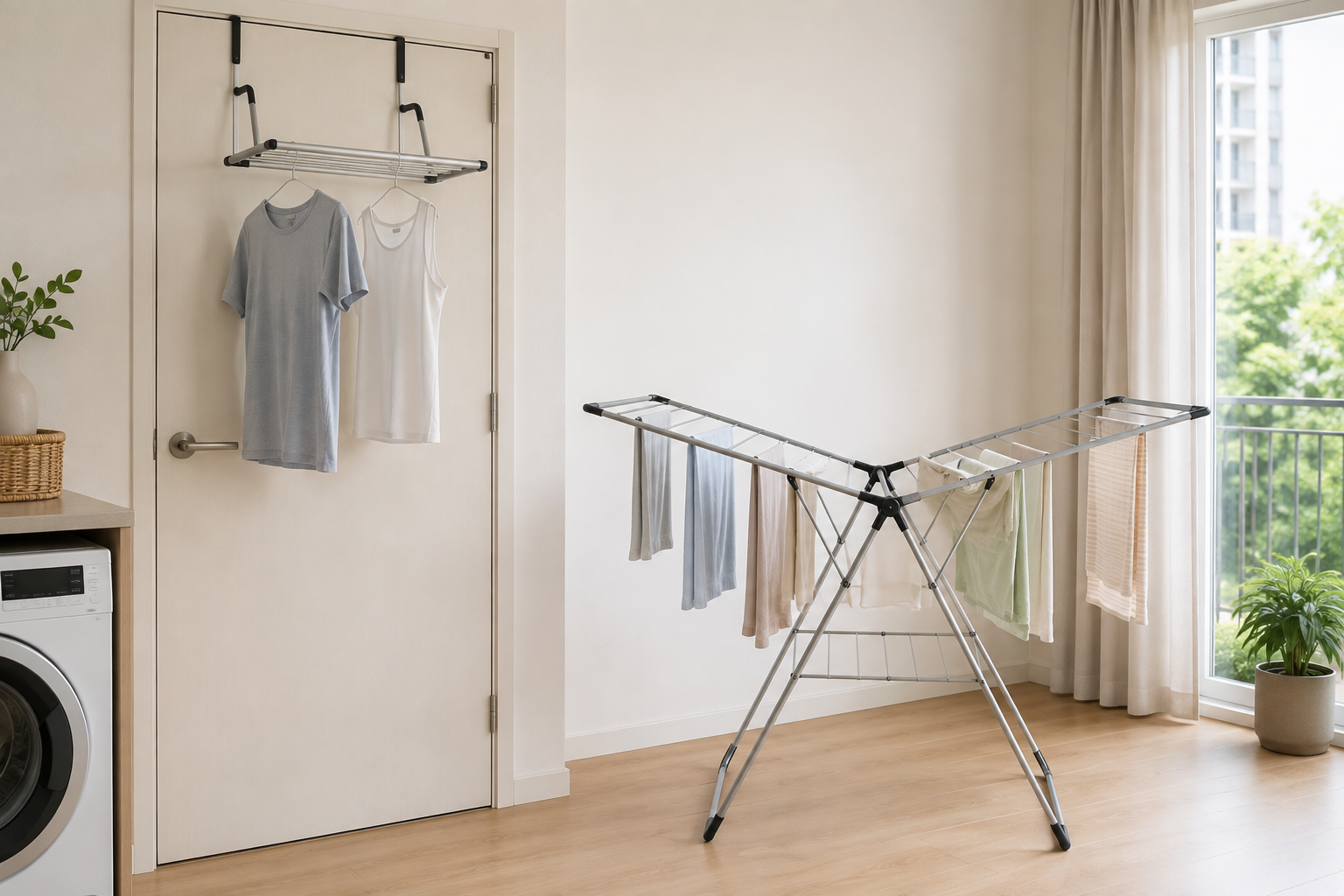
Choose an over-the-door drying rack when floor space is scarce, the rack fits one nonessential door without stopping it from closing, and you mostly air-dry small, lightweight loads. Choose a freestanding rack when you need more flexible placement, a broader mix of garments, and a door that stays fully usable. Measure the deployed setup—not just the folded product.
As an Amazon Associate, The Good Home Doc may earn from qualifying purchases.
Quick decision before shopping
First measure the available space, identify the setup or surface constraints, and decide who will maintain the item. Skip the category if it blocks access, conflicts with the manufacturer's instructions or lease, or adds more upkeep than the problem justifies.
Measure the door and open floor area before shopping: These affiliate category links are comparison starting points, not tested winners.
- Browse category: Compare over-the-door clothes drying racksCheck door thickness, top and frame clearance, hook padding, deployed depth, documented load, and folded position.
- Browse category: Compare freestanding folding drying racksCheck open and folded dimensions, locking joints, bar spacing, feet, documented load, and storage fit.
Follow the rack instructions and garment-care labels. Wet fabric weighs more than dry fabric; do not exceed stated loads, improvise attachment points, or block a required exit route.
Quick comparison
| Decision point | Over-the-door rack | Freestanding rack |
|---|---|---|
| Best fit | Small, lightweight loads and almost no spare floor area | Mixed garments and a clear temporary floor zone |
| Main measurement | Door thickness, top gap, frame clearance, and deployed depth | Open footprint, garment overhang, height, and folded size |
| Room access | May limit door swing or prevent closing | May narrow walking and appliance routes |
| Placement | Tied to one compatible door | Movable to a suitable ventilated location |
| Typical load shape | Shorter items on a compact set of bars | Broader loads across bars, wings, or tiers |
| Surface contact | Hooks and pads contact the door and frame | Feet contact the floor |
Choose an over-the-door rack when the door can spare the space
An over-the-door rack moves the drying zone off the floor and usually installs without drilling. That can be useful in a studio, narrow bathroom, or laundry closet where even a compact floor rack would block circulation. It is best for a few shirts, delicates, dish towels, or other items that fit without crowding.
The door becomes part of the product fit. Measure its thickness, the gap above it, the frame clearance on both sides, handle clearance, and the rack depth when open. Confirm that padded hooks sit flat without forcing the door or scraping its finish. Never assume “universal” means it fits every door.
Choose it if:
- A low-traffic interior door can remain partly or fully open while laundry dries.
- The exact hook range and top clearance match the door.
- Your usual air-dry load fits the documented capacity with space between garments.
- The rack folds without striking the wall, handle, frame, or nearby fixture.
- You can protect the door finish according to both the rack and door-care guidance.
Skip it if:
- The door is an entry, required exit, fire door, sliding door, folding door, or otherwise must operate normally.
- The hooks stop the door from latching or create force at the hinges.
- Wet hems would touch the door, wall, floor, toilet, or another surface.
- Children or pets could swing the loaded door or pull garments down.
- Your typical load includes bulky towels, bedding, or more weight than the rack permits.
Choose a freestanding rack for flexibility and mixed loads
A freestanding rack does not rely on door geometry. You can place it on a suitable floor, orient it for normal airflow, and choose a shape that matches the laundry: a basic folding frame, winged rack, tower, or flat-dry shelf. It is generally the more adaptable choice when one setup must handle shirts, pants, towels, and delicates.
The tradeoff is temporary floor occupation. Measure the rack fully open, add sleeve and hem overhang, and trace the remaining route to the washer, bathroom, closet, and exit. Check the folded dimensions too; a rack is not apartment-friendly if there is nowhere dry and accessible to store it.
Choose it if:
- You have one stable, level floor zone that can remain occupied while laundry dries.
- You want to move the setup between a bathroom, laundry area, or other suitable room.
- Your garments need different bar heights, flat support, or broader spacing.
- The feet suit the floor and the frame locks open as its instructions describe.
- You have a measured storage slot for the rack after it dries.
Skip it if:
- Every available footprint blocks a doorway, appliance, heater, vent, or necessary walking path.
- The floor is uneven, slippery, easily marked, or unsuitable for damp laundry.
- The rack rocks when opened or lacks the stated capacity for your normal load.
- You cannot keep children or pets from climbing, pulling, or tipping it.
- You would have to fold it away while the frame or laundry is still damp.
Compare capacity by the laundry you actually separate
Count the items that cannot go in the dryer during a normal week. Note their wet weight, length, and whether they must hang, drape, or lie flat according to the care label. Total bar length is not the same as usable capacity: fabric needs separation, and overlapping seams or waistbands can stay damp.
Over-door racks tend to reward smaller, more frequent loads. Freestanding racks offer more layout options but can encourage overloading. In either case, distribute items as the maker directs and stop using a rack with bent bars, loose joints, damaged hooks, or unstable feet.
Plan around the room, door, and airflow
Air-drying adds moisture to indoor air. Space garments, use normal ventilation where allowed, and keep wet fabric away from walls, furniture, heaters, outlets, and appliances. Neither rack is a fix for a room with recurring condensation, a musty odor, a leak, or damaged materials.
If dampness persists, reduce the indoor drying load and address the source. Renters should document building concerns and contact the property manager. For active water, electrical concerns near moisture, spreading damage, or an unclear recurring source, use the appropriate qualified professional rather than relying on a drying product.
Renter and maintenance checks
Even a no-drill rack can leave marks. Read the lease, photograph the door and floor before use, and inspect contact points regularly. Do not add adhesive pads, screws, or substitute hooks unless both the product instructions and property rules allow them.
Wipe bars and contact pads as directed, remove detergent residue, and let the rack dry before storage. Open and close moving parts gently. A freestanding model needs clean, intact feet and sound locking joints; an over-door model needs straight hooks, secure pads, and a door that still operates without rubbing or strain.
Bottom line
An over-the-door rack is the better apartment fit for modest air-dry loads when a compatible, low-traffic door can safely give up some function. A freestanding rack is better for mixed or larger loads when a measured floor zone and storage slot are available. Choose the constraint you can manage every laundry day: door access or floor space.
Next step: Put this decision in context with the renter-friendly upgrades guide.