Wool Dryer Balls vs Reusable Dryer Sheets for Everyday Laundry
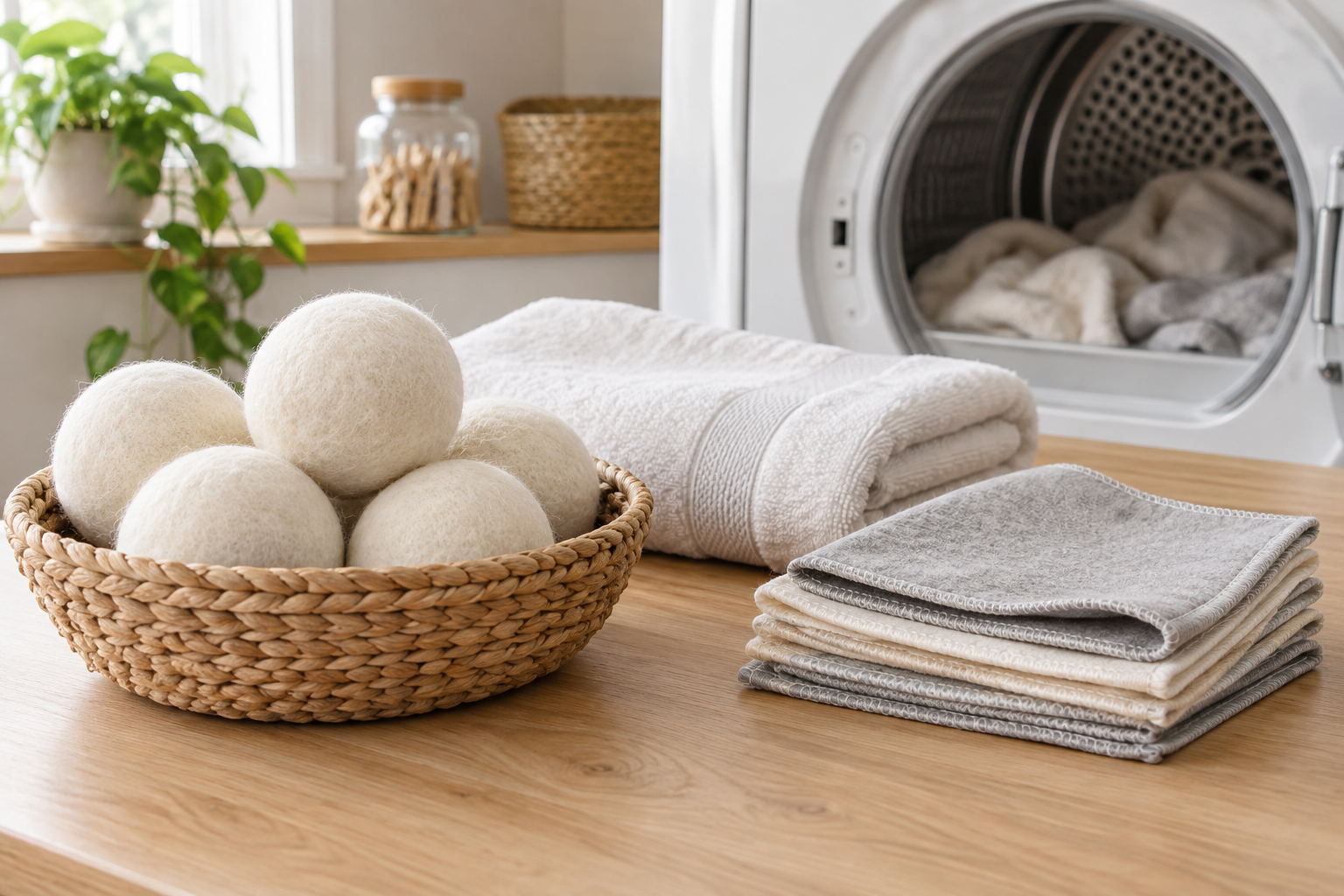
Choose wool dryer balls when you want a simple, unscented accessory and do not mind the sound of balls moving through the drum. Choose reusable dryer sheets when you prefer a flat format and the maker's material, care instructions, and fragrance ingredients fit your household. Neither accessory is essential, and neither should override the dryer or garment label.
As an Amazon Associate, The Good Home Doc may earn from qualifying purchases.
Quick decision before shopping
First measure the available space, identify the setup or surface constraints, and decide who will maintain the item. Skip the category if it blocks access, conflicts with the manufacturer's instructions or lease, or adds more upkeep than the problem justifies.
Compare the two formats after checking your dryer and garment labels:
- Browse category: Shop unscented wool dryer ballsCheck fiber content, ball size, quantity guidance, care, and replacement cues.
- Browse category: Shop reusable fabric dryer sheetsCheck materials, ingredients or treatments, load guidance, washing instructions, and expected replacement basis.
These are category routes, not tested rankings. Claims about static, softness, drying time, or service life vary by product and load; verify them in current manufacturer instructions.
Quick Decision
Choose wool dryer balls if wool suits the household, you prefer an additive-free option, and drum noise is acceptable.
Choose reusable dryer sheets if a flat accessory is easier to store and track, and its documented ingredients, textile compatibility, and care routine work for you.
Skip both if your dryer or garment instructions discourage add-ins, if a household member needs to avoid the material or fragrance, or if ordinary drying without an accessory already gives an acceptable result.
At a Glance
| Decision point | Wool dryer balls | Reusable dryer sheets |
|---|---|---|
| Format | Firm three-dimensional balls that tumble through the load | Flat cloths or treated fabric sheets that move with the load |
| Material check | Confirm actual fiber content and any wool sensitivity concerns | Confirm fabric, coating, fragrance, and other listed ingredients |
| Sound | Can create noticeable thumping, especially in a light load | Usually less mechanically noticeable |
| Care | Keep dry between uses and follow cleaning directions | Follow washing, drying, and re-treatment directions exactly |
| Replacement | Use wear and maker guidance rather than a universal load count | Use maker guidance; construction and treatments differ |
Start with the Job, Not the Marketing Claim
Write down what you actually want to change: static in a particular fabric mix, fragrance preference, tangling, or simply a reusable replacement for a disposable accessory. Then compare only products that document that use. Load size, fiber blend, humidity, dryer settings, and overdrying can all affect the result, so broad promises are not a reliable basis for choosing.
If the recurring problem is excessive drying time, first check the selected cycle, load size, lint screen, and the appliance manual. A sudden change in drying performance, unusual heat, burning odor, damaged cord, or suspected vent problem is not an accessory-shopping problem; stop using the appliance and follow the manufacturer or qualified-service guidance.
When Wool Dryer Balls Fit Better
Wool balls are straightforward: there is no sheet to unfold or wash after every load, and unscented versions avoid added fragrance. Their shape also makes them easy to spot when unloading a full drum. Compare diameter, number recommended for the load, fiber disclosure, colorfastness guidance, cleaning directions, and how the maker says to judge wear.
The main tradeoffs are material and movement. They may be unsuitable for households avoiding animal fibers, and they can sound surprisingly loud in a lightly loaded metal drum. Loose fibers, splitting, staining, or a misshapen ball are reasons to consult the care instructions and replace it if directed. Keep balls away from pets and children when they are not in the dryer.
When Reusable Dryer Sheets Fit Better
Reusable sheets take little storage space and may suit people who dislike tumbling-ball noise. But “reusable sheet” describes several constructions: some are untreated woven cloths, while others use a coating or require a separate product. Read the complete ingredient or material information instead of assuming every sheet works the same way.
Confirm whether the sheet must be washed, air-dried, re-treated, or kept away from particular fabrics or dryer settings. Fragrance-free wording and ingredient disclosure are separate checks. If residue, odor, skin irritation, or fabric changes appear, stop using the accessory and follow the relevant product and garment guidance.
Seven Checks Before Buying
- Read the dryer manual. Confirm that loose laundry accessories are permitted and note any cycle-specific restrictions.
- Read garment care labels. Performance fabrics, flame-resistant sleepwear, towels, and other textiles may have special care limits.
- Verify materials and ingredients. Look beyond the front label, especially for fragrance, coatings, wool, or other household sensitivities.
- Match the normal load. Compare the maker's load-size guidance with what you actually dry; do not add extra pieces based on guesswork.
- Plan retrieval and storage. Balls can hide in sleeves; sheets can cling to fabric. Store either format dry and out of reach of children and pets.
- Check care and replacement guidance. Avoid universal service-life claims. Follow observable wear cues and the maker's instructions.
- Keep expectations narrow. An accessory does not repair an appliance, clear a vent, correct an overloaded drum, or make an unsuitable garment dryer-safe.
Bottom Line
Wool dryer balls are the simpler choice for households comfortable with wool and drum noise. Reusable dryer sheets are the quieter, flatter format, but they demand closer attention to construction, ingredients, washing, and re-treatment. If neither solves a clearly defined problem, skipping both is the most economical choice.
For a broader, low-effort chore setup, continue to the home maintenance tools guide. It keeps product choices tied to real routines instead of adding gadgets by default.
Next step: Put this decision in context with the home-product buying framework guide.