How to Choose Dryer Vent Cleaning Kits for Routine Maintenance
A dryer vent kit is only a sensible DIY purchase when the entire job is accessible, the duct and appliance instructions allow the method, and every brush and rod can be controlled and retrieved. Choose for your actual route—not for the largest accessory count or longest advertised reach.
As an Amazon Associate, The Good Home Doc may earn from qualifying purchases.
Quick decision before shopping
First measure the available space, identify the setup or surface constraints, and decide who will maintain the item. Skip the category if it blocks access, conflicts with the manufacturer's instructions or lease, or adds more upkeep than the problem justifies.
Match the tool to the verified access route first: These affiliate category links are comparison starting points, not tested winners or a promise that DIY cleaning fits every vent.
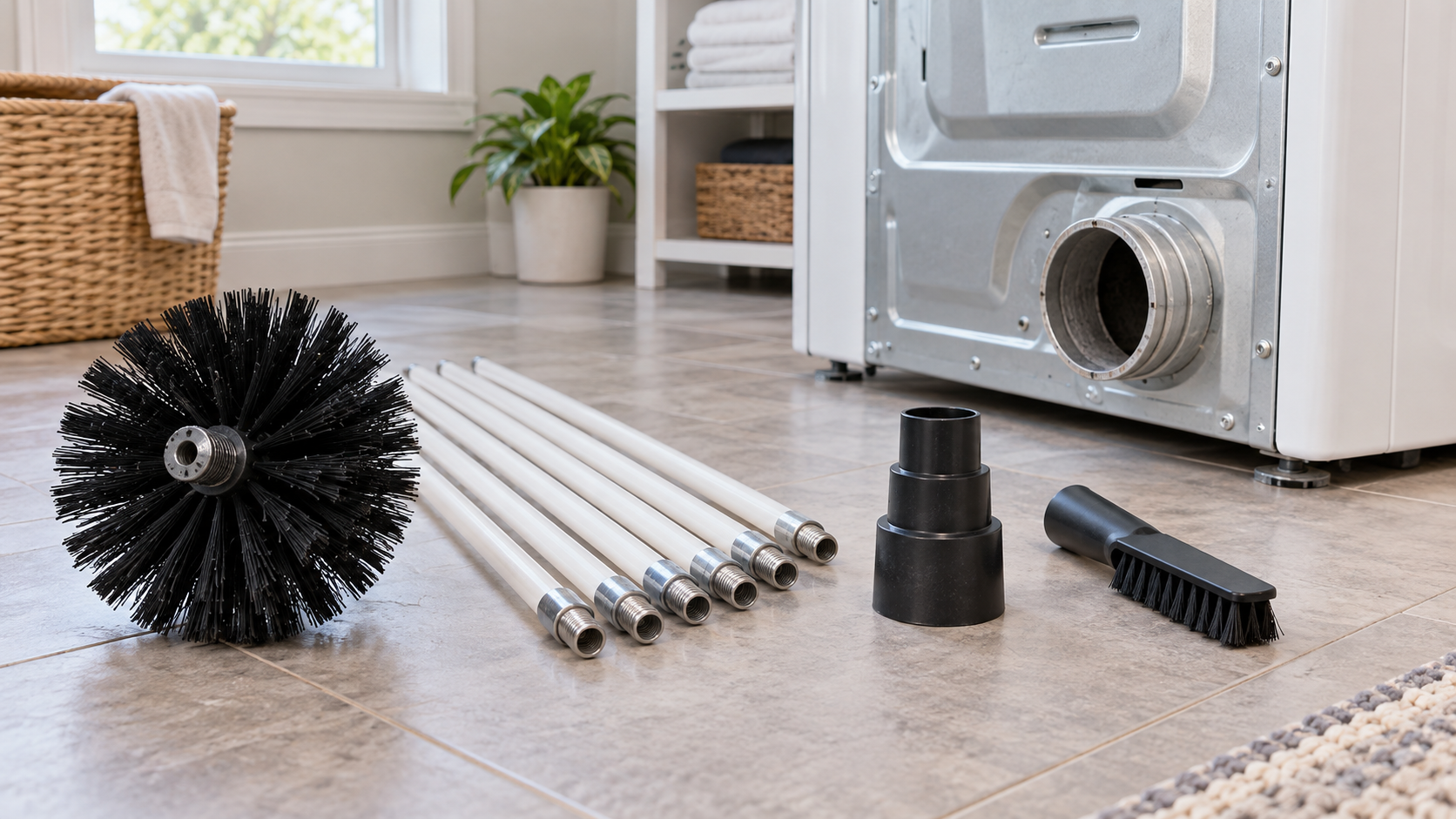
- Browse category: Compare dryer vent brush kits with threaded rodsCheck connector design, brush diameter, rod flexibility, permitted rotation, working length, and retrieval instructions.
- Browse category: Compare narrow dryer lint vacuum attachmentsFor reachable appliance cavities only when both the dryer and vacuum instructions permit access and use.
- Browse category: Compare flexible hand lint brushesA simpler choice for short, visible, reachable areas where a long rotary rod system is unnecessary.
Verify the current dryer, duct, kit, and vacuum instructions before buying or using any tool. Stop if the route is concealed, damaged, shared, unusually long, sharply bent, roof-terminated, inaccessible at either end, or repeatedly clogging.
The U.S. Fire Administration advises cleaning the lint filter before and after each load and having the dryer cleaned regularly by a professional. A consumer kit can support limited routine lint removal in a straightforward setup; it cannot certify that a vent is clear, correctly installed, code-compliant, or safe.
Quick Picks by Vent and Access Type
- Best for a short, accessible straight route: a correctly sized brush with securely joining flexible rods and explicit rotation instructions.
- Best for the reachable connection and appliance opening: a narrow hand brush or permitted vacuum attachment with controlled reach.
- Best for a route with turns: professional service when you cannot see, access, or confidently retrieve the tool through the full path.
- Best for a roof, shared, concealed, damaged, or repeatedly clogging vent: skip the consumer kit and use qualified help.
Start with the Duct, Not the Kit
Locate both ends of the exhaust route and read the dryer maker's cleaning and disconnection instructions. Identify the duct material, approximate path, termination point, number of turns, and whether furniture, stacked appliances, gas connections, hard-wired power, or tight clearances make safe access unrealistic. Never move or disconnect an appliance beyond what its instructions and your competence permit.
Flexible foil or plastic-like ducting, crushed sections, loose connections, damaged fittings, and unknown concealed routes are not good places to experiment with a rotating brush. Do not improvise around a gas connection, electrical work, roof access, wall opening, or a shared building exhaust.
Comparison Framework
Flexible Rod-and-Brush Kits
These kits use joining rods to advance a round brush. Compare the brush diameter with the documented duct size, then inspect how each rod locks to the next. A positive threaded or otherwise secured connection matters because a separated brush or rod can become a new obstruction.
Watch for: unclear rotation direction, drill use without explicit kit and duct permission, rods too stiff for the route, loose press-fit joints, and claims that maximum length makes every route reachable.
Hand Brushes
A flexible hand brush offers more direct feedback in short, visible areas such as an accessible connection or permitted appliance opening. It is often the better tool when a long rod system would add retrieval risk without adding useful reach.
Watch for: an exposed wire tip, a handle that can disappear into the opening, and bristles or bends that do not match the documented surface and access instructions.
Vacuum Attachments
A narrow hose can collect loose lint from a reachable cavity, but it does not scrub an entire exhaust route or prove that hidden sections are clear. Confirm that the appliance instructions permit vacuum access and that the vacuum is suitable for the material being collected.
Watch for: forcing the hose beyond view, snagging internal parts, using an attachment as a substitute for route inspection, or assuming suction alone resolves packed buildup.
Drill-Compatible Kits
Powered rotation may be offered by some kit makers, but speed adds less control and can tighten or loosen rod joints depending on the system. Use a drill only when the current kit instructions, dryer instructions, and duct guidance all permit it, and follow the stated direction and speed limits exactly.
Watch for: reversing direction, over-speeding, forcing through resistance, or using powered rotation in an unknown, fragile, damaged, or tightly bent route.
Must-Have Features
- Documented compatibility: stated brush diameter, duct-material guidance, rotation rules, and exclusions.
- Secure rod connections: joints designed to remain attached in the permitted rotation direction.
- Controlled working length: enough for the verified accessible route, without buying excess reach as a substitute for professional access.
- Retrieval plan: clear instructions for withdrawing every part without reversing or separating it.
- Cleanable components: a brush and adapters that can be cleared and dried as directed.
Nice-to-Have Features
- A storage case that keeps rods straight and connectors protected.
- Clearly distinguishable rod ends that make complete inventory easy.
- A hand brush for the short connection area.
- A compatible vacuum adapter when the appliance and vacuum instructions permit it.
Setup and Cleanup Questions to Answer
- Can you safely access both ends without roof work, opening a wall, disturbing utilities, or moving an appliance beyond its instructions?
- Do you know the duct material, diameter, route, turns, and termination?
- Does the kit explicitly allow that duct and the intended hand or drill method?
- Can you contain loosened lint, account for every rod and attachment, and reconnect the dryer exactly as instructed?
- Can you run the maker's post-service checks without ignoring heat, airflow, noise, odor, or error warnings?
Keep the appliance off and disconnected exactly as its manual directs before accessing permitted areas. Do not run the dryer with the exhaust disconnected unless the manufacturer specifically instructs that step. Afterward, verify that connections are secure, the duct is not crushed, and the exterior termination operates as documented.
When to Stop and Hire a Qualified Professional
Use qualified service for a concealed or inaccessible route, roof termination, shared building system, long or sharply turning run, damaged or crushed duct, uncertain material, repeated blockage, disconnected joint inside a wall, appliance disassembly, or any setup involving gas, electrical, structural, permit, or code questions.
Stop using the dryer and seek qualified assessment if you notice a burning smell, smoke, scorching, unusual heat, visible damage, persistent errors, a suddenly much longer drying cycle, or weak exhaust that routine lint-filter care does not resolve. Do not use a cleaning kit to diagnose or certify the appliance.
Who Should Skip a Dryer Vent Cleaning Kit
Skip the category if you rent and cannot confirm permission or safe appliance access; if the dryer is stacked, built in, unusually heavy, gas-connected, or hard to move; if either end of the route is inaccessible; or if you cannot verify the duct and tool instructions. Professional service is also the better choice when you would use maximum rod length merely to reach an unknown section.
A kit is a poor value for a simple reachable lint-filter area that only needs the cleaning method in the appliance manual. Conversely, it is not enough for a route that needs inspection, repair, rerouting, or code evaluation.
Bottom Line
For a short, known, accessible, compatible route, start with a correctly sized brush, secure rods, explicit rotation rules, and a complete retrieval plan. Use hand brushes or permitted vacuum attachments for visible reachable areas. Treat claimed reach, drill speed, and accessory count as secondary.
The safest buying decision is sometimes not to buy the kit. When access, duct condition, utilities, or repeated symptoms create uncertainty, preserve the system and call a qualified professional rather than pushing a tool farther.
Sources and Further Reading
- U.S. Fire Administration: appliance and electrical fire prevention
- Your dryer's current use-and-care manual and the cleaning kit manufacturer's current instructions.