Is a Portable Carpet Cleaner Worth It for Pet Messes?
A portable carpet cleaner can be worth it when small, wet pet messes recur on surfaces the machine is approved to clean and quick access matters more than the storage and washout routine. Skip it for rare incidents, delicate or unidentified materials, widespread saturation, or any mess that needs contamination control beyond ordinary household spot cleaning.
As an Amazon Associate, The Good Home Doc may earn from qualifying purchases.
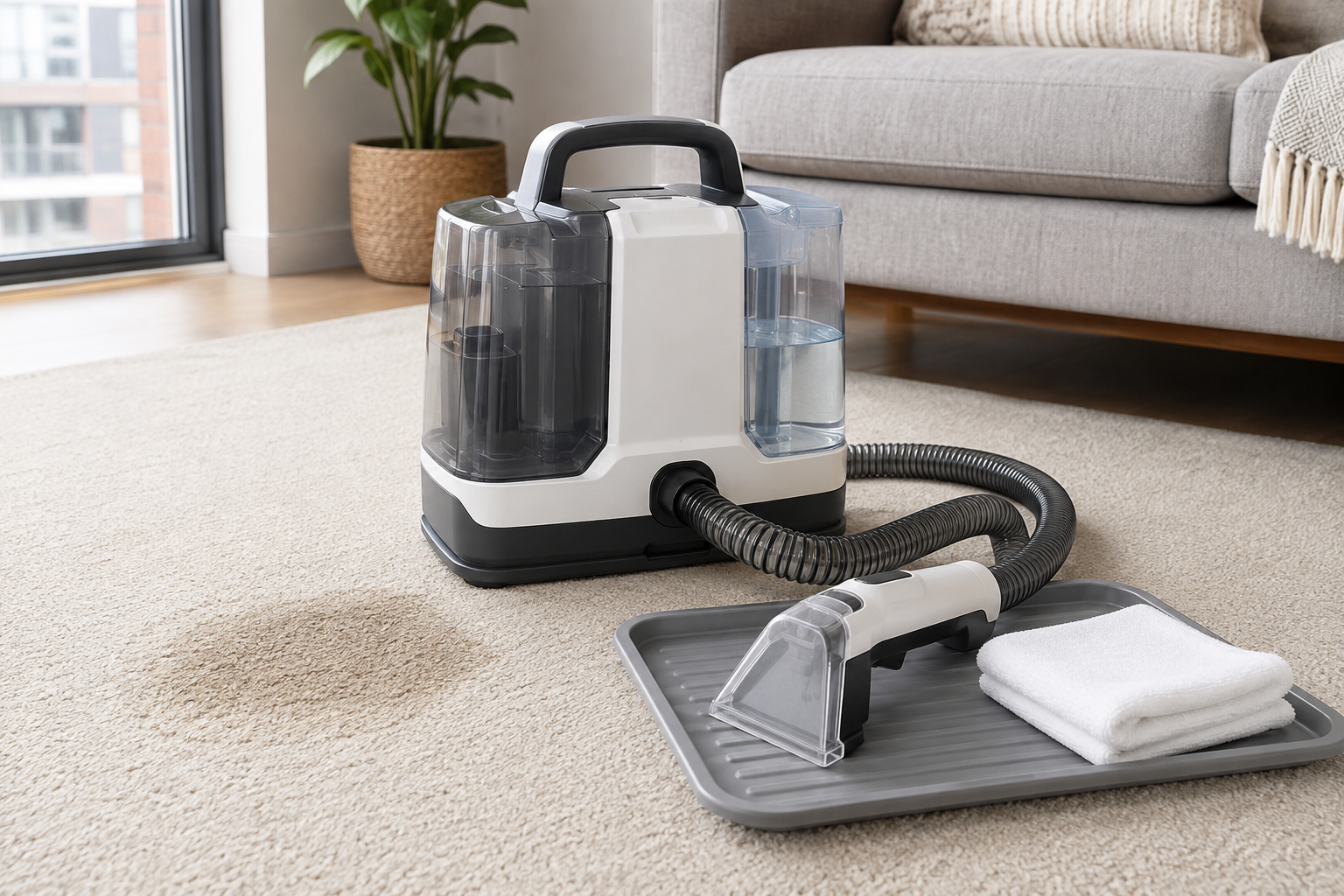
Quick decision before shopping
First measure the available space, identify the setup or surface constraints, and decide who will maintain the item. Skip the category if it blocks access, conflicts with the manufacturer's instructions or lease, or adds more upkeep than the problem justifies.
Confirm the surface and cleanup routine first: This affiliate category link is a comparison starting point, not a tested winner or a promise of stain or odor removal.
- Browse category: Compare portable carpet spot cleanersCheck approved surfaces and solutions, tank and hose design, tool cleanup, storage dimensions, cord routing, and manufacturer warnings.
A portable extractor applies an approved cleaning solution and lifts some of that liquid back into a recovery tank. It still leaves moisture behind, needs cleaning after use, and cannot make every carpet, rug, upholstery fabric, stain, odor, or contamination problem suitable for DIY treatment.
Quick answer
Buy one when localized messes happen often, the care label permits wet extraction, you have a nearby outlet and drying plan, and you will rinse and dry every required part immediately after use.
Borrow or rent first when incidents are occasional or you do not yet know whether the hose reach, machine weight, noise, and cleanup burden fit your home.
Skip it when manual blotting handles rare fresh spills, storage is tight, or the affected surface calls for a different care method or qualified cleaner.
Start with the surface, not the machine
Find the carpet, rug, or upholstery care label and the cleaner maker's current surface list. “Carpet cleaner” is not blanket permission for wool, silk, viscose, jute, natural-fiber backing, loose weave, velvet, leather, antique rugs, or upholstery with wet-cleaning restrictions. If the material is unknown or already damaged, do not experiment.
Follow the surface maker's instructions when they are more restrictive. Test the approved solution and method in a hidden area, allow it to dry fully, and check for color transfer, texture change, rings, shrinkage, or backing problems before treating a visible spot.
Frequency is what makes ownership useful
Write down how many suitable, localized incidents occurred during the last few months. Then compare that real frequency with the space the machine and solution will occupy, the setup time, and the cleanup after every use. Prompt access can be useful in a pet household, but an idle machine is not automatically better than careful manual cleanup or occasional rental.
Do not justify a purchase with a guaranteed stain-removal, odor-removal, sanitizing, or allergen claim. Results depend on the material, substance, age of the mess, prior treatments, product directions, technique, and drying conditions.
Measure the whole workflow
- Working reach: Check the documented hose and cord lengths against the outlet and furniture layout without stretching, pinching, or creating a trip route.
- Carrying: Consider machine weight with the clean tank filled, the grip, stairs, and the route to the sink.
- Storage: Measure the body, wrapped hose, tool, cord, approved solution, and the ventilated space needed while parts finish drying.
- Refilling and emptying: Confirm tank openings fit the sink and can be handled without spilling recovery water.
Cleanup is part of the purchase
Read the manual's after-use sequence before buying. Recovery tanks, lids, seals, hose paths, extraction nozzles, brushes, and filters may each have specific rinsing and drying instructions. Leaving residue or closing damp parts into a cabinet can turn a quick cleanup tool into a maintenance problem.
Use only solutions and ratios allowed by the machine and surface manufacturers. More detergent is not necessarily more effective and may be harder to rinse. Keep products in their original containers, follow label precautions, and keep the appliance, cord, and plugs away from inappropriate liquid exposure.
Drying determines when the job is finished
Extraction does not mean dry. Use the number of passes and ventilation method allowed by the relevant instructions, keep people and pets off the area while it is wet, and do not cover or replace furniture until the surface and any underlying layer have dried appropriately. Stop if liquid reaches flooring, padding, electrical components, or an area the product is not designed to treat.
Portable cleaner versus the alternatives
| Option | Best fit | Main tradeoff |
|---|---|---|
| Portable extractor | Recurring small messes on approved surfaces | Purchase, storage, solution, washout, and drying routine |
| Manual blotting with an approved product | Rare, fresh, localized incidents | Less extraction and more hands-on work |
| Rental machine | Occasional larger routine cleaning within machine limits | Pickup, return, machine condition, and full cleanup planning |
| Qualified cleaner | Valuable or uncertain materials, widespread impact, recurring odor, or complex damage | Appointment and service cost |
When to stop and get help
Do not use a consumer spot cleaner for sewage, floodwater, unknown biological material, hazardous substances, pest contamination, or liquid that may have reached wiring, padding, subflooring, walls, or a large hidden area. Keep pets away from cleaning products and wet surfaces as directed. Persistent odor, recurring staining, broad saturation, suspected mold, or a valuable and unfamiliar textile calls for the appropriate qualified professional rather than repeated soaking.
Who should skip a portable carpet cleaner?
- Households with only rare spots that respond to the surface maker's approved manual method.
- People without a ventilated place to rinse and fully dry the tanks, hose, and tools.
- Homes where the likely surfaces exclude wet extraction or have unclear care labels.
- Anyone expecting one machine to sanitize materials or guarantee removal of stains, odors, or allergens.
- Situations involving widespread water, contaminated liquid, persistent odor, or damage below the visible surface.
Bottom line
A portable carpet cleaner earns its space through repeated, compatible small jobs and a cleanup routine you will actually complete. Verify every surface and solution, measure the working and stored setup, plan drying, and compare ownership with manual treatment, rental, and professional service. If those checks are easy and messes recur, use the portable carpet cleaner category guide to compare tanks, hose reach, tools, handling, and storage without relying on unsupported rankings; otherwise, skip the appliance.
Next step: Put this decision in context with the home-product buying framework guide.