How to Choose Hand Pruners for Houseplants and Balcony Plants
For routine indoor and balcony plant care, the best pruning tool is the smallest clean, controllable blade that matches the stem. Precision snips suit soft, crowded growth; compact bypass pruners give more leverage on firmer stems. The tool maker's stated cutting limit and the plant's care guidance matter more than an oversized blade.
As an Amazon Associate, The Good Home Doc may earn from qualifying purchases.
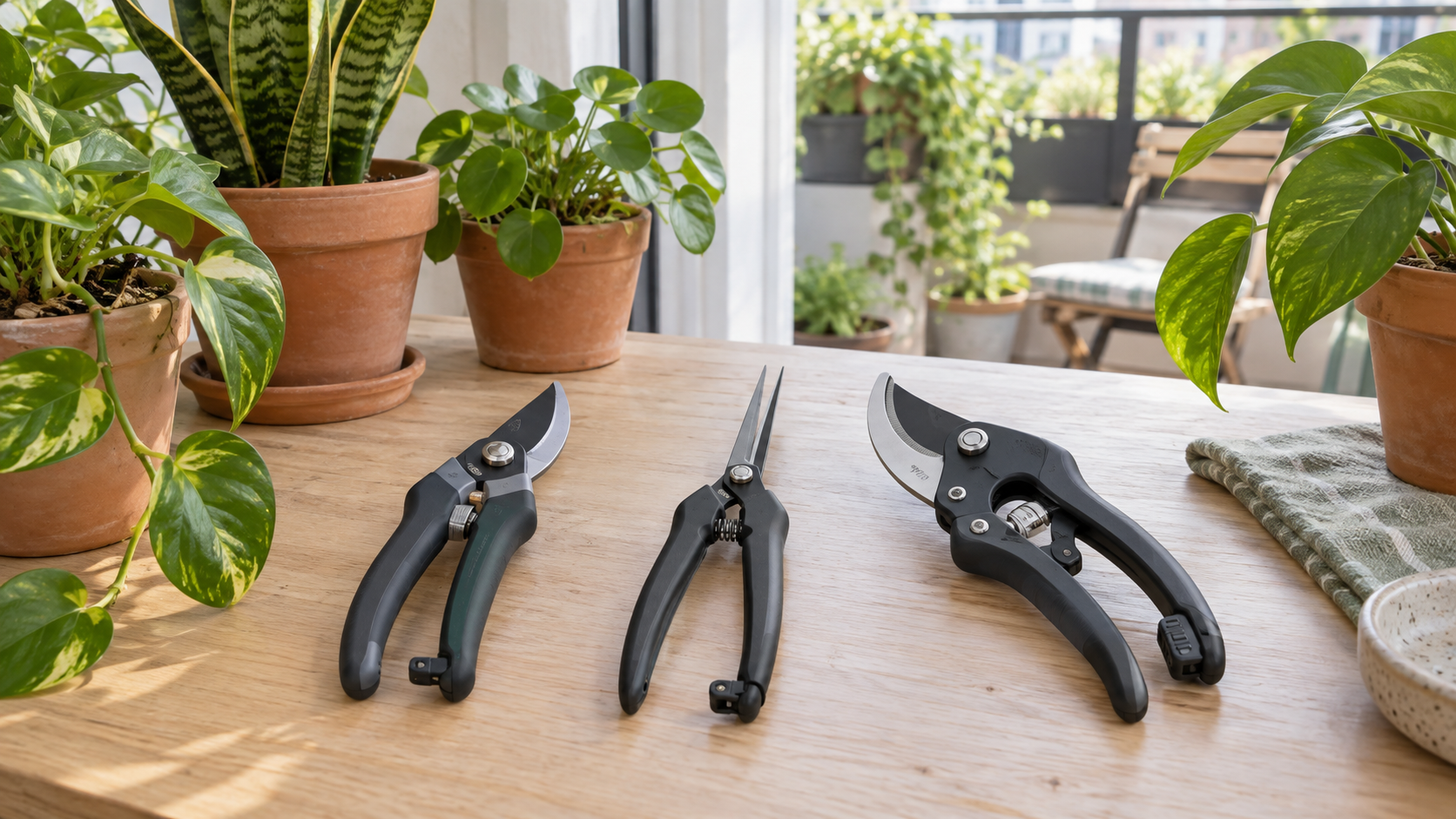
Quick decision before shopping
First measure the available space, identify the setup or surface constraints, and decide who will maintain the item. Skip the category if it blocks access, conflicts with the manufacturer's instructions or lease, or adds more upkeep than the problem justifies.
Match the blade to the stems before shopping: These affiliate category searches are comparison starting points, not tested rankings.
- Browse category: Compare compact bypass prunersCheck the maker's stated cutting capacity, grip span, lock position, blade material, replacement parts, and care instructions.
- Browse category: Compare precision plant snipsCheck blade length, tip protection, spring and lock design, cleaning guidance, and whether the narrow blades fit the intended soft growth.
- Browse category: Compare ratcheting hand prunersConsider only when repeated squeezes suit your grip and the exact tool is rated for the stem; the larger mechanism takes more storage room.
Confirm specifications, warnings, handedness, replacement parts, cleaning and lubrication instructions, and return terms for the exact tool. Do not infer capacity from blade size.
Quick comparison
| Format | Best fit | Main tradeoff | Skip when |
|---|---|---|---|
| Precision snips | Soft tips, spent flowers, and narrow access between leaves | Less leverage and a pointed tip that needs protected storage | The stem exceeds the maker's limit or is hard and woody |
| Compact bypass pruners | Routine cuts on small, firmer live stems | Bulkier head and wider grip than snips | The head cannot reach the cut without contacting nearby growth |
| Ratcheting pruners | Users who prefer several staged squeezes on compatible stems | More mechanism, weight, cleanup, and storage space | You want one quick controlled cut or the ratchet complicates release |
Start with the stem, not the tool bundle
Look at the routine cuts you actually make. Tender tips and small leaf stems call for control and visibility. Firmer stems may need the curved, passing-blade action of a bypass pruner. Measure a typical stem and compare it with the manufacturer's cutting-capacity statement; leave margin rather than working at the maximum on every cut.
Do not use household scissors, anvil pruners, or a large outdoor pruner by default. Scissors may not be made for plant material, anvil blades press a cutting edge against a flat surface, and an oversized head can hide the intended cut. For thick woody growth, tree branches, damaged stems under tension, or work above a safe standing reach, use the right larger-scale tool or qualified help.
What matters most
Blade format and control
Bypass pruners use two blades that pass one another. For live stems, the cutting blade should be sharp, aligned, and used according to the maker's instructions. Narrow snips improve sightlines in dense foliage but their pointed tips need deliberate handling and a secure cap or lock.
Hand fit and lock access
Compare the closed and open handle span, not just the overall length. Your hand should control the tool without stretching to reach the handles or shifting into the blade path. Left-handed shoppers should verify whether the lock, handle shape, and blade visibility work from that side; a symmetrical-looking handle is not proof of equal access.
Spring and return action
A spring opens many pruning tools after each squeeze. Test only as the seller permits and check whether the return feels predictable. A very forceful spring can tire a hand, while a weak or exposed spring can complicate maintenance. Ratcheting tools intentionally cut over several squeezes, so confirm how to release and close the mechanism before use.
Must-haves
- A documented cutting limit: Match it to the actual stems and never force a tool through material outside that range.
- A lock you can verify: It should keep the blades closed in storage without placing fingers near the edge.
- Controllable grip span: Choose a handle size and texture that remain manageable with clean, dry hands.
- Care instructions: The maker should explain cleaning, drying, lubrication, sharpening or blade replacement, and storage.
- A protected storage place: Keep the closed tool dry and inaccessible to children and pets.
Nice-to-haves
- Replaceable blade or spring: Useful only when the correct parts are available and replacement instructions are clear.
- High-visibility handles: Easier to find among pots and foliage, especially outdoors.
- A tether hole: Potentially useful for organized storage, but not a substitute for a closed lock or blade cover.
- Low-friction blade treatment: Consider it only with clear maker cleaning guidance; no coating eliminates the need to clean and dry the blade.
Cleaning between plants
Plant-care guidance varies by species and problem, so follow reliable plant-specific advice when disease is suspected. Remove visible sap and debris after use, then clean, dry, and lubricate only as the tool maker directs. Do not mix cleaning products, improvise a chemical soak, or put a tool away damp.
If a plant shows unfamiliar discoloration, widespread dieback, pests, or signs of disease, pause before pruning and identify the problem through a reliable horticultural source or local extension service. A new pruner does not diagnose or treat a plant condition.
Balcony and apartment setup
- Work on a stable surface with enough light to see the intended stem and keep the free hand behind the blades.
- Keep tools and cuttings away from balcony edges, walkways, doors, children, and pets.
- Check lease or building rules before trimming shared, exterior, or landlord-owned plants.
- Collect cuttings rather than dropping them over a railing; check local disposal or composting rules.
- Store the tool closed, dry, and indoors when the maker warns against weather exposure or freezing conditions.
Who should skip each format?
Skip precision snips if most stems are woody, the pointed tip is difficult to control, or safe covered storage is unavailable. Skip compact bypass pruners if the grip is too wide, the head blocks the cutting view, or your plants only need occasional soft-tip trimming. Skip ratcheting pruners if you dislike staged squeezes, cannot release the mechanism predictably, or need a narrow head for crowded foliage.
Skip DIY pruning when the plant is poisonous or irritating and you do not have trustworthy handling guidance, when growth is beyond a safe reach, or when the work involves a tree, structural support, power line, shared property, or another hazard. Use qualified help for those situations.
Buying checklist
- Identify whether the usual stems are tender, firm, or woody.
- Measure representative stems and check the maker's stated cutting capacity.
- Choose precision snips for tight soft-growth work or bypass pruners for firmer compatible stems.
- Check closed and open grip span, handedness, weight, spring action, and lock access.
- Verify cleaning, drying, lubrication, sharpening, and replacement-part instructions.
- Plan a closed, dry storage spot away from children and pets.
- Skip bundles that add blade formats you cannot identify a safe use for.
Bottom line
Most houseplant and balcony gardeners need either narrow precision snips for soft crowded growth or a compact bypass pruner for small firmer stems—not a large multi-tool kit. Let the stem size, sightline, grip, lock, and maintenance routine decide. If the task falls outside the exact tool's stated limit or your plant-care knowledge, stop rather than forcing the cut.
Next step: Put this decision in context with the home-product buying framework guide.