Is a Fabric Shaver Worth It for Clothes and Upholstery?
A fabric shaver can be worth it when pills keep forming on ordinary, intact textiles that the care label and tool instructions allow you to treat. It is usually a poor buy for delicate, loose-knit, embellished, damaged, irreplaceable, or undocumented fabric—or when a sweater comb, lint roller, careful hand removal, or professional care better matches the problem.
As an Amazon Associate, The Good Home Doc may earn from qualifying purchases.
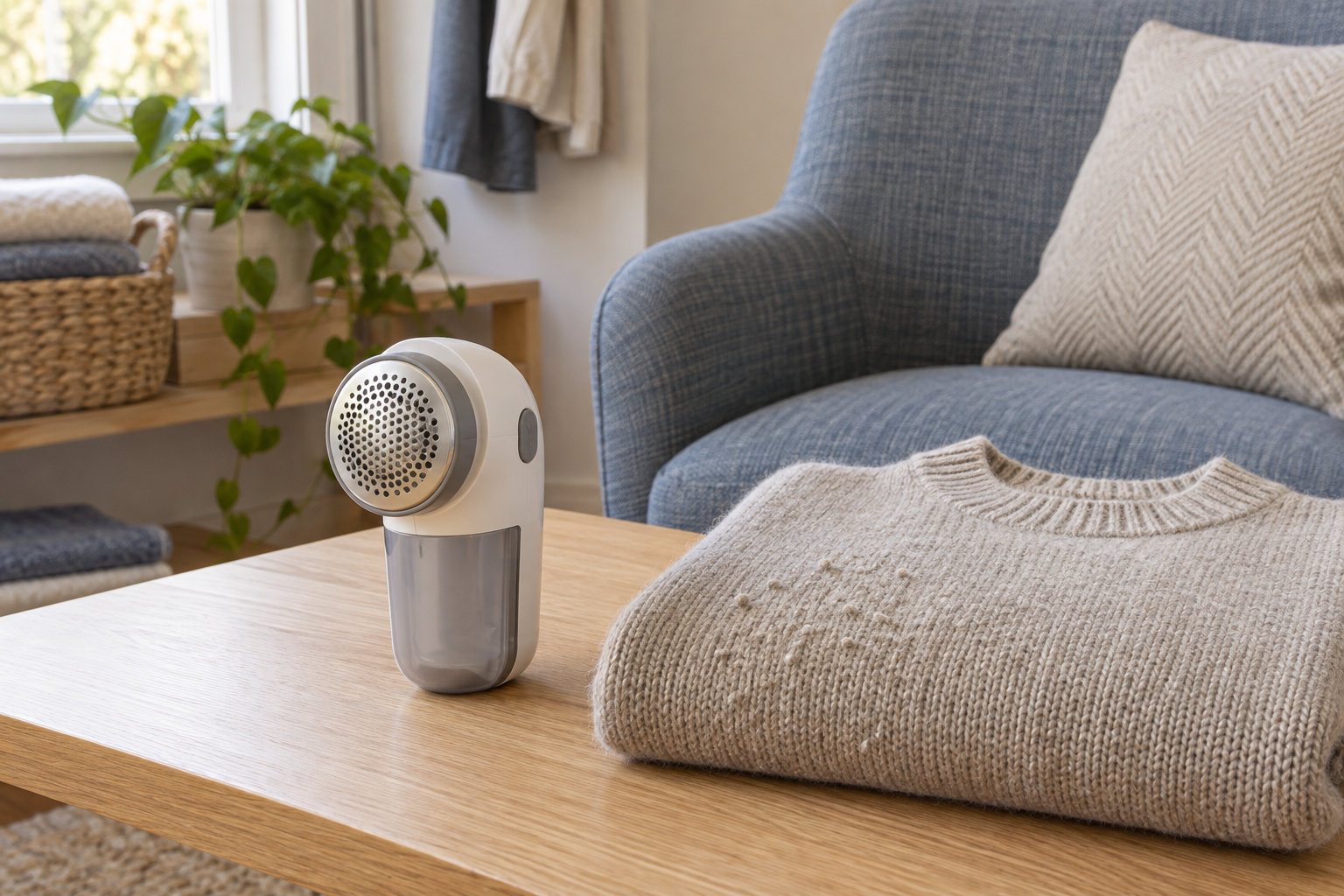
Quick decision before shopping
First measure the available space, identify the setup or surface constraints, and decide who will maintain the item. Skip the category if it blocks access, conflicts with the manufacturer's instructions or lease, or adds more upkeep than the problem justifies.
Start with the textile, not the motor: These affiliate category links are comparison starting points, not tested winners.
- Browse category: Compare fabric shavers with adjustable guardsCheck approved textiles, guard settings, head size, power, blade access, debris cup, cleaning, and replacement parts.
- Browse category: Compare manual sweater combsA simpler option for documented compatible knits when you want direct control and have only occasional pilling.
A fabric shaver cuts raised fibers close to the textile surface. That makes it more consequential than a lint roller, which lifts loose debris. It cannot restore thinned yarns, repair snags, remove stains, deep-clean upholstery, or make worn fabric new. Follow the textile care label and the shaver maker's current instructions; when either excludes the material or gives no usable guidance, skip the tool.
Quick answer
- Probably worth it: several compatible, replaceable garments or an approved upholstery surface pill repeatedly, and you will test an inconspicuous spot and maintain the tool.
- Measure the risk first: the weave is textured, pills sit near seams or edges, the tool offers little control, or you cannot identify the fiber and care requirements.
- Probably skip it: fabric is loose-knit, lace, sheer, embellished, embroidered, damaged, stretched over hard details, valuable, sentimental, or costly to replace.
Identify the problem first
Pills are small tangles of fibers attached to fabric. Loose hair, dust, crumbs, and lint call for different tools; a shaver adds needless blade contact when debris is not anchored. Snags, pulled loops, holes, thinning areas, open seams, and worn patches are damage, not pilling. Do not shave them.
Inspect the item in strong light. On upholstery, check piping, tufts, buttons, zippers, seams, folds, and firm structure directly beneath the cover. These areas can change the distance between blade and fabric.
Decide whether the textile is a candidate
Read both sets of instructions: the textile's care label or furniture documentation and the tool manual. Do not infer approval from “safe for most fabrics.” Confirm the material or construction is included and note exclusions.
Even an allowed material needs an inconspicuous test patch. Use the least aggressive permitted setting and a clean, undamaged tool. Check for pulled yarns, uneven texture, fuzz loss, color change, or thinning before expanding the work. Stop if the fabric catches or resistance changes.
Electric shaver or manual care?
| Option | Best fit | Main tradeoff |
|---|---|---|
| Electric fabric shaver | Repeated work on larger, documented compatible surfaces | Faster coverage, but blade condition, pressure, settings, power, and cleaning matter |
| Manual sweater comb | Occasional care on a compatible knit | Direct control, but still requires correct direction and light pressure |
| Lint roller or brush | Loose lint, hair, and debris | Does not remove attached pills |
| Professional textile care | Valuable, delicate, fitted, or uncertain items | Costs more, but avoids experimenting on a high-consequence surface |
| Leave it alone or replace it | Damage is structural or useful life is over | No cosmetic refresh, but no added cutting risk |
Features that matter
- Documented textile guidance: clear allowed and excluded materials beat vague compatibility claims.
- Guard or height control: adjustment can increase blade separation; it does not eliminate snag risk.
- Manageable head size: larger heads cover flat areas, while smaller heads may be easier near curves. Avoid seams and details unless allowed.
- Visible debris cup: stop and empty it before buildup interferes.
- Maintainable cutting head: instructions should explain safe cleaning, inspection, replacement, and reassembly.
- Practical power setup: compare cord route, battery, charging, and storage.
The work surface matters
Garments generally need a clean, stable surface and the positioning described by their care instructions. Do not work while wearing the garment or while another person or pet touches it. Keep fabric flat enough that folds do not rise into the head, without stretching it beyond normal shape.
Upholstery is less forgiving because fabric tension and hidden structure vary. If the furniture maker does not authorize this care, or the cover cannot be positioned as the tool requires, do not improvise. A removable cover is not automatically shaver-safe.
Count the maintenance
Unplug the tool or follow its power-isolation instructions before opening the head. Empty the cup as directed, remove fibers by the approved method, inspect the foil or guard and blade, and reassemble exactly as shown. Never use a bent, loose, chipped, corroded, or damaged cutting part.
Store the dry tool with its protective cover if supplied, away from children and pets. Follow battery and charging instructions. If required replacement blades or foils are unavailable, the product may become disposable sooner than expected.
Who should skip a fabric shaver?
- Anyone unable to confirm that both textile and tool instructions permit the use.
- Owners of delicate, loose, sheer, lace, embellished, embroidered, damaged, heirloom, or high-value textiles.
- Households dealing mostly with hair, dust, stains, odors, snags, holes, or thinning rather than pills.
- People who will not test an inconspicuous area or inspect and clean the head.
- Upholstery with buttons, piping, tufts, folds, loose covers, or hidden structure that prevents a controlled flat pass.
- Anyone expecting the tool to restore worn fibers or permanently stop pilling.
Bottom line
A fabric shaver is worth it for recurring pilling on ordinary textiles that are explicitly compatible, low consequence to test, and easy to position. Buy for control, usable instructions, and maintainability—not promises that fabric will look new. If the textile is delicate, damaged, valuable, or undocumented, use a gentler approved method, seek professional textile care, or leave it alone.
Next step: Put this decision in context with the home-product buying framework guide.