How to Choose Folding Desks for Multipurpose Rooms
A folding desk earns its space when a bedroom, living room, or guest room needs to change jobs after work. The useful choice is not simply the smallest desk: it is the format that holds the actual equipment, opens without an awkward lift, stays stable in use, and stores where you planned.
As an Amazon Associate, The Good Home Doc may earn from qualifying purchases.
Quick decision before shopping
First measure the available space, identify the setup or surface constraints, and decide who will maintain the item. Skip the category if it blocks access, conflicts with the manufacturer's instructions or lease, or adds more upkeep than the problem justifies.
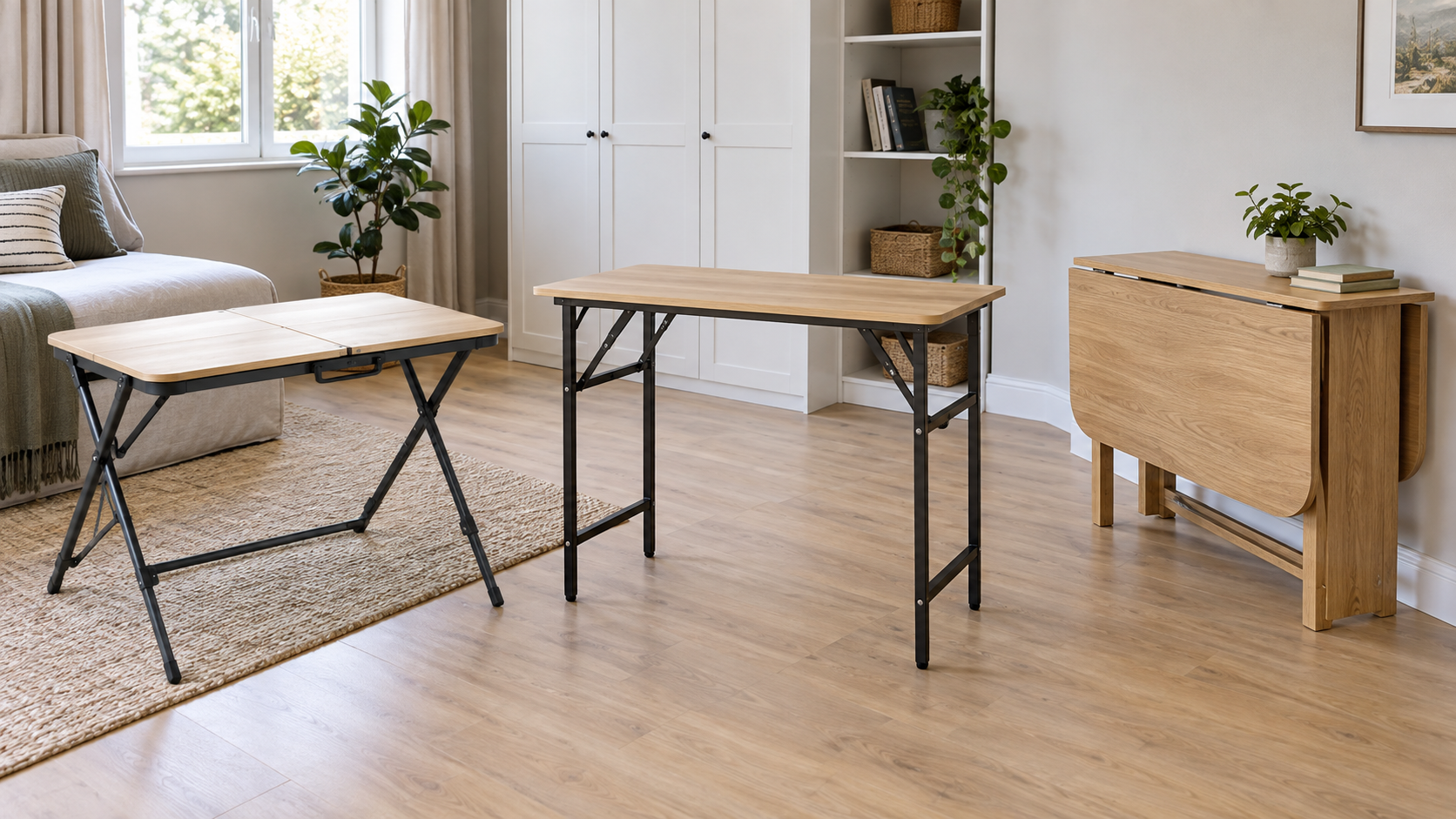
Compare the format that fits your room-change routine:
- Browse category: Compare compact folding-leg desksCheck open and folded dimensions, leg-lock instructions, work-surface depth, assembly, and floor contact.
- Browse category: Compare fold-in-half desk tablesCheck center-seam flatness, handle position, folded weight, latches, bracing, and storage orientation.
- Browse category: Compare freestanding drop-leaf desksVerify leaf support, knee space, base footprint, hardware, assembly, and clearance through the full folding path.
These are category searches, not tested rankings. Confirm current dimensions, stated load and intended use, locking or support method, assembly instructions, materials, care, warranty terms, and return policy on the listing or maker documentation.
This is a best-fit framework, not a hands-on product ranking. Folding hardware, load guidance, dimensions, and setup steps vary by model, so use the current manufacturer instructions as the final reference. If you are still deciding between a portable seated surface and furniture-size workstation, use the lap desk versus folding desk comparison. If the question is whether any folding surface earns its space, start with the folding-desk buy-or-skip guide.
Quick Best-Fit Guide
- Fast daily open-and-close routine: a one-piece folding-leg desk with accessible locks and a manageable lift.
- Occasional work plus compact transport: a fold-in-half table format with a secure closed latch and a handle that does not interfere in use.
- Desk-like appearance when closed: a freestanding drop-leaf format, provided its base still fits the room and its support mechanism is easy to inspect.
- Very light, short sessions: a lap desk may be simpler than storing and moving a furniture-size surface.
Measure the Room in Both Modes
Draw the desk's open footprint on the floor with removable tape, including the chair pulled back far enough to stand. Check doors, drawers, sofa beds, closets, vents, baseboards, outlets, and the room's main walking path. A multipurpose room must still work when the desk and chair are deployed.
Then measure the proposed storage space. Use the complete folded height, width, and depth—not a marketing label such as “slim.” Allow room for feet, handles, latches, hinges, and anything that projects when folded. Confirm whether the maker permits vertical storage or requires the desk to rest in a particular orientation.
Fit the Work Surface to the Real Setup
List everything that must stay on the desktop at once: laptop or monitor base, keyboard, mouse area, notebook, task light, and any dock. Compare those footprints with the usable surface, not just the outside dimensions. A hinge seam, rounded edge, brace, or raised lip may reduce the practical work area.
For a monitor or other concentrated load, follow the desk and equipment makers' placement and load guidance. Do not assume the stated total load means every spot on a folding top supports the same weight. If equipment must be removed each evening, include that handling and storage in the routine before deciding the desk is convenient.
Compare the Main Folding Formats
One-Piece Folding-Leg Desks
These keep the top intact while the legs fold underneath. They are often the quickest format to deploy, but braces and locks can reduce knee clearance or create pinch points during setup.
Choose one if: you need a conventional flat top and expect to fold the desk often.
Watch for: unclear lock engagement, legs that must be forced past cables, exposed pivots, uneven floor contact, and a folded package too large to move comfortably.
Fold-in-Half Table Desks
A center hinge makes the stored package shorter, which can help with a closet or car. The tradeoffs are a seam across the work surface, extra latches, and more steps before the legs and top are fully supported.
Choose one if: folded length matters more than having a seamless top.
Watch for: a raised or flexible center joint, latches that are awkward to reach, handles that protrude near the seated edge, and equipment placed across the hinge without maker approval.
Freestanding Drop-Leaf Desks
These keep a cabinet-like or narrow base in the room while one or more leaves fold down. They can look more furniture-like, but they do not disappear: measure the permanent base and the full leaf swing.
Choose one if: the room can hold a narrow permanent piece and you prefer not to carry the desk elsewhere.
Watch for: support arms in the knee zone, uneven leaf alignment, complicated assembly, restricted chair position, and wall-clearance assumptions. This guide excludes wall-mounted fold-down desks, which require a separate installation and wall-suitability decision.
Must-Haves Before Nice-to-Haves
Must-Haves
- Verified open and folded dimensions for both the room and storage location.
- A usable work surface deep enough for the complete equipment setup.
- Clear leg-lock, brace, latch, or leaf-support instructions.
- Stable floor contact and enough seated knee, shin, and chair clearance.
- A stated intended use and load arrangement that fit the planned equipment.
- A setup and carrying routine the user can repeat without rushed lifting or trapped fingers.
Nice-to-Haves
- A handle that remains comfortable when the full folded desk is carried.
- Adjustable floor contacts for maker-approved leveling.
- A cable opening that stays useful without crossing a hinge or fold path.
- A finish that matches the cleaning and storage conditions of the room.
Stability, Locks, and Pinch Points
Set the desk on the actual hard floor or rug and follow every setup step in order. Locks and braces should reach their documented position without improvising. Keep fingers, loose clothing, cords, and nearby objects away from folding joints. Never defeat a latch, add an unapproved shim, or keep using hardware that is bent, loose, cracked, or no longer engages as described.
A lightweight desk may move more easily between rooms, while a heavier model may be harder to set up and store. Weight alone does not establish stability. The frame geometry, joint condition, floor, load placement, and correct assembly all matter.
Cables and the Daily Room Reset
Trace power from the deployed desk to the outlet without stretching a cord across a doorway or fold path. Equipment and cables usually need to be removed before closing the desk unless the manufacturer explicitly provides another arrangement. A nearby basket or closed cabinet can hold the laptop stand, keyboard, lamp, and supplies so the room reset does not create a second clutter pile.
Time the entire reset once: shut down equipment, disconnect and store accessories, move the chair, fold the desk, and place it securely. If that sequence is too disruptive for a normal workday, a narrow permanent desk or rolling workstation may be the better fit.
Who Should Skip a Folding Desk
- Anyone who expects to leave a full monitor, lamp, documents, and accessories in place while folding the desk.
- People who cannot comfortably handle the desk's documented setup, folded weight, and storage route.
- Households where children or pets can reach folding joints, unsecured stored furniture, or a desk being opened.
- Users who need a fixed accessibility setup, specialized accommodation, or consistent equipment position that frequent folding would disrupt.
- Rooms where the open desk blocks an exit, doorway, vent, heater, closet, or necessary walking clearance.
- Anyone considering wall mounting; choose hardware and installation guidance specifically designed for the wall and get qualified help when the wall, anchors, utilities, or lease permissions are uncertain.
Buying Checklist
- Measure the desk, chair, and walking zone in the room's work mode.
- Measure the complete folded package and its planned storage route.
- Map every device on the usable top and verify maker load and placement guidance.
- Inspect how legs, braces, hinges, leaves, and latches reach their working positions.
- Check knee space, floor contact, cable routing, and chair movement.
- Plan where equipment goes before the desk folds.
- Confirm assembly, care, warranty, and return terms before buying.
Bottom Line
For frequent room changes, a one-piece folding-leg desk is usually the simplest format when its locks are easy to verify and its folded size fits. A fold-in-half desk is more storage-friendly when shorter folded length matters, while a freestanding drop-leaf desk suits rooms that can keep a narrow base in place. Choose from measured open and stored layouts—not the word “compact”—and skip the category if the reset routine, hardware, or equipment handling will make it harder to use safely and consistently. If the same room needs occasional extra seats, compare folding chairs for apartment guests by open footprint, stored package, carrying route, and floor contact.