Lap Desk vs Folding Desk for a Multipurpose Room
A lap desk is the lighter, faster option when work is occasional and an existing seat is genuinely usable. A folding desk asks for more floor space and a separate chair, but gives a larger, independent work surface for equipment and longer sessions. The right choice depends less on the word “portable” and more on your measured device setup, room-change routine, and storage route.
As an Amazon Associate, The Good Home Doc may earn from qualifying purchases.
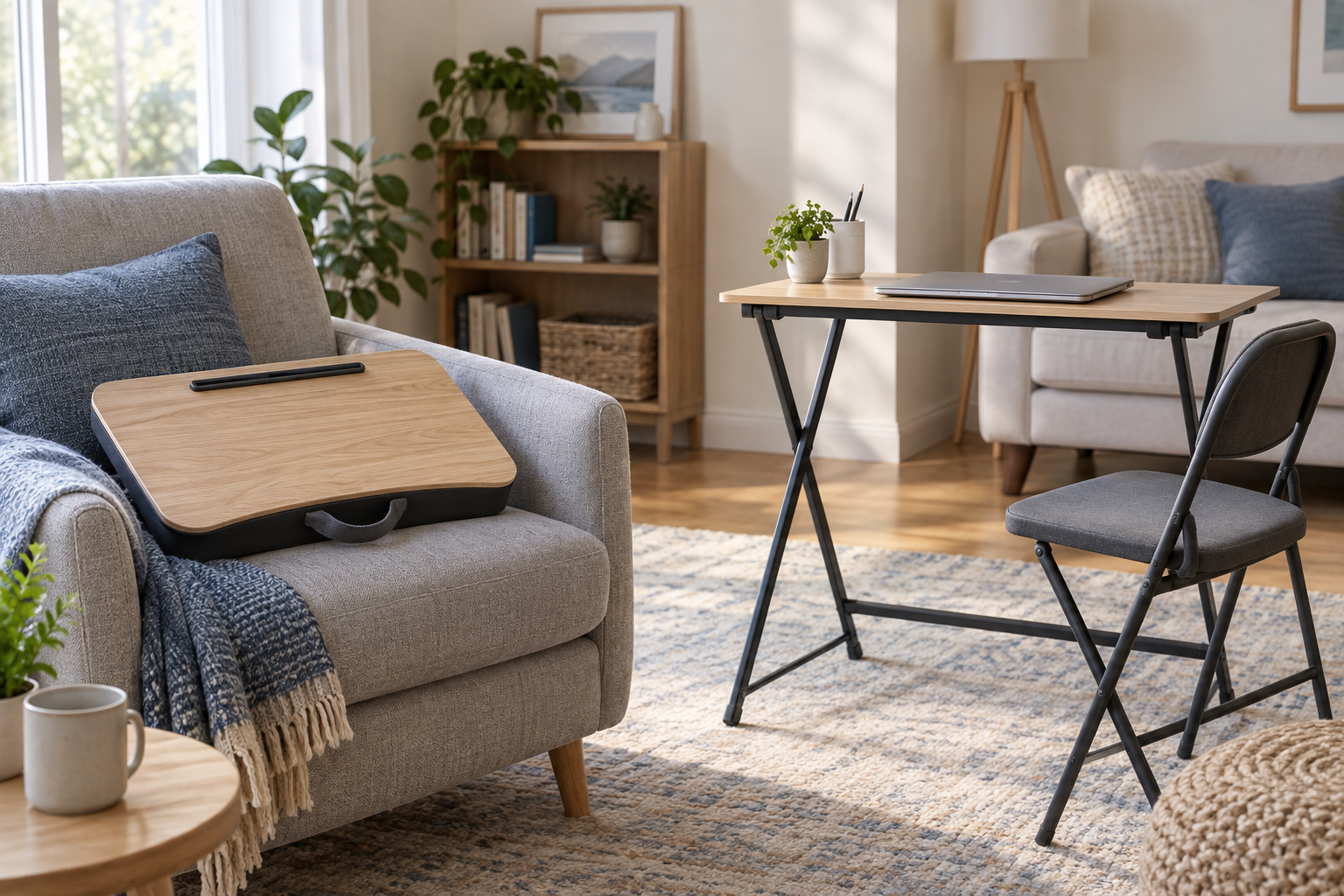
Quick decision before shopping
First measure the available space, identify the setup or surface constraints, and decide who will maintain the item. Skip the category if it blocks access, conflicts with the manufacturer's instructions or lease, or adds more upkeep than the problem justifies.
Compare only after measuring your device, seat, floor space, and storage spot: Browse category: browse portable lap desks or Browse category: browse compact folding desks.
These are category shortcuts, not tested rankings. Verify usable surface dimensions, product weight, stated load and intended use, leg or hinge locks, feet, device ledges, ventilation guidance, assembly, open and stored dimensions, care, warranty, and return terms.
The short answer
- Choose a lap desk for short, light-device sessions when a supportive chair or sofa already fits the work and the surface must move or store in seconds.
- Choose a folding desk when you need an independent, larger surface, can fit a separate chair, and can repeat the open-close and equipment-reset routine.
- Skip both if neither setup keeps exits and walking paths clear, the device cannot be used according to its maker’s ventilation guidance, or regular work calls for a permanent setup with more adjustability.
Side-by-side decision table
| Decision point | Portable lap desk | Freestanding folding desk |
|---|---|---|
| Working surface | Usually sized for one device and limited accessories. | Often provides more depth and room for separate inputs or papers. |
| Support | Depends on the user and the existing seat, or on short folding legs. | Stands on the floor and needs a compatible chair and knee clearance. |
| Room footprint | No separate furniture footprint, but occupies the seated user’s space. | Requires the complete desk-and-chair footprint while open. |
| Reset routine | Remove the device, lift the surface, and store it. | Remove equipment, close hardware as instructed, then move or store the desk. |
| Best fit | Occasional, portable, light-duty work. | Repeated room conversion with a more conventional workstation. |
Start with the work, not the product label
List what must sit on the surface at the same time: laptop or tablet, separate keyboard, mouse, notebook, charging cable, and any accessibility equipment. Compare those items with the manufacturer’s usable surface dimensions rather than the product’s total width. A raised edge, cup recess, hinge, or rounded corner can reduce usable space.
A lap desk is a poor fit when the device overhangs, its feet miss the rigid surface, or the ledge conflicts with ports or wrist placement. A folding desk is a poor fit when the top is deep enough but the frame, crossbar, or hinge layout removes needed knee or chair clearance.
Measure the room in both modes
For a lap desk, check the intended chair or sofa: seat width, arm spacing, cushion slope, and a clear way to sit down and stand up after the empty desk is moved. A portable surface does not make a soft or awkward seat suitable for every task.
For a folding desk, tape out the full open footprint plus the chair in working and pulled-back positions. Keep doors, drawers, vents, outlets, heaters, curtains, and the main walking route clear. Then measure the folded desk and the entire path to storage, including handles, projecting feet, latches, and turns through doorways.
Device support and ventilation
Follow the device maker’s instructions for supported surfaces, ventilation openings, power use, and operating temperature. A flat lap desk may keep a computer off blankets or cushions, but that does not prove cooler operation. Vent holes in the desk also do not guarantee compatibility with a particular device.
Use any ledge, strap, tilt feature, or accessory only as documented. Do not carry a device on either surface unless the manufacturer expressly designs and instructs the product for that use. Move the electronics separately before lifting, folding, or storing the work surface.
Setup, stability, and daily handling
A lap desk still needs a repeatable setup: place it on the supported area named by the maker, confirm it sits as intended, route cords without creating a snag, and clear it before standing. Cushion wear, loose trim, damaged ledges, and folding-leg hardware deserve inspection.
A folding desk needs a level floor and every required leg, brace, hinge, or lock fully deployed. Assembly-free does not mean inspection-free. Stop using either format if it is cracked, bent, loose, incomplete, or will not open and secure as instructed. Never treat a work surface as a seat, step, climbing aid, or support for an unstated load.
Storage and maintenance
Lap desks usually store faster, but their actual thickness, handle, cushion, and ledge can rule out a narrow slot. Store them in the orientation the maker permits, without leaning them where they can fall or placing weight on a cushion that could deform.
Folding desks can store against a wall or in a closet only when the maker allows that orientation and the folded unit is secure. Check product weight before planning repeated carrying. Clean tops, cushions, frames, hinges, feet, and latches by the documented method; inspect floor-contact points so grit or damaged caps are not dragged across a finish.
Who each option fits
A lap desk fits best when
- Work sessions are short and use one compact device.
- An existing seat has been checked for the user and task.
- The surface needs to move between rooms or disappear quickly.
- There is no safe floor area for a desk-and-chair footprint.
A folding desk fits best when
- The task needs more surface depth or separate input devices.
- The room can hold both the open desk and a suitable chair.
- A repeatable equipment reset is acceptable after work.
- The folded unit has a measured, manufacturer-permitted storage place.
Who should skip each option
Skip a lap desk if the device does not fit completely, a soft underside feels difficult to manage, the setup encourages cables across a walking route, or regular work needs more adjustability and support than a portable tray provides. Avoid products that promise to correct posture, prevent pain, or cool every computer.
Skip a folding desk if there is no room to pull the chair back, the reset requires an awkward lift, the folded furniture blocks a route, or you intend to leave heavy or fragile equipment on it while folding. A permanent narrow desk may be simpler when the workspace stays active most days.
Skip both when discomfort, mobility, vision, or other individual needs require a more specialized setup. Product format alone cannot establish ergonomic or medical suitability; seek qualified guidance when needed.
A practical pre-purchase check
- Measure every device and accessory that must fit at once.
- For a lap desk, measure the intended seat and verify the desk’s supported use.
- For a folding desk, tape out the open desk, chair, pullback space, and walking route.
- Record product weight, usable surface, stated load basis, locks, feet, and device guidance.
- Measure the stored size, permitted orientation, grip points, and complete carrying path.
- Read assembly, opening, closing, cleaning, inspection, and warranty instructions.
Bottom line
Choose a lap desk when true portability and fast storage matter more than surface area and your measured seat-device combination works. Choose a folding desk when the room can support a conventional temporary workstation and the larger setup and reset are realistic. Neither is a universal ergonomic upgrade: buy by exact fit, documented use, and the routine you will actually repeat.