Is a Folding Desk Worth It for a Multipurpose Room?
A folding desk is worth considering when the room genuinely needs to change jobs, the complete work setup fits on the desk, and one person can open, clear, fold, and store it without turning every work session into a furniture project. It is usually not worth it when the desk will stay open, equipment cannot remain organized between sessions, or a narrow permanent surface would use the same floor area more predictably.
As an Amazon Associate, The Good Home Doc may earn from qualifying purchases.
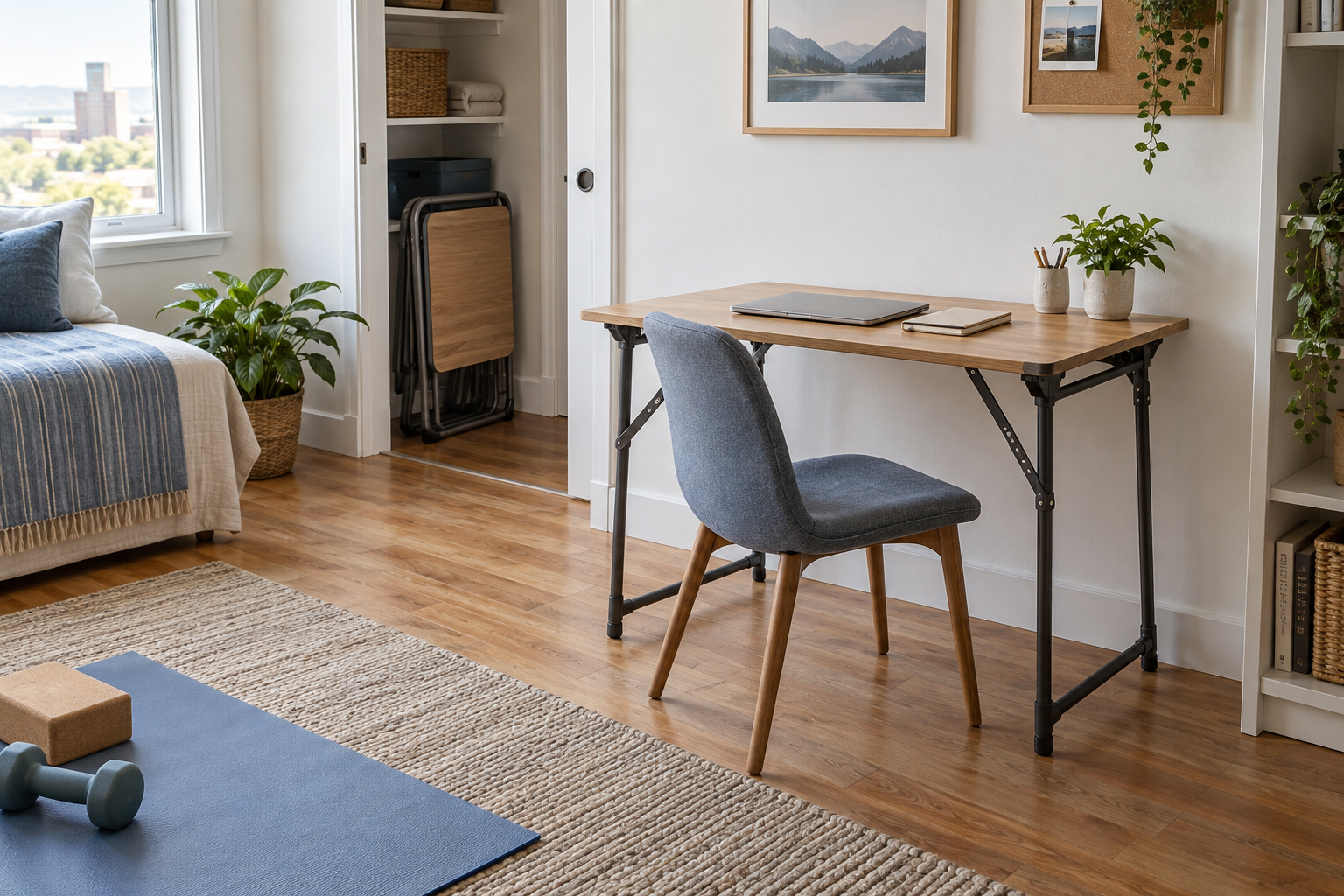
Quick decision before shopping
First measure the available space, identify the setup or surface constraints, and decide who will maintain the item. Skip the category if it blocks access, conflicts with the manufacturer's instructions or lease, or adds more upkeep than the problem justifies.
Shop only after mapping both versions of the room: This affiliate category link is a comparison starting point, not a tested winner.
- Browse category: Compare compact folding-desk formatsCheck open and folded dimensions, usable top size, stated load, product weight, locks or braces, assembly, storage orientation, floor contact, and maker instructions.
This guide answers whether a folding desk belongs in the room at all. It does not rank models or assume that “compact” means easy to move. Dimensions, load guidance, folding sequences, hardware, anchoring requirements, and permitted storage positions vary; verify them in the current manufacturer documentation.
Quick answer
- Probably worth it: you reclaim the desk footprint several times a week, can store the cleared equipment nearby, and have a measured, permitted place for the folded desk.
- Measure before deciding: the room converts only occasionally, the chair takes more space than expected, or monitors and accessories make every reset complicated.
- Probably skip it: the desk will remain open most days, folding blocks a door or walkway, hardware is difficult to operate, or stored furniture could tip or be reached by children or pets.
Start with two floor plans
Measure the room in work mode and in its other use—sleeping, exercising, hosting, or living. In work mode, mark the full desk footprint, chair pullback, space to stand, door swings, drawers, closet access, vents, heaters, outlets, and the main walking route. Then repeat the check with the desk folded and placed in its proposed storage position.
Use actual product dimensions rather than “small-space” labels. Folded feet, hinges, handles, braces, and latches can make the stored package thicker than the top alone. Measure every doorway and turn along the storage route, and confirm whether the manufacturer permits vertical storage or requires another orientation.
Count the whole room-reset routine
The desk saves space only after the surface is cleared. List what must move after each session: laptop, monitor, stand, lamp, keyboard, paperwork, charger, and chair. Give those items a nearby storage home before buying the desk. If the equipment becomes a floor pile, the room has not actually regained useful space.
Run a paper version of the routine: disconnect equipment, clear the top, move the chair, release the supports, fold the desk, carry or roll it to storage, and reverse the process next time. Frequent short work sessions often favor a narrow permanent desk because the repeated reset costs more effort than the reclaimed area is worth.
Check whether the work surface is enough
Sketch the usable top to scale and place every item on it. Allow room for hands, papers, ventilation, and cables—not just the footprint of a closed laptop. A listed width and depth may include edges or frames that are not usable work area. Follow the desk maker's stated load and placement guidance; do not treat the maximum load as a target or as proof of stability.
Check knee clearance, leg and brace positions, chair width, and the height of the complete setup. A folding desk is still a poor fit if crossbars crowd the seated position or if the working height does not suit the intended chair and task. People who need a fixed ergonomic or accessibility setup may be better served by a stable permanent arrangement selected for those needs.
Hardware determines the daily experience
Look for a documented opening sequence and supports or locks that visibly reach their working position. Inspect where fingers, loose clothing, cables, and nearby objects could enter folding joints. The person using the room should be able to manage the complete product weight and folding path without twisting, overreaching, or balancing the desk against a wall.
Weight alone does not establish stability. Frame geometry, correct assembly, the condition of hinges and fasteners, floor level, load placement, and engaged supports all matter. Stop using the desk if a lock no longer engages as described or if a joint, top, brace, or foot is loose, cracked, bent, or damaged.
Compare the simpler alternatives
| Option | Best fit | Main tradeoff |
|---|---|---|
| Folding desk | The floor area must be reclaimed regularly | Equipment clearing, moving, hardware, and storage |
| Narrow permanent desk | Frequent work with a setup that should stay ready | Occupies a fixed strip of the room |
| Freestanding drop-leaf surface | A slim base can remain while the top changes size | The base still takes space and support hardware needs clearance |
| Lap desk | Brief, light laptop or writing sessions | Limited surface, equipment support, and positioning |
| Wall-mounted folding desk | The wall, installation, lease, and intended load are verified | Installation and wall suitability require more planning |
Who should skip a folding desk?
- Anyone who expects to fold it with a monitor, lamp, or loose equipment still on top.
- Rooms where the open desk or chair blocks an exit, doorway, vent, heater, closet, or necessary walking path.
- Households without a secure storage position that follows the maker's instructions.
- People who cannot comfortably control the desk through its complete folding and carrying sequence.
- Users who need a permanently positioned workstation or specialized accommodation.
- Renters considering a wall-mounted format without written permission and verified wall and installation requirements.
Bottom line
A folding desk is worth it when reclaiming the floor area is frequent and valuable enough to justify clearing equipment, operating hardware, and storing the furniture. Measure both room modes, time the reset, and assign storage for every accessory. If the desk would stay open or the routine feels burdensome on paper, a narrow permanent desk is usually the more honest use of the space.