How to Choose Folding Chairs for Apartment Guest Seating
The best folding chair for an apartment is the one that works in two places: where a guest will sit and where the chair will live afterward. Measure the open chair around the table, then check folded thickness, carrying weight, hinge design, floor contact, and the storage route. A slightly larger chair that is comfortable and easy to handle can be more useful than a thin chair nobody wants to sit on.
As an Amazon Associate, The Good Home Doc may earn from qualifying purchases.
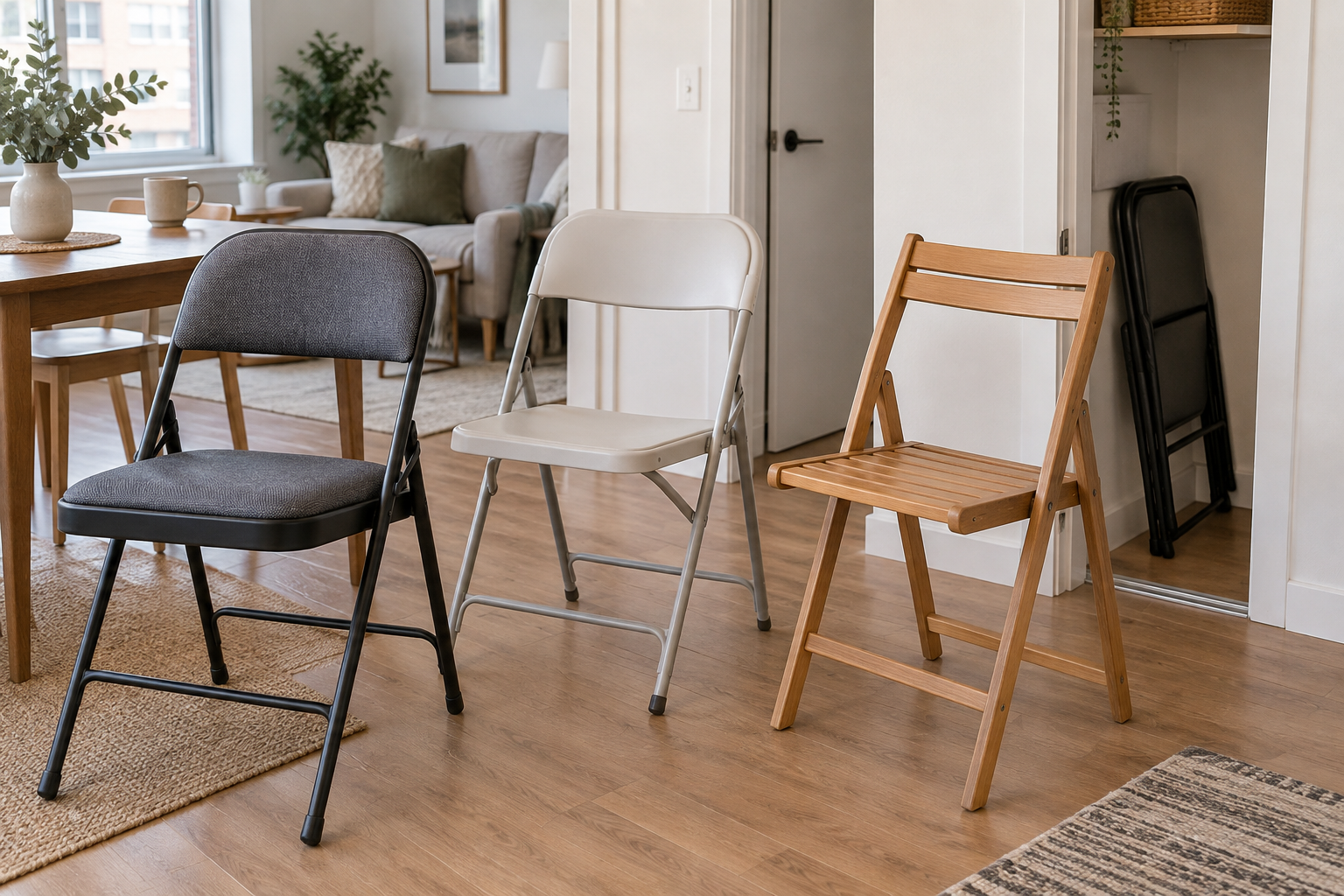
Quick decision before shopping
First measure the available space, identify the setup or surface constraints, and decide who will maintain the item. Skip the category if it blocks access, conflicts with the manufacturer's instructions or lease, or adds more upkeep than the problem justifies.
Compare chairs only after measuring the open and stored positions: Browse category: Browse compact folding chairs for apartment guests.
This is a product-category shortcut, not a tested ranking. Verify current open and folded dimensions, chair weight, stated capacity and use limits, locking or hinge instructions, seat dimensions, feet, materials, care, assembly, storage orientation, and manufacturer warnings.
Choose the chair format by its real tradeoff
| Format | Often fits | Check closely |
|---|---|---|
| Padded seat and back | Longer meals, games, or visits where basic cushioning matters | Extra folded thickness, fabric care, drying, and stored bulk |
| Molded plastic | Easy-wipe household use and frequent moving between rooms | Seat shape, flex, surface care, frame contact, and storage size |
| Slatted wood | A visible chair that needs to blend with ordinary furniture | Hard-seat comfort, finish care, hinge clearance, weight, and humidity guidance |
These are formats, not automatic winners. Construction varies within each group. Compare the exact chair’s documentation and dimensions rather than assuming padding guarantees comfort, plastic is lightweight, or wood is stronger.
Measure the guest setup, not just the chair
Mark the chair’s open width and depth on the floor where it will be used. Add room behind the seat for a person to pull it out and sit without hitting a wall, cabinet, radiator, curtain, or another chair. At a table, compare seat height with the underside and any apron or crossbar; then check usable knee clearance.
Walk the route from storage to the setup. Note closet openings, hallway turns, door handles, stairs, and any place the folded chair must be lifted. Product weight matters most at the awkward part of that route, not while the chair is sitting still.
Give every folded chair a storage address
Measure folded thickness, width, height, and any feet or hinge parts that project beyond the main frame. Multiply thickness by the number of chairs, but leave room for handles, irregular frames, and safe removal. Do not assume several chairs nest tightly unless the maker documents that arrangement.
Choose a dry indoor location where chairs will not block an exit, utility access, electrical equipment, or daily closet items. Follow the manufacturer’s storage orientation. If chairs must lean, hang, stack, or be restrained, use only a permitted method and get landlord approval before adding wall hardware.
Inspect the seat, frame, and folding hardware
Seat height, usable width, back shape, and front-edge pressure determine whether a chair fits the intended guests. Overall width can include the frame without describing usable seat space, so look for an actual seat measurement. A test sit in a store is more informative than a generic comfort adjective when that option is available.
Read how the chair opens, locks, and closes. Keep fingers clear of hinge and brace paths and follow the exact sequence in the instructions. Check whether the feet sit fully on the apartment floor and whether the maker permits the surface. Never use a folding chair as a step stool, ladder, mobility aid, child restraint, or support for an unstated use.
Protect the rental surface realistically
Check the feet for complete contact, trapped grit, worn caps, sharp edges, or exposed fasteners before each setup. Added floor pads can shift, alter contact, catch during folding, or conflict with instructions. Ask the landlord or property manager about floor-care restrictions and use only compatible protection.
Do not promise a mark-free move-out. Dirt, dragging, moisture, chair movement, floor finish, and long storage contact all affect risk. Lift chairs as instructed rather than dragging them, clean feet before use, and place them only on a level surface permitted by the manufacturer.
Must-haves and nice-to-haves
Must-haves
- Open dimensions that leave usable table, wall, and walkway clearance.
- Folded dimensions and weight that fit the storage space and carry route.
- A documented stated capacity, intended household use, and clear setup instructions.
- Folding hardware the household can operate without forcing or bypassing a lock.
- Stable, complete foot contact on the intended level floor.
- Seat dimensions that fit expected users and table height.
Nice-to-haves
- An integrated carry opening or grip that the instructions permit.
- Replaceable manufacturer-approved feet or caps.
- Wipe-clean surfaces when food and drink are likely.
- A finish and profile that look acceptable if storage stays visible.
Setup and maintenance in a rental
Open each chair completely and confirm the instructed supports or locks are engaged. Keep it on a level surface, away from door swings and tight circulation paths. Children and pets can add unexpected movement, so follow supervision warnings and store folded chairs where they cannot be pulled over.
Clean only with the approved method, especially around upholstery, finishes, joints, and labels. Let every part dry before folding. Inspect hinges, braces, fasteners, feet, frame alignment, cracks, corrosion, loose fabric, and other conditions named by the manufacturer. Stop using a damaged, incomplete, unstable chair or one that does not open and lock as instructed; do not improvise a structural repair.
Who should skip folding chairs?
- Households with no measured indoor storage spot or clear carrying route.
- Anyone who needs everyday dining comfort; a permanent chair may use the space better.
- People who cannot comfortably unfold, lock, lift, or store the chair.
- Homes where the only setup narrows an exit or busy walkway.
- Users who need a mobility, transfer, accessibility, or medical-support product rather than ordinary guest seating.
- Renters whose planned storage requires unapproved wall hardware or conflicts with lease restrictions.
Bottom line
Choose apartment folding chairs by the complete routine: carry them out, open them, seat guests with real clearance, clean them, fold them, and return them to a measured storage spot. Start with open and folded dimensions, manageable weight, usable seat fit, understandable hardware, compatible floor contact, and realistic care. Skip the category when storage or handling is harder than the occasional seating problem.