Small-kitchen counter-space decision
Is a Countertop Paper Towel Holder Worth It in a Small Kitchen?
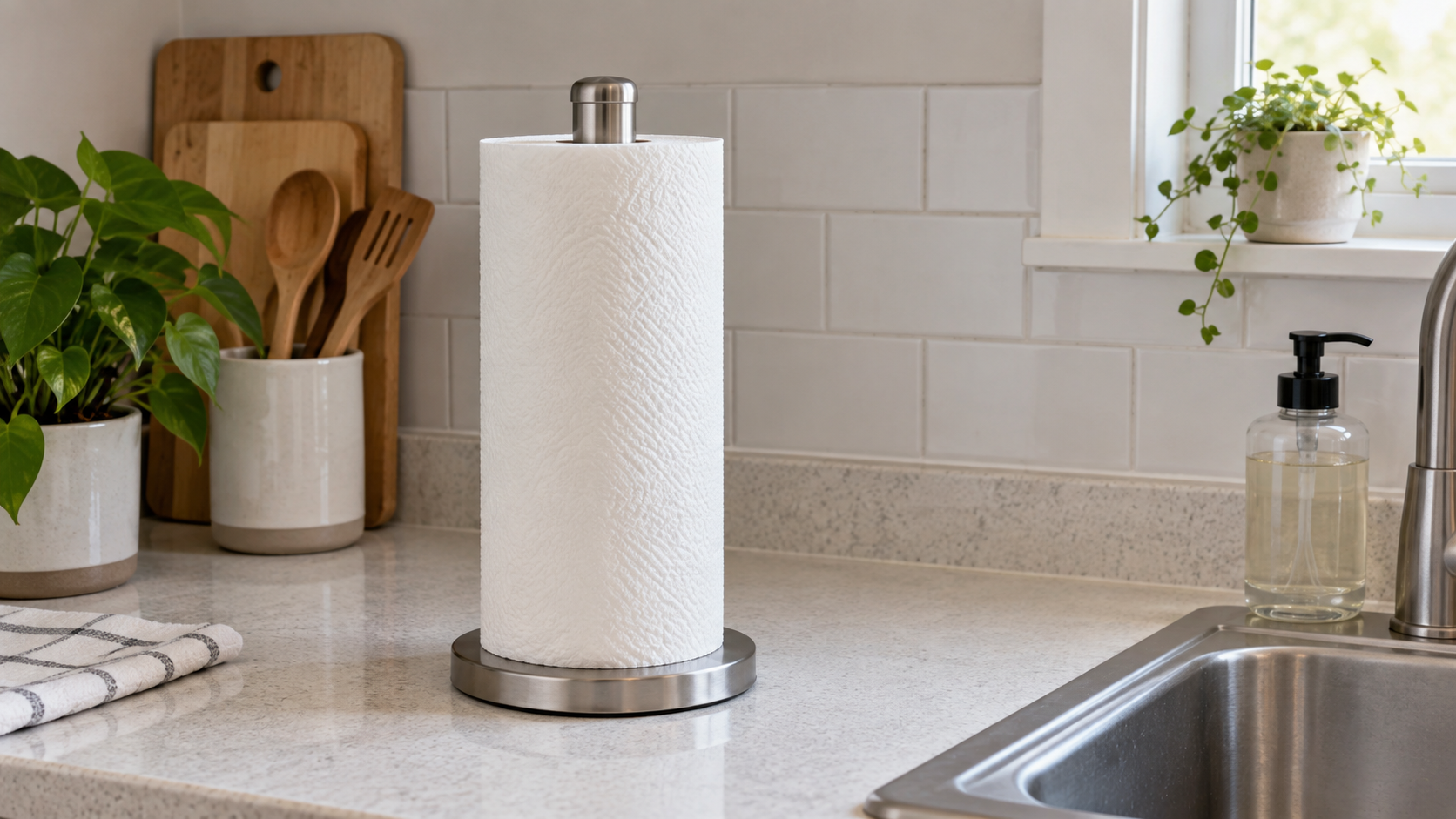
A countertop paper towel holder is worth considering when the roll is used often, needs to move between work zones, and can occupy one measured spot without stealing prep space. Skip it when the roll is rarely used, the only position is exposed to regular sink splash or cooking heat, or a cabinet, drawer, or compatible removable mount already keeps it accessible.
As an Amazon Associate, The Good Home Doc may earn from qualifying purchases.
Quick decision before shopping
First measure the available space, identify the setup or surface constraints, and decide who will maintain the item. Skip the category if it blocks access, conflicts with the manufacturer's instructions or lease, or adds more upkeep than the problem justifies.
Shop only after measuring the landing spot: This affiliate category search is a starting point, not a tested ranking.
- Browse category: Compare freestanding countertop paper towel holdersConfirm the complete base diameter, overall height, supported roll dimensions, feet, refill method, care instructions, and return terms.
This guide decides whether the freestanding category earns its space. It does not rank brands or promise one-handed tearing, stability, rust resistance, or roll compatibility without current manufacturer documentation.
Quick answer
It is probably worth it when paper towels are used most days, the roll needs to be portable, and a measured dry landing spot remains clear during normal kitchen work.
Delay the purchase until you measure a fresh roll, the holder base, upper-cabinet clearance, and the path your hand uses to pull and tear a sheet.
Skip it when permanent counter space is more valuable than portability, or when the only available location crowds the sink, food-prep zone, cooktop, or an appliance opening.
Start with the counter-space test
- Mark the base footprint. Use a paper circle or removable tape that matches the stated base diameter.
- Add the roll. A full roll can extend beyond the base, so compare its diameter and width with the complete working space.
- Check overhead room. Make sure the post and roll fit below upper cabinets and can be lifted off for refilling.
- Run the kitchen. Open nearby doors and drawers, use the faucet, and place a cutting board where it normally goes.
- Test the reach. The holder should be reachable without leaning across a hot, wet, or crowded work zone.
If the paper outline becomes an obstacle during this trial, the real holder will not solve the storage problem. The small-home organization guide can help identify a better zone.
What matters more than style
A base that fits the available spot
Compare the complete base diameter, not just the upright post. A wider or heavier base may resist movement, but weight alone does not establish stability. Check the maker's dimensions, product weight, feet, and intended pulling method. A high-friction underside can help on a compatible clean, dry surface; it still needs routine inspection so trapped grit does not mark the counter.
A roll path that actually works
Verify the holder's supported roll height and diameter against the rolls you buy. Include any spring arm, tension post, side bar, finial, or tear edge in the working envelope. Some designs load from the top; others require a cap or arm to move. Choose a refill motion that fits beneath the cabinet.
A controlled tear mechanism
A side arm or friction feature may help control the loose sheet, but do not assume universal one-handed use. Roll diameter, perforations, pull direction, base grip, and mechanism adjustment all affect the result. If the maker gives operating instructions, follow them and return a design that slides, tips, or requires an awkward pull in your setup.
Place it away from recurring splash and heat
The most convenient-looking spot beside the sink may also be the wettest. Leave enough distance to keep the roll and base out of routine faucet spray, wet dish traffic, and countertop puddles. Wipe moisture promptly according to the holder and counter care instructions, and move the holder to clean beneath it.
Keep paper products and the holder away from burners, hot cookware, appliance exhaust, open flames, and any clearance zone named by an appliance maker. If the only open counter is beside a cooking surface, choose another storage method rather than improvising a heat clearance.
Maintenance is part of the decision
Paper dust, cooking residue, crumbs, and moisture collect around the base and at seams. Look for a finish and shape that can be wiped using the maker's directions. Check whether the base pad, tension arm, or cap can be cleaned and dried without disassembly that the instructions prohibit.
Lift the holder during cleaning instead of dragging it. Clean and dry the counter beneath it, inspect contact points for trapped debris or moisture, and replace damaged pads only with compatible parts or guidance. A complicated finish or mechanism is not useful if the household will avoid maintaining it.
When a countertop holder earns its space
- Paper towels are used frequently enough that retrieving a stored roll interrupts routine cleanup.
- The complete holder and fresh roll fit one dry location without reducing essential prep space.
- The household benefits from moving the roll between the counter, dining table, and cleanup area.
- The stated roll range matches the rolls normally purchased.
- The base, feet, and pull method work on the actual counter without sliding or scratching.
- Refilling and wiping the holder are straightforward under the current cabinet layout.
Who should skip one?
- Small kitchens where every clear counter section is needed for food preparation or unloading.
- Households that use few paper towels and can keep the roll in a nearby cabinet or drawer.
- Anyone whose only spot is routinely wet, greasy, hot, or in the path of a door or appliance.
- People expecting every roll to fit or every model to tear cleanly with one hand.
- Anyone who needs the roll secured to one location and has a verified, permitted mounted option.
- Households likely to drag a heavy base across a delicate counter rather than lift it.
Alternatives that save counter space
A cabinet or deep drawer costs nothing when it keeps the roll dry and within easy reach. A basket or cleaning caddy can move the roll with other supplies without dedicating space to a single-purpose holder. A no-drill cabinet, door, or magnetic holder may clear the counter, but only when the exact mounting surface, clearance, lease, and appliance instructions permit it.
Mounted formats introduce their own fit and surface risks. The magnetic-versus-over-cabinet comparison helps renters screen two removable options, while the cloth-versus-paper-towel guide can help decide how often the roll should be part of the cleanup routine at all.
Bottom line
A countertop paper towel holder is worth it when frequent use and portability justify one measured, dry landing spot. The useful features are mundane: a base that fits, documented roll compatibility, a refill path with enough clearance, cleanable contact points, and a pull that behaves on your counter. If those checks fail, use an existing cabinet, drawer, caddy, or a verified removable mount instead.