Removable rental-kitchen storage
Magnetic Paper Towel Holder vs Over-the-Cabinet Holder for Renters
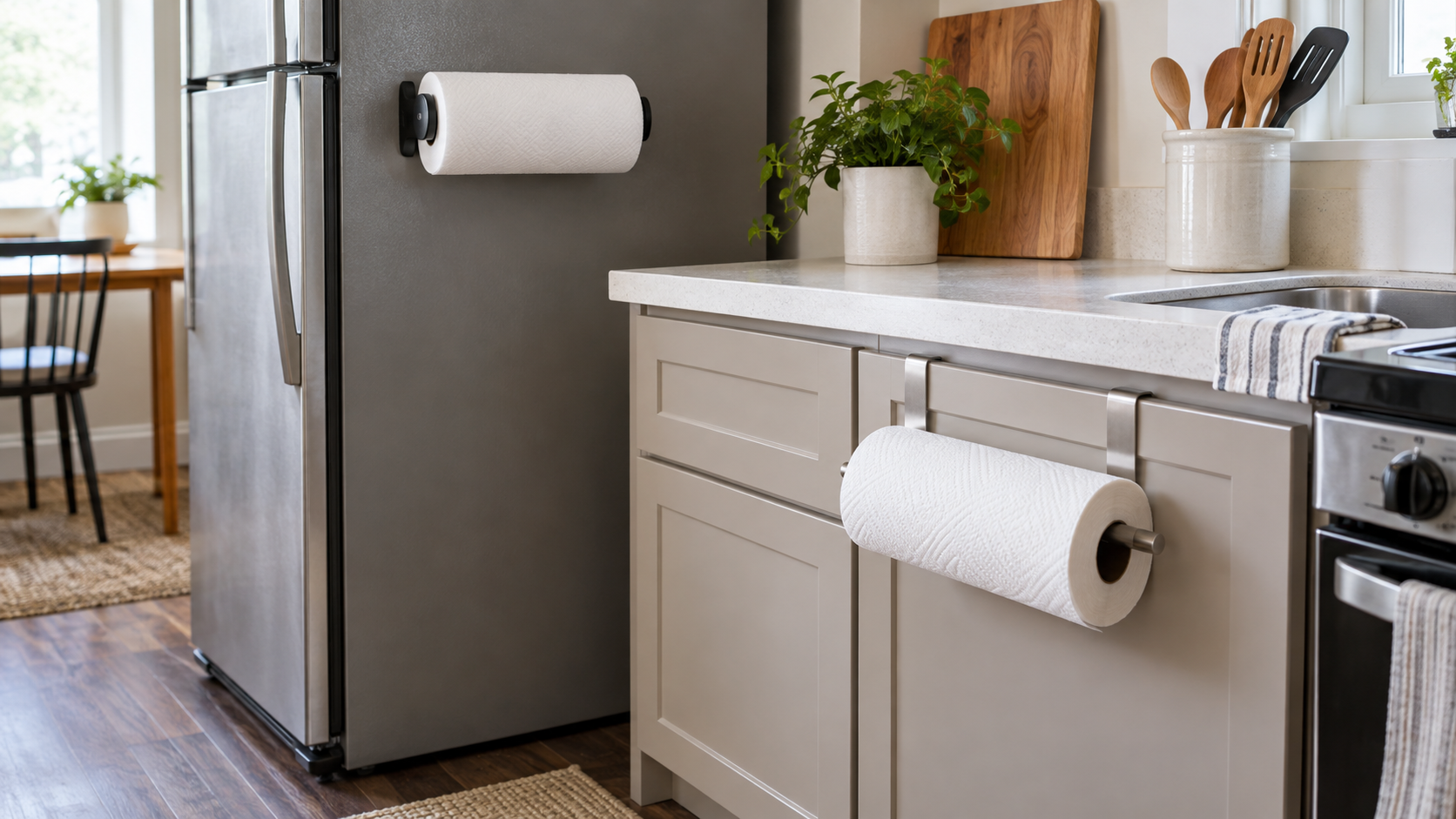
A magnetic paper towel holder is usually the cleaner choice when the exact side of your refrigerator attracts a magnet and leaves a convenient pull direction. An over-the-cabinet holder works without a steel surface, but its hanger has to fit the door without affecting closure, shelves, hinges, or the finish. Measure the mounting point and a fresh roll before choosing either one.
As an Amazon Associate, The Good Home Doc may earn from qualifying purchases.
Quick decision before shopping
First measure the available space, identify the setup or surface constraints, and decide who will maintain the item. Skip the category if it blocks access, conflicts with the manufacturer's instructions or lease, or adds more upkeep than the problem justifies.
Shop only after checking the mounting point: These affiliate category links are starting points, not tested winners or universal-fit recommendations.
- Browse category: Compare magnetic paper towel holdersCheck the magnet-base dimensions, approved surfaces, roll capacity, rod orientation, finish protection, stated limits, and cleaning instructions.
- Browse category: Compare over-the-cabinet paper towel holdersCheck door thickness, hanger width and padding, interior clearance, roll capacity, projection, stated limits, and care guidance.
Quick comparison
| Decision | Magnetic holder | Over-the-cabinet holder |
|---|---|---|
| Required surface | A manufacturer-approved panel that is actually magnetic | A door edge within the hanger's documented fit range |
| Main clearance check | Appliance doors, handles, vents, labels, walls, and nearby traffic | Door closure, counter lip, shelves, hinges, adjacent doors, and drawers |
| Movement during use | Can shift or rotate if the pull exceeds the holder's grip | Can rattle, rub, or lift as the cabinet door moves |
| Relocation | Lift off and recheck the next surface; do not slide across the finish | Lift off and remeasure the next door and its top gap |
| Better fit when | An accessible refrigerator side is verified and clear | No suitable magnetic surface exists but one cabinet door fits fully |
Start with the surface you actually have
A refrigerator that looks like stainless steel is not automatically magnetic on every panel. Test the intended spot with an ordinary magnet, then check the appliance manual or current manufacturer guidance for permitted attachments and required clearances. A magnetic front, side, and door can behave differently. Do not cover controls, warning labels, air openings, seams, handles, or service access.
An over-door holder needs more than the door thickness. Measure the door at the top edge, including any profile, bumper, trim, or protective pad. Check the gap above the door and the space behind it. The hanger must not scrape the counter, press into an interior shelf, stop the door from closing normally, or add strain that the cabinet hardware is not intended to carry.
Measure the roll, holder, and pull path
Measure the width and diameter of a new roll rather than a nearly empty one. Add the holder's end caps, brackets, and loading space. Then mark that full envelope at the proposed location. Open the refrigerator, cabinet, drawer, dishwasher, and nearby appliance doors to reveal collisions before buying.
Think about how the paper will be pulled. A side pull from a refrigerator may be awkward if the holder is behind the door swing or across a walking route. A holder on a lower cabinet door may require bending and can move with the door. Neither placement is useful if every tear makes the mount twist, the door rebound, or the roll brush a handle, floor, towel, sink splash, or cooking zone.
Magnetic holders: simple only on the right panel
Compare the contact-pad size, magnet arrangement, stated load, permitted orientation, rod retention, and instructions for installation and removal. Clean both surfaces only as their manufacturers direct. Grit trapped beneath a magnetic base can mark a finish, and sliding the base during adjustment can increase abrasion. Lift it away, clean, inspect, and replace it instead.
A magnet's holding behavior depends on the exact product, contact area, surface, orientation, and pull direction. Do not infer performance from the word “magnetic” or from a light test object. Load one compatible roll and use gentle pulls. Remove the holder if it creeps, rotates, chatters, or marks the panel.
Over-the-cabinet holders: fit both sides of the door
Look at the entire hanger, not just the visible rod. The hook needs adequate top-edge fit, smooth or padded contact, and room on the cabinet interior. Confirm that the door closes normally with the holder installed and the roll loaded. Open it fully to check the hinge route, neighboring hardware, shelves, and stored items.
The bracket can still leave pressure marks or rub a finish even when sold as no-drill. Padding may reduce contact but does not make every painted, laminated, veneered, or damaged door compatible. Stop if the finish compresses, flakes, lifts, or changes. If the door already sags, binds, or has loose hardware, do not add a hanging product; ask the property owner to address the cabinet.
Placement around water, heat, and appliances
Keep either holder out of direct sink spray, routine drips, cooking splatter, and heat. Do not mount it where the roll crowds a range, toaster, kettle, appliance exhaust, or other hot area. Follow the clearance and attachment rules for every nearby appliance rather than relying on a generic distance.
A holder on a refrigerator needs to preserve the appliance's ventilation and normal door movement. A cabinet-door holder needs to stay clear of plumbing access, trash pullouts, child latches, and other hardware inside the cabinet. If the only spot conflicts with instructions or normal use, choose a freestanding countertop holder even if it occupies more space.
Must-have features
- Complete dimensions: The listing shows the mount, rod, projection, and compatible roll size—not only the package size.
- Documented fit: Magnetic models name acceptable surfaces; over-door models give a real door-thickness range and required top clearance.
- Protected contact: Pads are replaceable or cleanable and do not hide sharp edges, exposed fasteners, or trapped grit.
- Positive roll retention: The roll stays on during an ordinary pull but can be changed without forcing or bending the rod.
- Clear limits and care: Instructions cover placement, load, cleaning, inspection, and removal in terms you can follow.
Nice-to-have features
A reversible rod can improve left- or right-handed access, while a resistance arm may help with one-handed tearing if the maker documents how it works. Neither feature matters if it adds width, blocks the door, or makes loading difficult. A removable decorative finish is less important than smooth contact surfaces and hardware you can inspect.
Cleaning and move-out
Remove the roll before taking down either holder. Wipe paper dust and kitchen residue according to the holder, appliance, and cabinet care instructions. Inspect padding, magnets, hooks, fasteners, and the mounting surface regularly. Do not use a damaged, corroded, bent, or sharply edged holder.
Before move-out, lift rather than drag a magnetic model. Lift an over-door model straight off without levering it against the cabinet face. Clean and dry the parts, keep removable pads with the holder, and protect the rod from bending. The next kitchen requires a fresh fit check; portability does not make the new surface compatible.
Who should skip each format?
Skip a magnetic holder if the intended appliance panel is not confirmed magnetic, the manual excludes attachments, the holder would obstruct a door or vent, or the only useful position sits in a busy passage. Do not add adhesive merely to rescue a weak magnetic fit.
Skip an over-the-cabinet holder if the hanger prevents normal closure, rubs the finish, crowds an interior shelf, makes the door sag or rebound, or puts the roll in a knee, pet, child, water, or heat path.
Skip both if the lease prohibits attachments, the available surfaces are damaged or undocumented, the kitchen cannot provide a clean and convenient pull path, or a household member cannot comfortably reach and operate the mount. A weighted countertop holder or portable caddy is often the simpler answer.
Bottom line
Choose a magnetic paper towel holder when a verified, permitted refrigerator panel provides easy access without blocking appliance functions. Choose an over-the-cabinet holder when a cabinet door fits the complete hanger and still closes, opens, and carries its normal contents without rubbing or strain. Exact surface compatibility, full roll clearance, pull direction, contact protection, cleaning, and lease rules should decide—not the promise that either mount is simply “renter-friendly.”