No-drill rental-kitchen storage
How to Choose Under-Cabinet Paper Towel Holders for Renters
A no-drill paper towel holder can clear counter space without changing the cabinet, but the mounting format matters more than the style. Start with a clamp-on holder when a compatible exposed edge exists, use a magnetic model only on a confirmed magnetic surface, and treat removable adhesive as a surface-specific last choice rather than a damage-free promise.

As an Amazon Associate, The Good Home Doc may earn from qualifying purchases.
Compare the mount that fits your kitchen
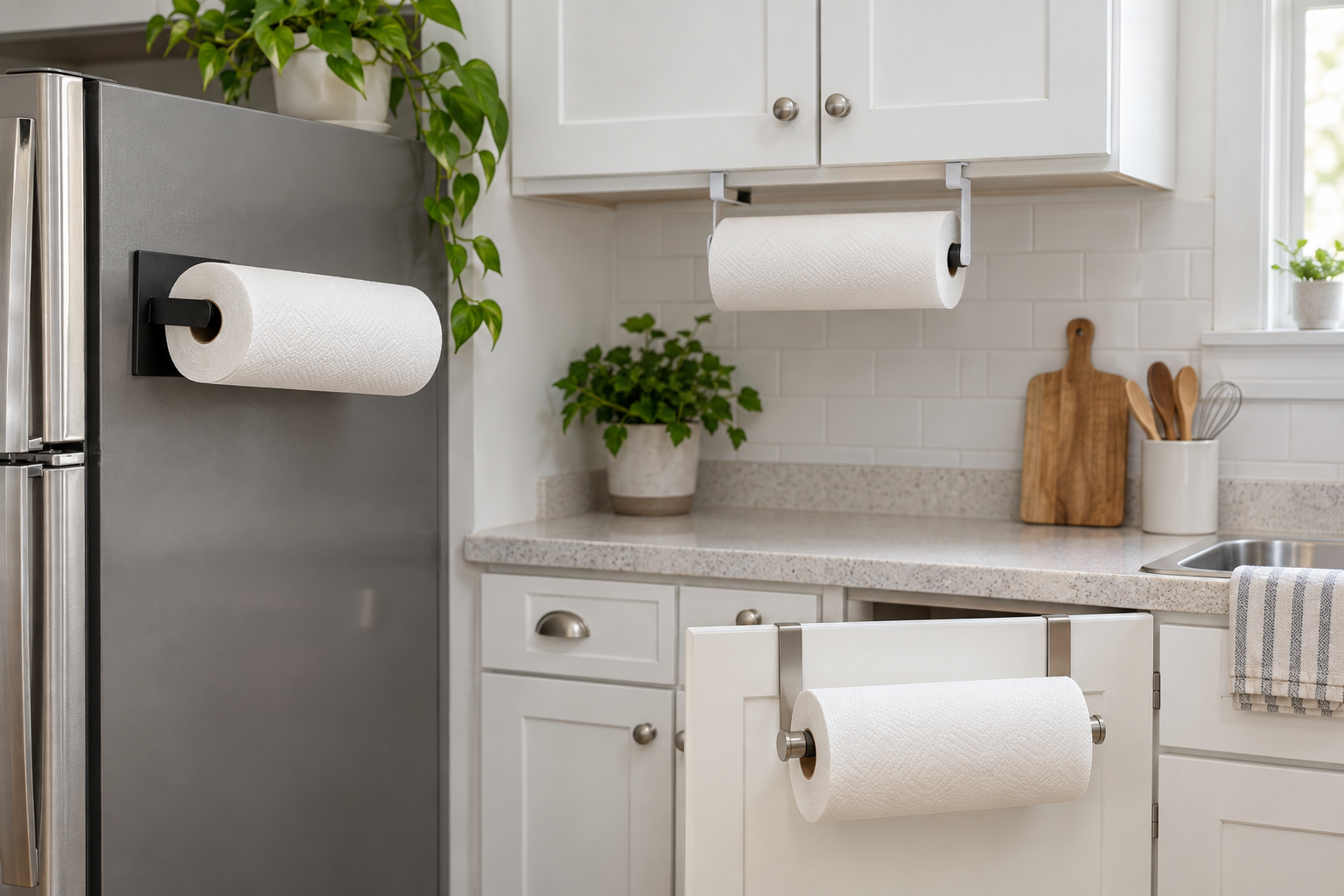
- Browse category: Clamp-on under-cabinet paper towel holdersStart here when a compatible shelf or cabinet lip is exposed and the clamp can be padded and tightened as directed.
- Browse category: Magnetic refrigerator-side paper towel holdersUseful only after confirming the exact appliance panel attracts a magnet and placement preserves doors, vents, labels, and service clearance.
- Browse category: Over-the-cabinet-door paper towel holdersHighly portable, but hanger thickness, door closure, interior shelf clearance, and movement noise need checking.
These category searches are shopping starting points, not tested winners. Confirm current dimensions, mounting instructions, compatible surfaces, stated load, roll fit, care, and return terms.
Quick answer: choose the mount before the holder
A clamp-on format is the most broadly reversible starting point when you have an exposed, strong, compatible edge and enough space for the clamp. A magnetic holder is simpler on a confirmed steel refrigerator side. An over-door hanger is easy to pack but can interfere with closing or rattle during use. Adhesive models require the most caution because paint, veneer, laminate, coatings, humidity, cure time, and removal method all affect risk.
Skip the category if every available position crowds a sink or cooktop, blocks a cabinet, conflicts with appliance instructions, or puts the roll where splashes and heat are routine. A weighted countertop holder avoids cabinet and finish contact but uses permanent work surface; use the countertop paper towel holder decision guide to check whether that trade is worthwhile.
Measure five things before shopping
- Mounting edge: Measure the shelf, cabinet-bottom lip, or door thickness. Include face frames and trim.
- Roll envelope: Measure a fresh roll's width and diameter, then allow room for it to turn and reload.
- Door movement: Open adjacent doors and drawers fully. An over-door bracket also needs space inside the cabinet.
- Work-zone clearance: Keep the roll clear of faucet handles, sink spray, cooking heat, appliance vents, prep space, and walking routes.
- Tear direction: Check whether the roll can be pulled normally without twisting the mount or dragging the door.
Hold a paper outline of the roll plus holder near the proposed location without contacting a sensitive finish. This reveals collisions better than holder dimensions alone.
How the no-drill formats compare
Clamp-on holders
Compare the documented clamp range, pad material, tightening method, projection, and whether installation is permitted on the exact cabinet material. Do not overtighten against thin panels, glass shelves, loose trim, or excluded surfaces.
Magnetic holders
Stainless-looking does not always mean magnetic. Test the proposed panel with an ordinary magnet, then follow appliance instructions. Keep the mount away from controls, displays, vents, moving doors, warning labels, and required clearances. Lift rather than slide it during removal to reduce abrasion.
Over-the-door holders
Verify door thickness, hanger padding, top-gap clearance, interior shelf position, hinge load, handle movement, and normal closure. Stop if the hanger scrapes, strains the hinge, or makes the door rebound.
Removable-adhesive holders
Use only when holder and surface guidance explicitly include the exact clean, intact finish. Follow preparation, cure time, load, temperature, humidity, and removal directions. “Removable” does not guarantee residue-free or damage-free removal, especially on aging paint, veneer, wallpaper, porous finishes, or repaired surfaces.
Must-have features
- Complete dimensions: Holder length, rod diameter, bracket projection, and the mount's full fit range.
- Positive roll retention: The roll should load without bending hardware and remain captured during a normal pull.
- Documented compatibility: Reject vague “universal” claims when attachment depends on a particular edge, finish, or metal.
- Protected contact points: Pads or smooth hooks can reduce rubbing, but do not eliminate finish risk.
- Simple removal: Favor a holder that detaches by clear instructions and packs without losing proprietary pieces.
Rental restrictions and setup
Check the lease and ask the landlord or property manager before attaching anything when cabinet or appliance rules are unclear. Do not drill, alter a cabinet, remove trim, or modify an appliance. Photograph the intact area before installation, keep the instructions, and stop if the finish is loose, swollen, cracked, peeling, or already damaged.
Install with the roll removed. Clean only by the cabinet, appliance, and holder makers' guidance. Fit the mount without forcing it, load one roll, then open every nearby door and drawer and make several gentle pulls. If the mount shifts, the door binds, or the surface marks, remove it.
Maintenance, storage, and move-out
Wipe paper dust and kitchen residue by the holder's care instructions. Check clamps, pads, hooks, magnets, adhesive edges, and contact points regularly. Remove the roll before adjustment. Take adhesive holders down only by the documented method; if finish begins lifting, stop and ask the property manager how to proceed.
For a move, clean and dry non-adhesive parts, keep pads and fasteners together, and pack the rod so it cannot bend. Remeasure and recheck permission in the next kitchen.
Who should skip these holders
- Renters whose lease or property manager prohibits cabinet or appliance attachments.
- Anyone with delicate, peeling, uneven, glass, or undocumented surfaces at the only mounting point.
- Kitchens where the roll would sit beside a burner, appliance vent, direct sink splash, or cabinet-door pinch point.
- Households that need forceful pulls but cannot secure the holder within the maker's stated limits.
- People who move the roll frequently; a countertop holder or portable caddy may be less fussy.
Bottom line
The best under-cabinet paper towel holder for a renter is the least invasive mount that fits a verified surface and leaves the roll, doors, appliances, and work zone clear. Start with a padded clamp on a compatible exposed edge, choose magnetic only on a confirmed appliance panel, and use over-door or adhesive formats only after checking their closure and finish risks.