How to Choose Hose Nozzles for Watering Container Gardens
A hose nozzle can make patio pots easier to reach, but more spray settings do not automatically mean better control. Start with the hose connection, the distance from spigot to containers, and where you need the water to land. Then choose a compact nozzle or wand whose control you can operate comfortably without dragging the hose across pots.
As an Amazon Associate, The Good Home Doc may earn from qualifying purchases.
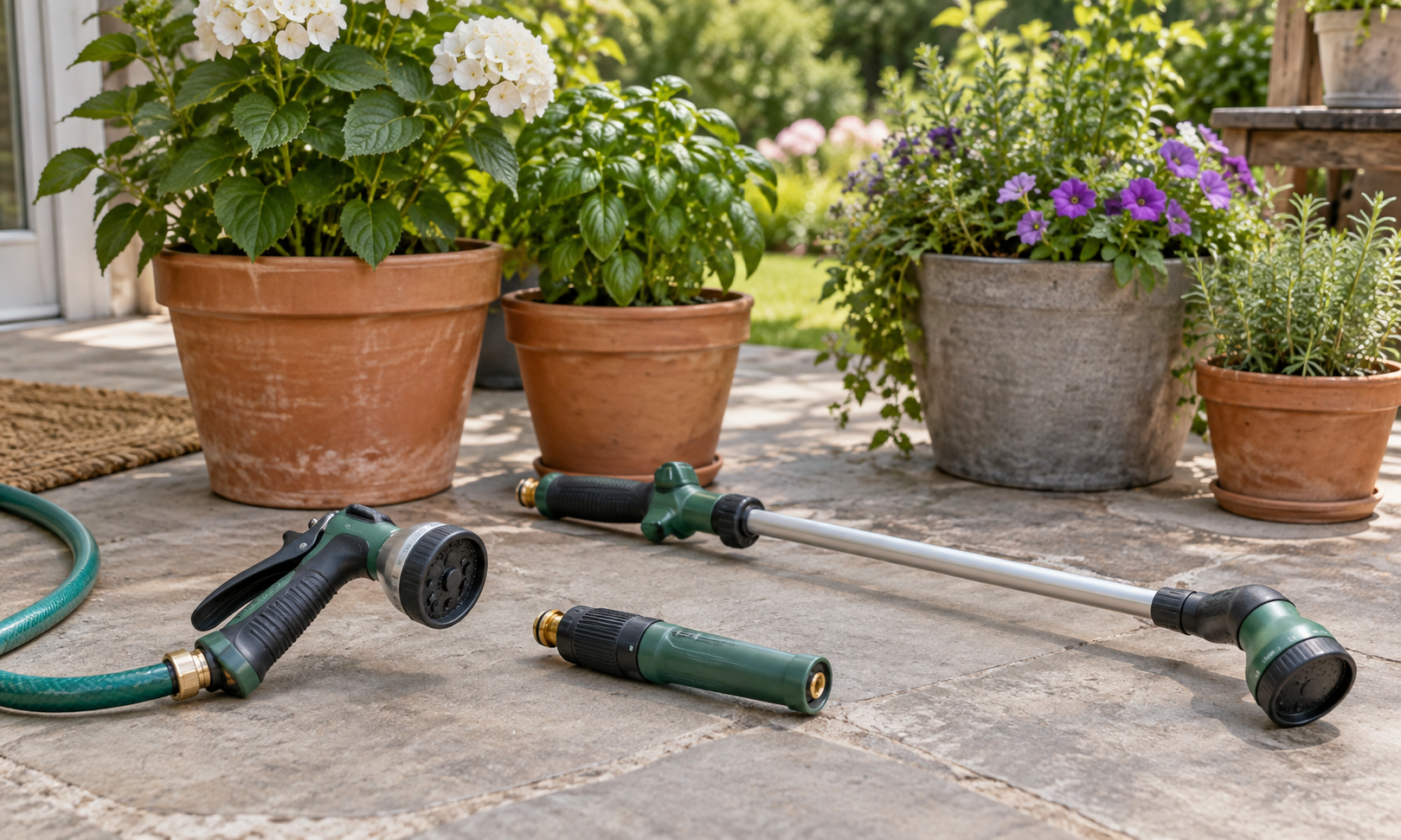
Quick decision before shopping
First measure the available space, identify the setup or surface constraints, and decide who will maintain the item. Skip the category if it blocks access, conflicts with the manufacturer's instructions or lease, or adds more upkeep than the problem justifies.
Choose the reach and control format before extra spray patterns: These affiliate category searches are comparison starting points, not tested rankings.
- Browse category: Compare flow-control hose nozzlesCheck the documented hose connection, complete size, control type, spray settings, gasket access, care, and storage guidance.
- Browse category: Compare watering wands for containersCompare complete length, head angle, shutoff location, grip, hanging size, and whether the wand reaches pots without contacting plants.
- Browse category: Compare adjustable twist nozzlesLook for a simple control range, usable wet grip, compatible connection, replaceable washer or gasket guidance, and easy draining.
Confirm current connection details, included fittings and gaskets, materials, stated pressure limits, controls, intended uses, warnings, care, freeze-storage guidance, warranty, and return terms for the exact item. A spray-pattern name is not proof that it suits a particular plant or potting mix.
Quick comparison
| Format | Best fit | Main tradeoff | Skip when |
|---|---|---|---|
| Pistol-grip or thumb-control nozzle | Mixed patio watering and nearby rinse tasks | Trigger or slider feel varies, and the body stays close to your hand | The control is awkward to hold or the pots sit beyond easy reach |
| Adjustable twist nozzle | Simple, compact storage and a direct adjustable stream | Usually requires two-handed adjustment while wet | You need frequent one-handed shutoff or a long reach |
| Watering wand | Deep beds, crowded planters, hanging pots, and watering near soil level | Longer stored size and more leverage at the wrist | The wand catches plants, furniture, doors, or the storage area |
Start with the hose and connection
Identify the hose coupling and compare it with the nozzle maker's documented connection. Do not assume that a listing described as “standard” will fit every hose, quick-connect adapter, or region. Check whether required washers, gaskets, or adapters are included and whether replacement pieces are identified.
Inspect the hose end before adding a nozzle. A damaged coupling, flattened gasket, cross-threaded connection, or leaking hose is not fixed by adding more fittings. Thread the accessory only as its instructions direct; forcing or overtightening a connection can damage parts. If the spigot, hose, or connection is damaged or leaks persistently, stop and address that problem rather than masking it with a nozzle.
Match reach to the containers
Measure from the place you can stand to the soil surface of the farthest pot. Include the pot height, foliage, railings, furniture, and any point where the hose changes direction. A compact nozzle works well when every container is open and close. A wand can place the head nearer the soil in a deep planter or behind leaves, but only when there is room to move the full shaft without striking stems, glass, screens, or neighboring property.
Route the hose before shopping. It should not pull across planters, stairs, doors, walkways, or sharp edges. If the hose route creates a trip hazard or requires crossing a shared area, a measured watering can may be the better category.
Control matters more than the number of patterns
Compare how the water starts, stops, and changes at the tool. Common controls include a squeeze trigger, thumb slider, separate shutoff lever, or rotating barrel. Read the exact instructions and consider whether the control can be returned to off without changing your grip or aiming water away from the containers.
Pattern labels such as “shower,” “mist,” or “jet” are not standardized performance guarantees. The result also depends on the water source, hose, nozzle, connection, and operating conditions. Begin at a low, controlled setting permitted by the product instructions and observe the potting surface. Stop or change approach if water displaces the mix, exposes roots, splashes soil from the container, or runs into an unwanted area.
Must-have features
- A documented connection: The exact hose and any adapter should be accounted for before purchase.
- A reachable shutoff: You should be able to stop flow without dropping or sharply twisting the tool.
- Enough reach, not maximum reach: The head should reach the watering point while the complete tool still clears plants and surroundings.
- Serviceable seals: Look for clear gasket or washer guidance rather than accepting a persistent drip.
- Care and storage directions: The tool needs a practical route for draining, drying, and protected storage.
Nice-to-have features
- Pattern dial with clear detents: Useful when each setting is easy to select without guessing between positions.
- Hanging loop: Helpful only when the full wet tool can drain in a permitted, protected spot.
- Angled wand head: May improve access to tall or deep containers, but adds stored shape and clearance needs.
- Replaceable washer access: Useful when the maker identifies the correct replacement and procedure.
Grip, length, and handling
A larger rubberized area does not guarantee that a grip will suit your hand, especially when wet. Compare handle span, control position, complete product weight, and whether the hose pulls against the grip. For a wand, the distance between your hand and the head increases leverage; a longer model can be more tiring or harder to aim even when its listed weight seems modest.
Do not lock a trigger open unless the exact product supports that operation and you can immediately stop the flow. Keep fingers clear of moving levers and coupling threads. A hose nozzle is not a pressure-washing tool, and a narrow stream should not be directed at people, animals, fragile surfaces, windows, electrical equipment, or anything the product instructions exclude.
Leak checks and routine care
- With the water off, inspect the hose end, threads, seal, nozzle body, and controls.
- Connect the tool according to both hose and nozzle instructions.
- Test the setup in a permitted open area at the lowest practical flow.
- Check the coupling and body for leaks before walking the hose toward the pots.
- After use, shut off the source, relieve pressure as directed, disconnect if required, and drain the tool.
- Clean and store it according to the maker's directions, protected from conditions the product excludes.
Water left in a nozzle or wand can create storage mess and may damage products exposed to freezing conditions. “Metal” does not mean weatherproof, and plastic does not mean freeze-safe. Follow the exact storage guidance instead of leaving the tool connected year-round by default.
Local and property constraints
Follow current local watering restrictions, permitted hours, drought rules, and property or building policies. A nozzle does not create an exemption or guarantee reduced water use. Prevent runoff into walkways, neighboring spaces, building openings, drains, or streets, and correct overflowing containers or blocked drainage instead of trying to solve them with a different spray pattern.
Renters should confirm permission to use an exterior spigot, route a hose, or store equipment outdoors. Do not attach a hose to an indoor faucet unless the faucet and every required adapter are specifically intended and approved for that setup.
Who should skip each format?
Skip a pistol-grip nozzle when the trigger or slider is uncomfortable, the hose pull makes close control difficult, or the pots require more reach. Skip a twist nozzle when you need frequent one-handed shutoff or cannot adjust the barrel securely when wet. Skip a watering wand when the full length cannot move and store without striking plants, walls, glass, or furniture.
Skip the whole category when there is no permitted hose connection, the route crosses a shared walkway, the hose or spigot needs repair, or only a few reachable pots need water. A small watering can may take longer, but it can offer a simpler measured route without a pressurized connection.
Buying checklist
- Identify the hose coupling and every adapter already in the route.
- Measure standing position, farthest soil surface, obstacles, and stored space.
- Choose compact nozzle or wand based on reach—not the number of advertised patterns.
- Compare control type, grip span, complete weight, length, and head angle.
- Check included seals, replacement guidance, pressure limits, and intended uses.
- Plan where the tool will drain, dry, and stay protected between uses.
- Confirm property rules and current local watering restrictions.
- Reject vague listings that omit connection, dimensions, care, or use limits.
Bottom line
Choose a compact flow-control nozzle when pots are close and easy to reach, a twist nozzle when simple construction and small storage matter most, or a watering wand when measured reach solves a real access problem. The best fit is the format that connects correctly, shuts off predictably, reaches without striking the garden, and can be drained and stored after every use.
For the rest of a compact container-care kit, compare soil scoops by bag and pot access and hand pruners by stem fit, grip, lock, care, and storage.