Is a Vacuum Sealer Worth It for a Small Kitchen?
A countertop vacuum sealer can be worth it when you portion and freeze food often enough to keep the machine, bags, labels, and cleanup supplies in a repeatable routine. It is usually a poor small-kitchen trade when freezer prep is occasional, storage is already tight, or ordinary freezer bags and rigid containers handle the foods you actually store.
As an Amazon Associate, The Good Home Doc may earn from qualifying purchases.
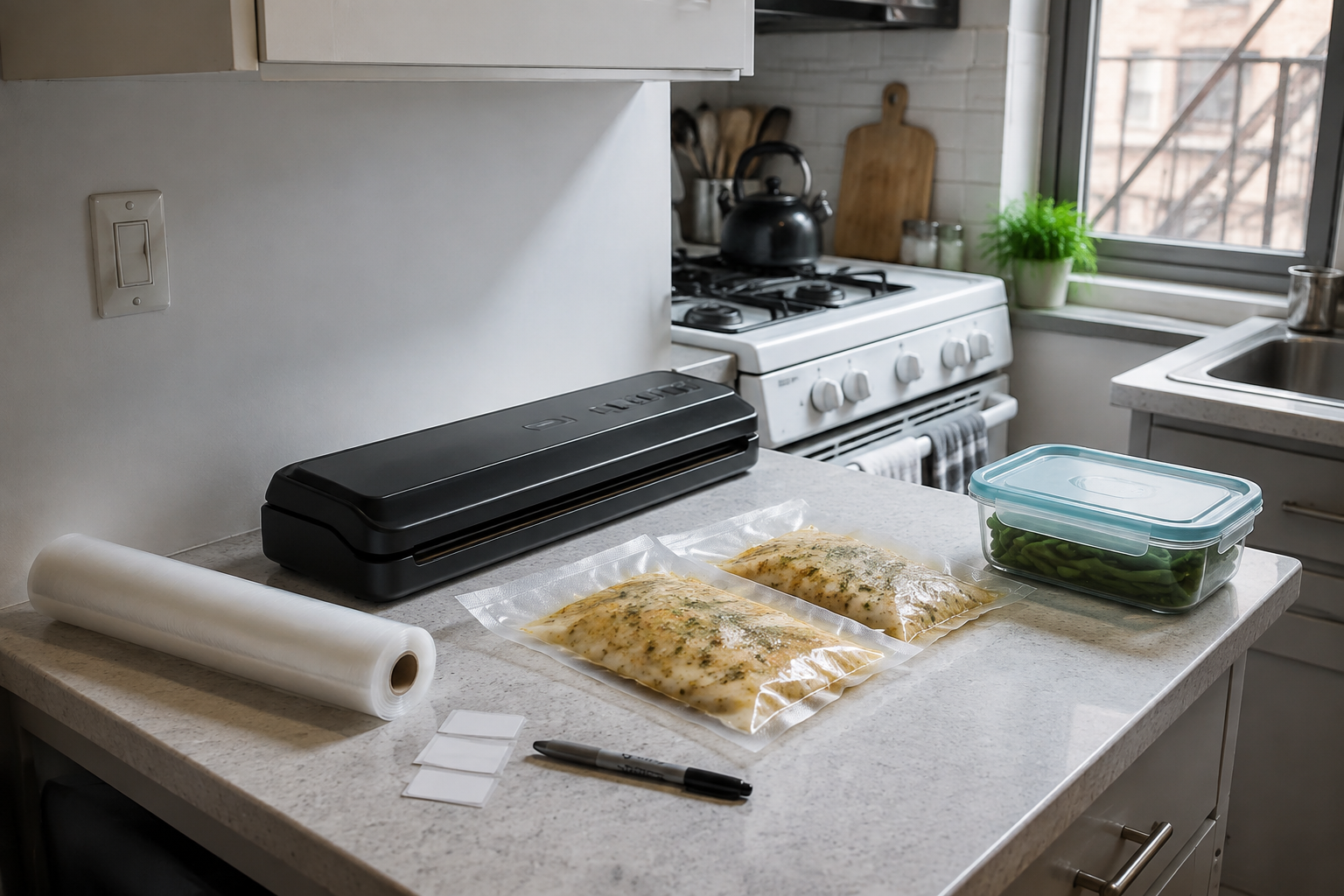
Quick decision before shopping
First measure the available space, identify the setup or surface constraints, and decide who will maintain the item. Skip the category if it blocks access, conflicts with the manufacturer's instructions or lease, or adds more upkeep than the problem justifies.
Confirm the routine before comparing machines: This affiliate category link is a shopping starting point, not a tested product ranking.
- Browse category: Compare compact countertop vacuum sealersCheck the full working depth, seal width, compatible bag system, controls, cleaning access, cord storage, food restrictions, and warranty.
This is a buy-or-skip framework, not a food-preservation guarantee or a product test. A vacuum seal does not make unsafe food safe, replace refrigeration or freezing, or override time and temperature guidance. Follow the appliance and bag instructions plus current food-storage guidance from an appropriate public-health authority.
Quick Answer
It is probably worth it when you freeze portioned food several times a month, can store the machine and compatible bags together, and will label and rotate packages consistently.
Delay the purchase until you have tracked what enters the freezer for a few weeks and measured both the stored appliance and the counter space needed to load a flat bag.
Skip it when most leftovers are refrigerated for near-term use, your freezer is too crowded for flat packages, or reusable containers already fit the routine with less setup.
Count Uses, Not Good Intentions
Write down the foods you would actually seal and how often. Bulk portions, planned freezer meals, and regularly divided ingredients can create repeat use. One holiday batch or an occasional warehouse-store trip may not justify another appliance.
Also count the steps: portion, prepare the bag, position the open edge, run the cycle, inspect the seal, label the package, clean any contacted surfaces, and put everything away. If that sequence feels too fussy on an ordinary weeknight, a zip-style freezer bag or rigid container may be the more durable habit.
Measure the Working Setup
The listed appliance dimensions are only the stored footprint. Many machines need space in front for the filled bag to lie reasonably flat, room above for the lid to open, and nearby storage for rolls or precut bags. Measure counter depth, upper-cabinet clearance, outlet reach, and the path from preparation area to freezer.
Then choose a realistic home for the supplies. A compact machine is not truly compact if bag rolls, cutters, labels, and cleaning items scatter across three cabinets.
Consumables Are Part of the Decision
Before buying, confirm exactly which textured rolls, precut bags, reusable accessories, or containers the manufacturer supports. Note their sizes, where you will store them, and whether you can readily replace them. Do not assume every generic bag works with every machine.
A simple comparison is more useful than a promised payback: estimate how many bags you would use in a normal month, multiply by the current cost per bag from the source you would actually buy, and compare that recurring input with the containers or freezer bags you already use. Include wasted roll length from making custom bags and failed seals while learning.
Food and Liquid Limits Matter
Read the exact model's instructions before sealing moist foods, liquids, powders, sharp bones, delicate items, or foods that may expand. Different machines and accessories handle these conditions differently. A removable drip tray can make cleanup easier, but it does not erase the maker's restrictions.
Keep sealing surfaces clean and inspect each closure rather than treating the cycle as proof of a sound package. Label contents and date them, refrigerate or freeze promptly as applicable, and discard food when safety is uncertain. For preservation methods beyond ordinary refrigerator or freezer storage, use authoritative guidance rather than improvising with a countertop sealer.
Must-Haves Versus Nice-to-Haves
Must-haves: a measured storage and working footprint, a compatible bag supply, clear food restrictions, controls you understand, accessible sealing surfaces, practical cleanup, and a freezer routine that includes labels and rotation.
Nice-to-haves: an integrated roll holder or cutter, pulse or manual control documented for delicate items, accessory ports you will genuinely use, and removable cleaning parts. Extra modes do not compensate for poor storage fit or expensive supplies.
Who Should Skip a Vacuum Sealer?
- Households that rarely freeze portioned food or already use containers effectively.
- Very small kitchens with no safe counter area for the open machine and filled bag.
- Anyone expecting the machine to replace refrigeration, freezing, labeling, or food-safety judgment.
- People who do not want to keep compatible consumables in stock.
- Renters or frequent movers who already struggle to store occasional-use appliances.
- Anyone whose intended foods conflict with the manufacturer's restrictions.
Try a Two-Week Freezer Test First
For two weeks, label every item you freeze and note the package used. Record whether air removal would materially improve stacking, portioning, or your willingness to use the food. Also note packages that would be awkward because they are liquid, delicate, sharp, or needed only briefly.
If the list shows regular, compatible batches and a clear storage spot, a sealer may earn its footprint. If the list is short, improve labeling, flatten ordinary freezer bags before freezing, or standardize a few reusable container sizes first.
Bottom Line
A vacuum sealer is worth considering in a small kitchen when frequent freezer prep, flat package storage, and an organized labeling habit justify the appliance and its recurring bags. Measure the machine in use, price the consumables you would really buy, and verify the food restrictions before shopping. If the category passes that test, compare compact vacuum-sealer formats by workspace, bag system, controls, cleanup, and storage. If ordinary bags or containers already solve the problem, keep the counter and cabinet space. Use the same counter-space test before deciding whether a countertop ice maker fits frequent ice demand.