Is a Countertop Ice Maker Worth It for a Small Kitchen?
A countertop ice maker can be worth it when your household regularly runs short of ice, has a measured counter spot near a suitable outlet, and will transfer ice and clean the machine on schedule. It is usually a poor small-kitchen trade when a few trays meet the demand, counter space is scarce, or you expect the basket to work like long-term freezer storage.
As an Amazon Associate, The Good Home Doc may earn from qualifying purchases.
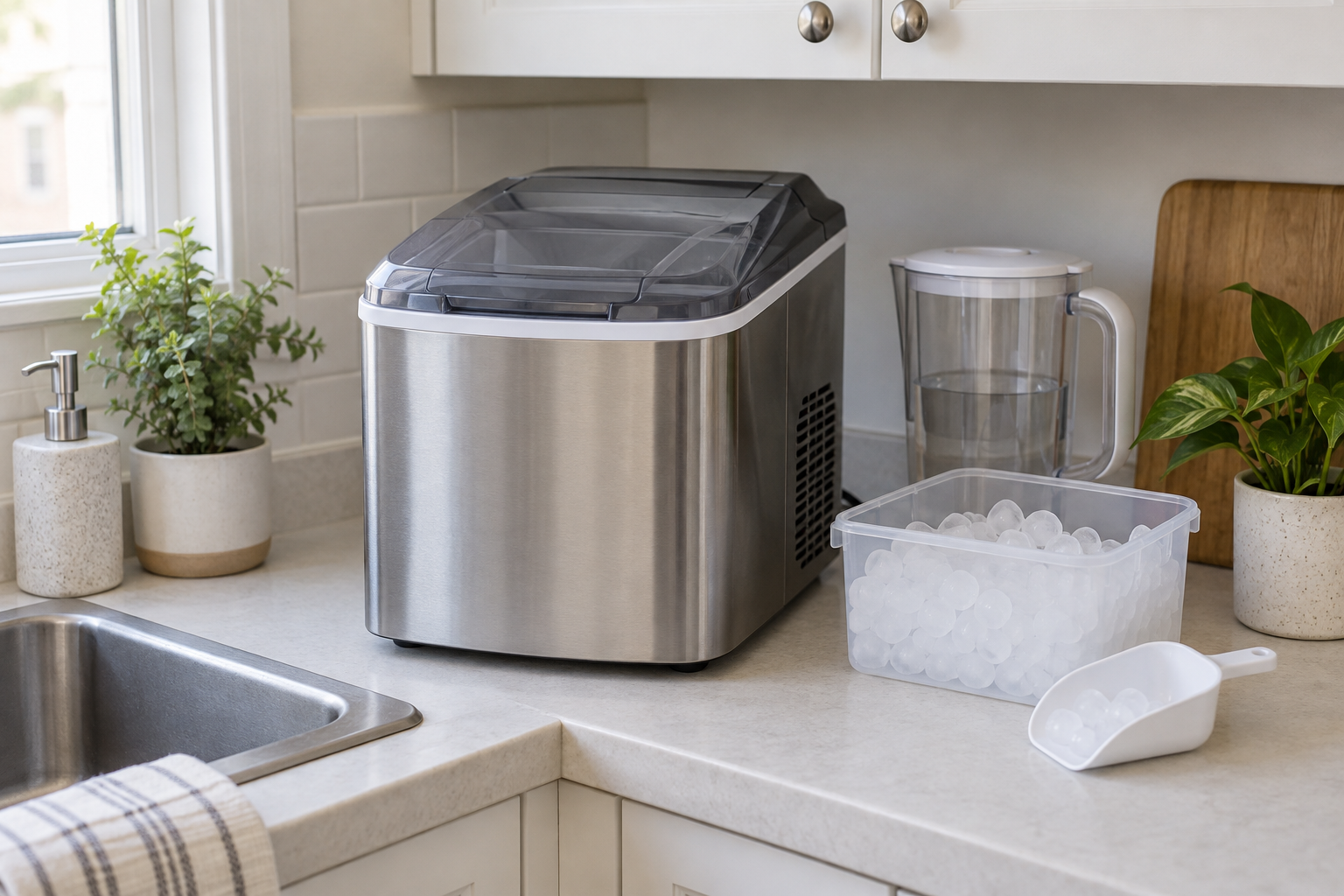
Quick decision before shopping
First measure the available space, identify the setup or surface constraints, and decide who will maintain the item. Skip the category if it blocks access, conflicts with the manufacturer's instructions or lease, or adds more upkeep than the problem justifies.
Measure the whole routine before shopping: This affiliate category link is a comparison starting point, not a tested winner.
- Browse category: Compare compact countertop ice makersCheck full dimensions and clearances, reservoir and basket access, maker-stated output basis, drain location, cleaning instructions, approved water, noise information, and warranty.
This guide is about whether the category fits, not which model wins. Production figures depend on manufacturer test conditions and do not tell you exactly how much ice will be ready at a particular moment. Read the chosen machine's manual before purchase and follow its placement, water, cleaning, draining, and operating instructions.
Quick answer
Buy one when you need repeated batches several days a week, can leave the machine in an approved operating spot, and have a simple plan to move finished ice to a suitable freezer container.
Delay the purchase until you track a normal week of ice use and measure the appliance with its lid open, vents clear, basket accessible, and drain reachable.
Skip it when ordinary trays cover most days, you mainly need ice for rare gatherings, or filling, transferring, draining, and cleaning would become a forgotten chore.
Count the ice shortage first
For one week, note when you actually run out of ice. Record the number of drinks or containers involved, whether the shortage happens at predictable times, and whether extra freezer trays would solve it. Separate daily demand from parties, travel coolers, or a broken refrigerator ice maker that may need service.
A dedicated machine makes the strongest case when shortages repeat and freezer-tray turnover cannot keep up. Occasional demand may be simpler to handle with another tray, a freezer bin filled in advance, or purchased ice.
Understand the basket limitation
Many compact machines make ice into an internal basket, but do not assume that basket keeps ice frozen indefinitely. Check the manual for the exact model. Plan where completed ice goes, which freezer-safe container will hold it, and how often someone must make the transfer.
A machine may produce ice quickly enough for a gathering yet still require attention between batches. If you want unattended long-term storage, the category may not match the job.
Measure the operating footprint
Measure width, depth, and height with the lid fully open. Add every clearance the manufacturer requires around vents and surfaces. Confirm that the basket can lift out without hitting an upper cabinet and that the reservoir can be filled without dragging the machine toward the sink.
Keep the cord and appliance in the placement described by the maker and away from water exposure, hot appliances, and unstable counter edges. Do not assume an extension cord, appliance slider, enclosed nook, or under-cabinet position is permitted. The manual controls those choices.
Compare stated output carefully
Cycle time, batch size, and daily output are useful only with their test basis. Water temperature, room conditions, ice size selection, and repeated removal can affect use. Compare current manufacturer documentation on the same basis and avoid treating a maximum daily figure as ice that appears all at once.
Start with the demand you observed. A smaller machine that fits the counter may be more useful than a higher stated output that requires unacceptable clearance or constant transfer.
Water handling is daily work
Check what water the manufacturer allows and how the reservoir is filled. A pitcher needs its own storage spot and a path that does not splash the appliance or cord. If the machine recirculates melted ice, follow the manual rather than assuming this eliminates refilling or routine cleaning.
Locate the drain before buying. Some units must move toward a sink or sit near a suitable container for draining; others have a plug that is awkward to reach. Test the full path with the appliance dimensions, weight, remaining water, and cord in mind. Never lift or tip a powered appliance unless its instructions direct that procedure.
Cleaning can decide whether it earns the counter
Read the cleaning and descaling sections before comparing convenience features. Note how often the reservoir, basket, scoop, interior, and water path need attention; which parts are removable; which products are allowed; and how the unit must dry before storage.
A self-clean cycle, if offered, is not permission to skip the maker's other sanitation steps. For nonuse, follow draining, drying, and storage instructions. Persistent residue, unusual odor, damage, or an unaddressed condition is a reason to stop use and contact the manufacturer or a qualified service provider.
Noise and heat belong in the decision
Compressors, fans, pumps, and falling ice can be noticeable in a studio, open-plan kitchen, or work-from-home space. Use current manufacturer noise information when provided, but remember that test methods may differ. Reviews can reveal the kinds of sounds owners notice, though they do not prove how loud a unit will be in your room.
The appliance releases heat while running. Give it the maker-required ventilation and consider whether its operating hours conflict with cooking, calls, or sleep. A machine that must be hidden away whenever it runs is unlikely to fit the routine.
Must-haves versus nice-to-haves
Must-haves: a measured approved location, sufficient lid and vent clearance, realistic output for observed demand, accessible filling and draining, clear cleaning instructions, a freezer-transfer plan, and practical storage if it will not remain out.
Nice-to-haves: selectable ice size, a timer, status lights, a viewing window, or a cleaning cycle. These can reduce friction, but none compensates for poor placement, inadequate upkeep, or a basket that does not provide long-term frozen storage.
Countertop machine versus simpler options
| Option | Best fit | Main tradeoff |
|---|---|---|
| Countertop ice maker | Frequent batches with counter space and an active transfer routine | Filling, noise, heat, cleaning, draining, and footprint |
| Extra freezer trays | Predictable moderate demand and available freezer space | Refill timing, handling, and slower recovery |
| Stored bagged ice | Occasional gatherings or short demand spikes | Freezer capacity, transport, and planning |
| Refrigerator service | A built-in system that should work but does not | Diagnosis may require the landlord, manufacturer, or qualified technician |
Who should skip a countertop ice maker?
- Households whose normal ice use is covered by one or two trays.
- Small kitchens without the required counter, vent, lid, outlet, and water-handling space.
- Anyone expecting the basket to hold finished ice like a freezer without checking the manual.
- People who do not want to transfer batches or keep up with cleaning, draining, and drying.
- Quiet-room users who would be bothered by fan, compressor, pump, or ice-drop sounds.
- Renters whose refrigerator ice supply is malfunctioning and should first be reported to the landlord.
- Anyone trying to solve water-quality or sanitation concerns that the appliance is not documented to address.
Bottom line
A countertop ice maker earns its space when recurring shortages are real, the complete operating footprint fits, and the household accepts the transfer and cleaning routine. Track demand for a week, measure with the machine open and ventilated, and read the manual before choosing. If trays or occasional purchased ice solve the problem with less work, keep the counter space.