How to Choose Vacuum Sealers for Small-Kitchen Freezer Prep
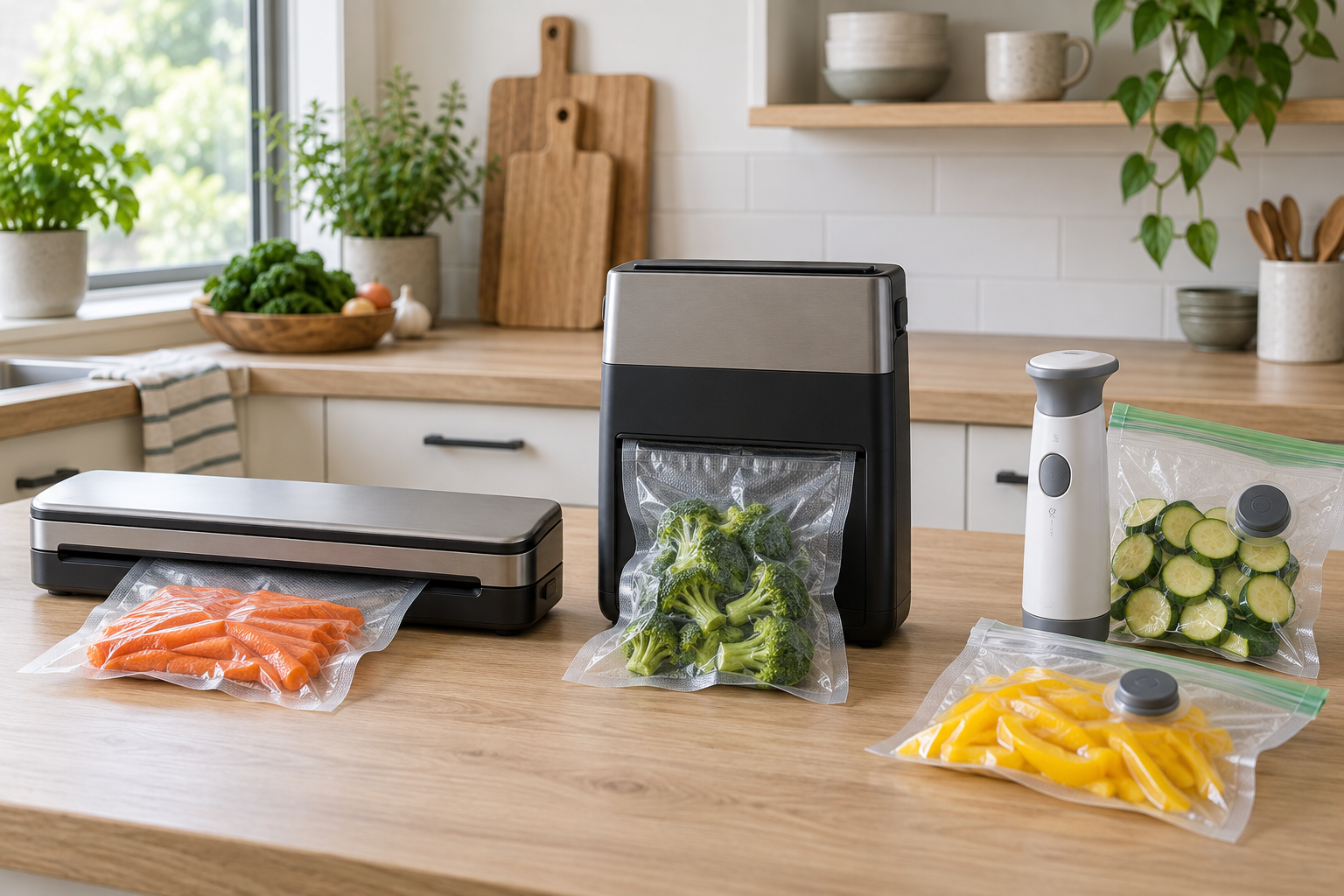
A vacuum sealer can make portioned freezer packages flatter and more consistent, but the machine is only one part of the setup. In a small kitchen, the useful choice is the format whose open working footprint, supported bags, controls, cleanup, and storage fit the batches you actually prepare. If you have not settled the bigger decision, start with whether a vacuum sealer is worth its space and recurring supplies.
As an Amazon Associate, The Good Home Doc may earn from qualifying purchases.
Quick decision before shopping
First measure the available space, identify the setup or surface constraints, and decide who will maintain the item. Skip the category if it blocks access, conflicts with the manufacturer's instructions or lease, or adds more upkeep than the problem justifies.
Compare the format that fits your prep and storage routine:
- Browse category: Compare compact external vacuum sealersCheck open dimensions, supported bag types and widths, controls, drip area, cord storage, and current food restrictions.
- Browse category: Compare upright-style vacuum sealersMeasure the tall stored shape, front working clearance, supported consumables, controls, and cleaning access.
- Browse category: Compare handheld vacuum systemsVerify the pump, valve, bag or container system, charging or batteries, cleaning, and permitted foods.
These are category searches, not tested rankings. Confirm the exact machine's dimensions, supported bags and accessories, food and liquid restrictions, sealing instructions, cleaning, cooling, duty-cycle, storage, and warranty terms before buying.
This is a format guide, not a ranking of named models. Current controls, compatible consumables, instructions, and included parts vary. A vacuum seal is packaging—not proof that food is safe, shelf-stable, or suitable for a particular storage period. Follow authoritative food-storage guidance and the instructions for the exact machine and food.
Quick Best-Fit Guide
- Low-profile external sealer: the broad starting point for households making repeated flat bags, provided there is room in front of and behind the machine to align them.
- Upright-style external sealer: worth comparing when a taller, narrower stored shape fits better and the front-loading workflow works on your counter.
- Handheld pump system: compact for compatible valve bags or containers, but it ties you to that connection and consumable system.
- Chamber sealer: usually a poor small-kitchen default because of its larger, heavier footprint; consider one only when its documented workflow clearly justifies dedicated space.
Measure the Whole Workflow
Record the closed width, depth, and height, then measure the machine as it is loaded, opened, and cleaned. Include room for the unsealed bag to lie flat, the filled portion to rest without pulling, the lid or handle to travel, controls to remain visible, and the cord to reach an appropriate outlet without crossing a sink or walkway.
Repeat the measurement for storage. A low-profile machine may fit a shallow drawer but need broad counter depth. An upright design can reduce the horizontal stored footprint while conflicting with a shelf above. A handheld pump occupies little space, yet its bags, valve containers, charger, and attachments still need one findable home.
External Suction Sealers
External sealers draw air from the open end of a supported bag and seal that edge. Compare the maximum supported bag width, required bag texture or construction, seal-bar position, lid or locking action, and how much empty bag must extend into the channel. Check whether the maker permits rolls, precut bags, accessory containers, or third-party consumables rather than assuming interchangeability.
For small batches, look at control rather than mode count. A clearly documented manual or pulse function may help with delicate items, while a documented moist setting may change the cycle for permitted foods. Neither feature overrides liquid restrictions or turns unsuitable food into a safe sealing task.
Upright-Style Sealers
An upright external sealer changes where the bag enters and how the machine stores. That can help when cabinet depth is tight, but verify the full front clearance with a filled bag and the height beneath upper cabinets. Check whether the sealing channel, drip area, and bag guides are easy to see and reach from your normal working position.
Do not infer different sealing performance from the body orientation alone. Compare the documented vacuum and sealing controls, compatible bags, cycle limits, cleaning parts, and manufacturer instructions just as you would with a low-profile model.
Handheld Pumps and Valve Bags
A handheld pump removes air through a valve in a compatible zipper bag or container. It can suit occasional, small portions when the pump and reusable pieces are easy to clean, dry, recharge, and store. Verify that the valve stays accessible, the closure is prepared as directed, and the exact pump supports the bag or container line you plan to buy.
Reusable does not mean maintenance-free. Inspect closures, valves, and bag surfaces according to the maker's directions, follow the permitted washing and drying method, and retire damaged pieces. Compare replacement availability and the real number of compatible bags you need for a normal prep session.
Bag Systems and Recurring Supplies
Write down the supported roll widths, precut sizes, textures, valve formats, containers, and accessory hoses for each candidate. Then price the consumables from the source you would actually use without publishing or relying on a stale per-bag figure. Include the extra roll length needed to form custom bags and the cabinet space used by rolls and accessories.
Bag fit should follow the food and batch. Leave the headspace required by the machine, avoid folds or residue across the seal area, and keep sharp edges within the maker's rules. Rigid freezer containers or ordinary freezer bags may remain the simpler choice for liquids, short storage intervals, or items that do not tolerate compression.
Moist Foods, Liquids, and Delicate Items
Read the model's restrictions before trying moist food, liquid, powder, soft baked goods, sharp bones, or anything likely to expand. Some makers specify preparation, pre-freezing, accessories, or exclusions. A moist mode or removable drip tray does not guarantee that liquid can be drawn into the machine.
Stop a cycle if the bag is being pulled out of position or liquid is moving where the instructions prohibit it. Clean any permitted drip component as directed and let washed parts dry fully before reassembly. If the intended food falls outside the documentation, use another storage method.
Controls, Cycle Limits, and Noise
Prioritize a clear stop or cancel control, an understandable sealing sequence, and visible alignment over extra presets. Note how the lid locks and releases, whether a second seal is allowed or required for a documented task, and how the machine signals completion. If hand strength or dexterity is a concern, evaluate the exact closing action in person or buy from a seller with a practical return policy.
Check the stated duty cycle, cooling interval, and batch guidance. A compact machine that needs frequent pauses may still fit occasional prep but frustrate a large session. Noise is also model-specific; use current documentation and a return plan rather than treating size or shape as a reliable proxy.
Cleanup and Storage
Inspect the sealing strip, gasket area, channel, drip tray, cutter, and exterior after use according to the manual. Compare which parts remove, how they are washed, how long they take to dry, and whether replacements are sold. Do not scrape a sealing surface or immerse a powered base unless the manufacturer explicitly directs it.
Store the machine in the position and latch state the maker permits. Some instructions warn against storing a lid locked because it can compress sealing components. Keep the cord, hose, cutter, and bags together without bending or contaminating sealing areas.
Must-Haves Before Nice-to-Haves
Must-Haves
- A complete working and stored footprint that fits the kitchen.
- A supported bag or accessory system available in useful sizes.
- Clear instructions for the foods, moisture level, controls, cycle limits, cleaning, and storage.
- A sealing channel and closure you can align, inspect, and maintain.
- A labeling and freezer-rotation routine that does not rely on the machine to judge food safety.
Nice-to-Haves
- An integrated roll holder and cutter when custom lengths are common.
- Documented manual control for compatible delicate items.
- A removable drip component when the planned foods are permitted.
- Accessory support only when containers or valve bags are already part of the routine.
Who Should Skip Each Format
- Skip a full-size external machine when there is no clear counter-and-bag working zone or practical storage spot.
- Skip an upright format when upper cabinets or the filled-bag path block loading and inspection.
- Skip a handheld system if proprietary valve bags and charging add more friction than they remove.
- Skip any sealer if the intended foods conflict with its current instructions or you expect sealing to replace refrigeration, freezing, labeling, rotation, or food-safety judgment.
- Skip the category when ordinary freezer bags or rigid containers already handle the household's small, infrequent batches.
Buying Checklist
- List the foods, portions, and batch size you routinely freeze.
- Measure the machine's stored space and the complete bag-loading workspace.
- Verify supported bag widths, materials, valves, containers, and accessories.
- Read current restrictions for moisture, liquids, powders, delicate foods, sharp edges, and expanding foods.
- Check controls, lid action, seal inspection, cycle limits, cooling, cleaning, drying, and storage instructions.
- Estimate recurring consumables using current sources and your actual monthly routine.
- Keep a simpler packaging method for tasks the sealer does not suit.
Bottom Line
For many small kitchens, a low-profile external sealer is the broadest format to compare first; an upright body can improve storage geometry, while a handheld pump can fit genuinely occasional valve-bag use. The best choice is the one that accommodates the full bag path, supported foods, consumables, cleanup, and storage—not the model with the most modes. Verify every current instruction and keep food-storage decisions separate from the promise of an airtight-looking package.