Is a Rolling Utility Cart Worth It for a Small Kitchen?
A rolling utility cart can be worth it when your kitchen has one measured parking spot, the cart holds a defined group of frequently used items, and moving it solves a real access or cleaning problem. It is usually a poor trade when it narrows the only walkway, becomes an overflow pile, or has nowhere to park without blocking a door, appliance, vent, or cabinet.
As an Amazon Associate, The Good Home Doc may earn from qualifying purchases.
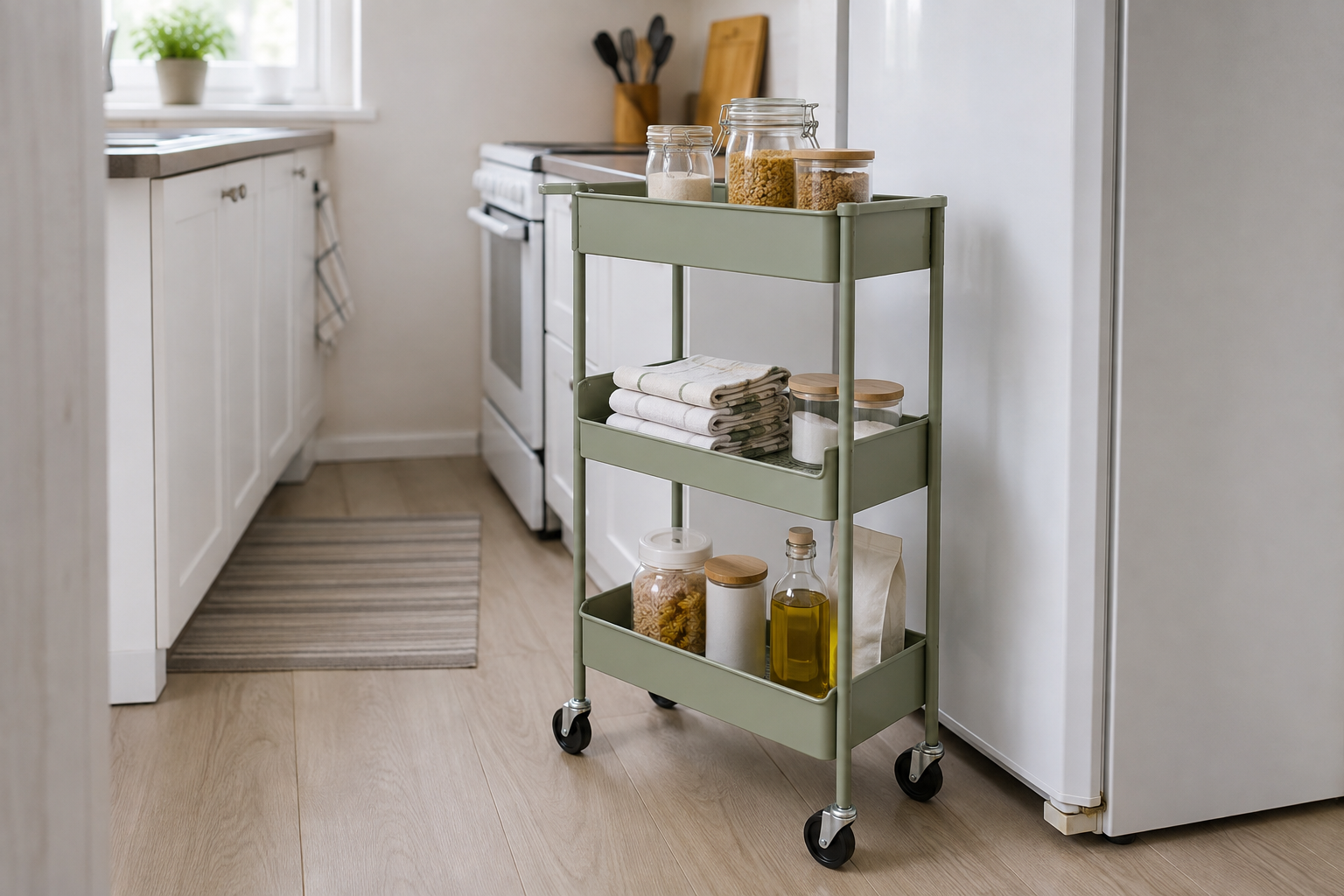
Quick decision before shopping
First measure the available space, identify the setup or surface constraints, and decide who will maintain the item. Skip the category if it blocks access, conflicts with the manufacturer's instructions or lease, or adds more upkeep than the problem justifies.
Measure the parking spot before shopping: This affiliate category link is a starting point, not a tested product ranking.
- Browse category: Compare slim rolling utility carts for kitchensCheck assembled width, depth, height, shelf dimensions, stated load, caster locks, assembly instructions, and cleaning guidance.
This is a category decision framework, not a product test. Dimensions, shelf loads, caster designs, assembly, materials, care, and tip-restraint instructions vary. Verify the current instructions for the exact cart, and do not assume a narrow cart is stable or that every wheel is designed to lock.
Quick Answer
It is probably worth it if you can mark a permanent parking rectangle on the floor, roll the cart through its full route without rearranging the room, and name the items assigned to each shelf.
Delay the purchase until you measure baseboards, handles, open appliance doors, cabinet and drawer swing, and the cart at its widest point—including protruding handles and casters.
Skip it if the cart would live in a circulation path, carry heavy or breakable items above a narrow base, sit near heat or water against product instructions, or duplicate storage you could create inside an existing cabinet.
The Five-Minute Floor Test
- Tape the footprint. Mark the advertised assembled width and depth on the intended parking spot, adding space for anything that projects beyond the frame.
- Open everything. Test the refrigerator, oven, dishwasher, drawers, cabinet doors, and nearby room door while the outline stays in place.
- Walk the real route. Carry a grocery bag through the kitchen. Do not judge clearance from an empty, sideways shuffle.
- Assign the shelves. Write down exactly what belongs on each tier. If the list is vague, the cart may become movable clutter.
- Find the cleaning route. Confirm the cart can move without striking trim or appliances and has a stable place to wait while the floor is cleaned.
When Mobility Actually Helps
Wheels earn their keep when one cart serves two nearby work zones, when stored items must move out for cabinet access, or when the parking spot needs to clear briefly for routine cleaning. Mobility is less valuable if the cart never moves or if every trip requires unloading top-heavy items first.
Check wheel diameter and material against the actual floor, thresholds, grout lines, and rug edges. A caster lock may limit rolling, but it does not turn a poorly proportioned or overloaded cart into fixed cabinetry. Follow stated shelf and total-load limits and any tip-restraint guidance.
Open Storage Changes the Chore
Open tiers keep frequently used supplies visible, but they also expose them to dust and kitchen residue. Smooth, removable trays can simplify wiping; wire or perforated shelves may shed crumbs to the level below. Compare shelf corners, seams, liners, and whether the wheels remain accessible for cleaning.
Use the cart for contained, routine items rather than unstable stacks. Keep heavy items low, respect the maker's placement restrictions, and avoid storing anything that could leak onto flooring or create a hazard if the cart is bumped.
Must-Haves Versus Nice-to-Haves
Must-haves: an assembled footprint that fits with working clearance, shelves sized for the assigned items, documented load limits, a stable frame, wheels suited to the floor, secure assembly, and surfaces you can realistically clean.
Nice-to-haves: handles that do not add unwanted width, removable bins, adjustable shelf spacing, useful wheel locks, and replacement hardware. Extra hooks and baskets are only useful if they stay within the cart's footprint.
Who Should Skip a Rolling Utility Cart?
- Small kitchens with no parking spot outside the main walking or appliance-opening path.
- Households that need closed storage for visual calm, dust control, or access management.
- Anyone planning to use the top as an unapproved work surface or appliance stand.
- Homes where children or pets can pull, climb, or collide with a loaded open cart.
- People who need large fixed capacity and have room for a properly secured pantry cabinet or shelves instead.
- Renters whose lease, building rules, or kitchen layout restrict the intended placement.
Better Alternatives for Common Problems
If the goal is to reclaim a single drawer, dividers or modular bins use no floor space. If cabinet shelves waste vertical room, a correctly fitted shelf riser may solve the bottleneck. A freestanding pantry cabinet offers more concealed capacity but requires door clearance, assembly space, and any restraint the maker specifies. Reducing duplicate gadgets and rarely used serving pieces may solve the problem without adding furniture.
If the cart needs to travel between a store or car and an apartment instead of parking inside the kitchen, use the foldable wagon decision guide to check stairs, elevators, thresholds, lifting, and folded storage.
Bottom Line
A rolling utility cart is worth considering when mobility supports a repeat kitchen routine and the cart has a safe, measured home between uses. Buy for the parking spot and assigned contents—not for an appealing empty-cart photo. If the taped footprint interferes with the room before you buy, another storage format is the better answer.
Once the floor test passes, use the slim rolling cart guide to compare dimensions, shelf geometry, wheels, materials, and cleaning details. If fixed open storage may fit better, compare a rolling utility cart with freestanding shelves before choosing the format.