Is a Foldable Wagon Worth It for Apartment Grocery Trips?
A foldable wagon can be worth it when most of your grocery route is level, the open wagon fits every doorway and elevator, and you have a realistic place to store it. It is usually a poor fit when stairs, transit transfers, tight turns, or repeated lifting are the hardest part of the trip.
As an Amazon Associate, The Good Home Doc may earn from qualifying purchases.
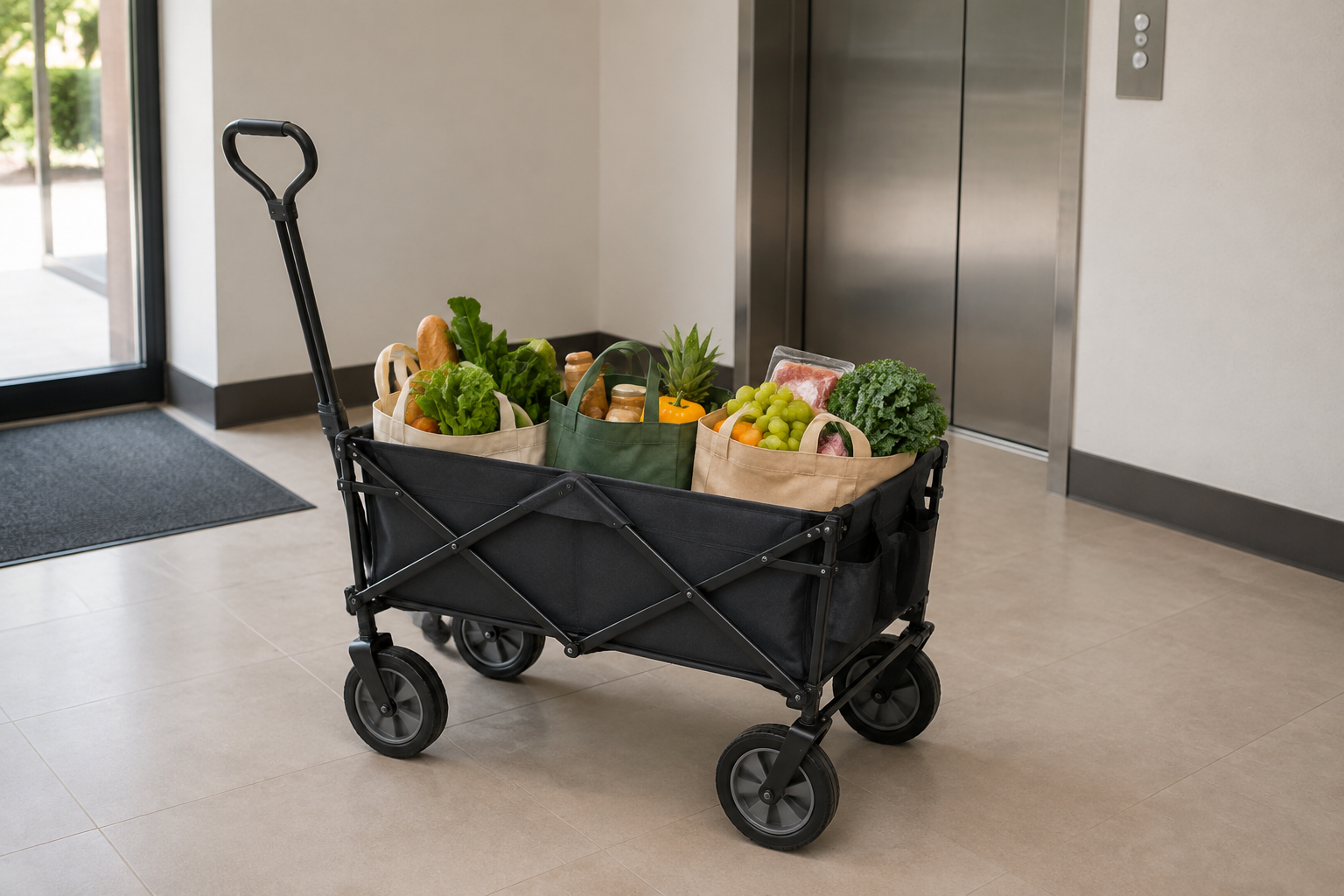
Quick decision before shopping
First measure the available space, identify the setup or surface constraints, and decide who will maintain the item. Skip the category if it blocks access, conflicts with the manufacturer's instructions or lease, or adds more upkeep than the problem justifies.
Map your route before comparing wagons: This affiliate category link is a starting point, not a tested winner or a promise that a wagon will handle every curb, stair, or surface.
- Browse category: Compare foldable utility wagonsCheck open and folded dimensions, product weight, stated load, wheel guidance, handle range, brakes, care instructions, and terrain limits.
Quick answer
Buy one when you regularly carry several bags over a mostly smooth, level route and can roll the loaded wagon from store or car to apartment without lifting it on the way.
Try one first when a curb, elevator turn, threshold, or vehicle loading step could decide the purchase. Borrowing or measuring a floor model can reveal more than a large stated load number.
Skip it when stairs dominate the route, public transit is crowded, storage is already tight, or a backpack, stair-climbing shopping cart, delivery, or smaller trips solve the real problem with less bulk.
Walk the complete route
Start at the grocery checkout or vehicle, not at the apartment door. Note sidewalk cracks, curb cuts, ramps, entrance lips, mats, narrow vestibules, elevator doors, hallway turns, and the final parking spot. A wagon that rolls easily across a lobby may still be awkward at one tall threshold or sharp turn.
Measure the narrowest door and elevator opening, then compare those measurements with the wagon's widest point. Allow room for your hands and neighbors rather than treating an exact numerical fit as comfortable clearance. Check building rules for carts in elevators, corridors, shared storage, and exits.
Stairs change the decision
A standard four-wheel utility wagon is not a stair cart. Do not pull or push a loaded wagon on stairs unless the manufacturer explicitly describes that use and you can follow its instructions. Even if the frame feels manageable empty, groceries and the wagon's own weight make lifting harder.
If the route includes unavoidable steps, compare a two-wheel stair-climbing cart, backpack, divided loads, delivery, or help from another person. Consider whether you can safely lift the empty folded wagon into a car or over a single permitted threshold without twisting or blocking the walkway.
Measure both open and folded storage
- Open footprint: Check length, width, handle sweep, turning space, and where it will sit while you unload.
- Folded package: Measure the wagon with its cover, wheels, and handle in the stored position. Confirm it can stand or lie where you intend without falling into a walkway.
- Product weight: This matters whenever you load it into a trunk, carry it through a non-step-free entrance, or move it to storage.
- Drying space: Fabric and wheels may need cleaning and open-air drying after rain, spills, or dirty sidewalks.
Load rating is not the whole story
Use only the manufacturer's stated load and loading instructions, but remember that your practical limit may be lower. Heavy items can be hard to start, stop, steer, and lift. Keep dense groceries low and balanced, protect fragile food, and do not stack bags so high that they block your view of the route.
Check whether the handle adjusts to a comfortable pulling position and whether it stays clear of your heels. Brakes can help while parked on an appropriate surface, but they do not turn a wagon into a safe choice for slopes. Follow all parking and incline restrictions.
Choose wheels for the real surface
Wheel diameter, width, tread, swivel design, and bearing protection affect how a wagon handles seams and rough paving. Larger wheels may cross modest surface changes more easily but add folded bulk. Wide wheels can take more elevator space and may collect more dirt. Product terms such as “all terrain” are not permission to ignore documented surface, incline, or weather limits.
If most of the trip happens indoors on smooth floors, easy turning and a compact footprint may matter more than oversized wheels. If outdoor paving is rough, pay closer attention to wheel construction, replacement availability, cleaning access, and the route's worst obstacle.
Wagon versus the alternatives
| Option | Best fit | Main tradeoff |
|---|---|---|
| Four-wheel foldable wagon | Level, door-to-door routes with several bulky bags | Wide turning footprint, folded storage, awkward stairs |
| Two-wheel shopping or stair cart | Narrow routes or models specifically designed for steps | Less horizontal cargo space; stair claims still need verification |
| Backpack and tote bags | Transit, short trips, and smaller loads | Weight stays on your body and capacity is limited |
| Delivery or smaller trips | Infrequent large orders or routes with major barriers | Fees, scheduling, or more frequent errands |
Maintenance and apartment storage
Read the fabric, frame, and wheel cleaning instructions. Grocery leaks and wet pavement can reach seams and the cargo floor, while grit can collect around swivels. A removable liner or washable insert is useful only if its care method fits your routine. Let permitted washable parts dry fully before folding and closing the wagon into a closet.
Do not leave the wagon in a hallway, stair landing, lobby, or required exit route. Keep it inside your unit or in building-approved storage, and avoid a parking spot that creates a trip or tip hazard.
Important use limits
A utility wagon is not automatically designed to carry children, pets, or passengers. Follow the manufacturer's intended-use and restraint warnings; never infer passenger approval from the wagon's size or stated cargo load. Keep fingers clear of folding joints and latches, supervise setup around children, and inspect the frame, handle, fabric, wheels, and fasteners as directed before use.
Who should skip a foldable wagon?
- Residents whose route includes unavoidable flights of stairs or repeated lifting.
- Transit riders who cannot keep the folded or open wagon within operator rules and out of other passengers' way.
- People without an indoor storage and drying spot.
- Shoppers who usually carry one light bag and would gain little from the extra equipment.
- Anyone expecting a cargo wagon to be a passenger carrier or a substitute for an accessibility aid.
Bottom line
A foldable wagon earns its space when it replaces several awkward bags on a predictable, mostly level apartment route. Measure every choke point, account for the wagon's own weight, verify the surface and use limits, and picture where it will dry and live between trips. If one recurring stair or transit transfer breaks that workflow, choose the alternative that fits that obstacle instead.