Garment Steamer vs Steam Iron for a Small Apartment
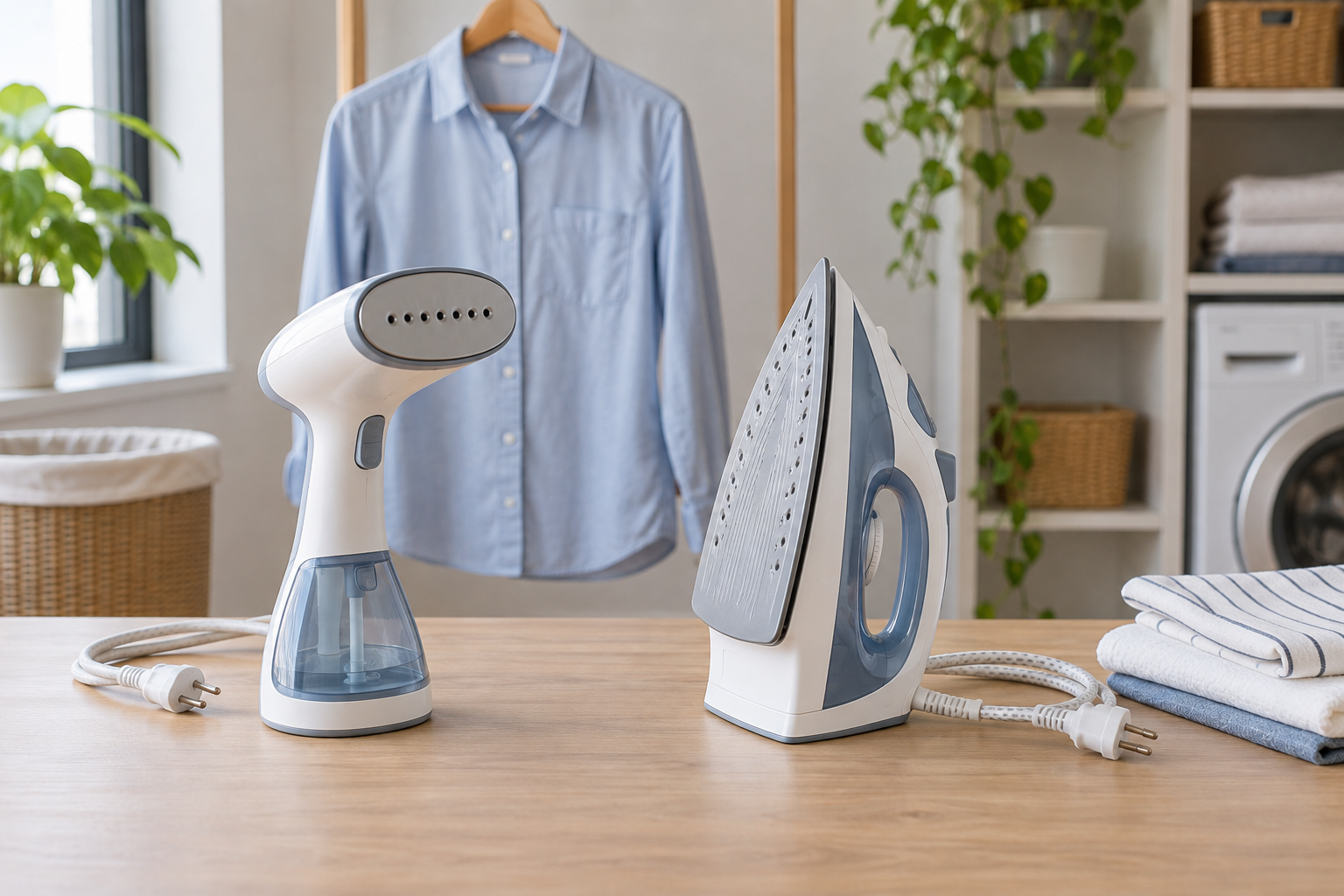
A handheld garment steamer is usually the easier fit for quick wrinkle release on hanging clothes when you have a permitted hanging point and a safe place to manage steam and drips. A steam iron is the better fit when you want flat seams, collars, hems, or a crisp finish and can provide a stable approved pressing surface. In a small apartment, choose by the clothes and finish you actually need—not by which appliance looks smaller in a product photo.
As an Amazon Associate, The Good Home Doc may earn from qualifying purchases.
Quick decision before shopping
First measure the available space, identify the setup or surface constraints, and decide who will maintain the item. Skip the category if it blocks access, conflicts with the manufacturer's instructions or lease, or adds more upkeep than the problem justifies.
Compare the appliance that matches your clothing routine:
- Browse category: Compact handheld garment steamersStart here for hanging garments, quick touch-ups, and a small stored footprint when the fabrics and setup permit steaming.
- Browse category: Compact steam ironsCompare these for flat pressing, defined edges, and temperature control when you have a suitable pressing surface.
These are category shopping routes, not tested rankings. Verify voltage, wattage, cord, tank, permitted water, fabric and temperature guidance, steam positions, leak-prevention instructions, automatic-shutoff behavior, cleaning, cooldown, storage, and every manufacturer warning.
Quick answer
- Choose a garment steamer for quick touch-ups on hanging shirts, dresses, and similar garments when their care labels permit steaming and you do not need pressed creases.
- Choose a steam iron for collars, cuffs, hems, seams, creases, and broad flat sections when you can set up a stable, heat-appropriate pressing surface.
- Keep both only when the two routines are genuinely frequent enough to justify two tanks, cords, cleaning schedules, cooldown spots, and storage spaces.
- Skip both when the garment label prohibits heat or steam, the setup is unstable or near water, or you cannot keep hot equipment and cords away from children, pets, and walkways.
Garment steamer vs steam iron at a glance
| Decision point | Handheld garment steamer | Steam iron |
|---|---|---|
| Primary action | Steam relaxes fibers while the garment hangs or is positioned as directed. | A heated soleplate presses fabric against a suitable surface, with or without steam. |
| Best-fit finish | Relaxed wrinkle reduction and refreshing between full care cycles. | Flat panels, shaped details, sharp edges, and deliberate creases. |
| Working space | Vertical clearance, a permitted hanging point, and room to keep the hose or cord controlled. | A stable approved board or mat setup, upright rest area, and a clear cord route. |
| Main apartment tradeoff | Small appliance, but the hanging work zone can be tall and drip-sensitive. | Compact appliance, but the pressing surface can dominate the setup and storage. |
| Maintenance | Tank emptying, permitted-water rules, mineral care, nozzle inspection, and drying. | Tank care, soleplate cleaning, steam-vent care, permitted-water rules, and drying. |
Who a garment steamer fits
A steamer fits a household that mainly wants to release light wrinkles from hanging garments shortly before wearing them. It can be practical for flowing pieces and shaped areas that are awkward to arrange flat, but only when the fabric label and appliance manual permit the material and method. The result is usually softer than a deliberately pressed finish.
Measure the working height from the garment’s top to its lowest point and leave the clearances required by the manual. A closet rod, shower rod, door, hook, or sprinkler pipe is not automatically an approved work support. Use a stable hanging point that can bear the garment, keeps steam away from finishes and electrical items, and does not block a door or exit.
Who a steam iron fits
An iron fits readers who regularly press shirt collars, cuffs, trouser seams, hems, napkins, or other flat areas where contact and pressure matter. Temperature selection can make the iron more versatile, but it also requires closer attention to care labels and heat order. Sort garments by permitted temperature instead of repeatedly jumping between high and low settings.
The iron is only half of the setup. The support must remain stable under ordinary pressure and must be permitted for the heat, steam, moisture, and backing involved. If a full board will not fit, the compact ironing mat guide explains why a mat cannot make an unsuitable table or appliance top safe.
Compare the complete setup
For a garment steamer
- Measure garment length, overhead clearance, and the reach of your hand and cord.
- Confirm the hanging support and nearby wall, door, floor, and furniture can be used as the instructions require.
- Plan for condensation or ordinary drips without steaming over an outlet, appliance, finished floor, or crowded surface.
- Check filled weight, handle shape, tank fill opening, allowed working angles, and where the hot head rests during pauses.
For a steam iron
- Measure the entire board or mat, the upright iron location, and the clearance needed to move the garment.
- Confirm that the pressing surface, cover, furniture below it, and garment all permit the intended heat and steam.
- Keep the cord out of doors, drawers, water, floor traffic, and any place where it can be pulled.
- Check whether the tank can be filled and emptied without spilling into controls or storing residual water.
Fabric and finish tradeoffs
Read the sewn-in care label before either method. “Steam” and “iron” symbols and temperature dots are instructions, not suggestions. Decorations, coatings, adhesives, prints, interfacing, pleats, sequins, and mixed-material panels may need different treatment from the main fabric. When guidance is unclear or the item is valuable, use professional garment care rather than experimenting.
A steamer does not promise a crisp finish, and an iron does not guarantee better results. Pressing can flatten texture, shine fabric, move a crease, or affect decoration when the temperature or technique is wrong. Steaming too close, too slowly, or in a prohibited position can leave water marks or affect heat-sensitive materials. Follow the exact distance, direction, and contact rules for the appliance.
Water, cleaning, and maintenance
Use only the water type allowed by the current manual. Some appliances specify tap water, some permit a mixture, and others have local-hardness guidance. Do not assume distilled water is universally preferred. Empty or retain water only as directed, and never add fragrance, starch, cleaner, or another liquid unless the manufacturer explicitly permits it.
For a steamer, inspect the tank seal, nozzle, vents, cord, and attachments. For an iron, inspect the soleplate, steam holes, tank cap, controls, cord, and base. Follow the stated descaling or self-clean process rather than using a household acid or cleaner by default. Let either appliance cool completely, dry as instructed, and store it where residual moisture cannot reach the cord or nearby belongings.
Small-apartment storage
Compare stored dimensions with everything that must stay together: appliance, cord, attachments, heat rest, measuring cup, and any board or mat. A handheld steamer may fit one shelf but still need a hanger and open vertical work zone. An iron may store neatly while its board becomes the awkward piece. Assign a protected cooldown spot before buying; “put it away immediately” is not a safe storage plan.
Travel labels deserve a separate voltage check. A compact shape does not mean dual voltage, airline-ready, or compatible with every destination. Verify the rating plate, manual, plug, and destination requirements rather than relying on “travel” in a listing title.
Who should skip each option?
Skip a handheld garment steamer if most clothes need sharp creases, the only hanging point is unstable or prohibited, filled weight strains your hand, the room offers no steam-safe work zone, or you are likely to store it wet.
Skip a steam iron if you cannot provide an approved stable surface, the board or mat would block the room, most garments only need relaxed touch-ups, or the required temperature sorting and cooldown routine will not happen.
Skip home treatment for unclear care labels, valuable or structured garments, damaged cords or appliances, persistent leaking, unusual odor, sparking, or any setup that conflicts with the manufacturer’s instructions. Unplug and stop using damaged equipment; contact the manufacturer or a qualified repair professional.
Bottom line
Choose a garment steamer when hanging touch-ups and a relaxed finish match most of your wardrobe, and choose a steam iron when flat contact and defined details matter enough to justify a pressing surface. For a small apartment, count the work zone, water routine, cooldown location, and stored accessories—not just the appliance body. The better option is the one whose complete routine fits both the garments and the room.