Dish Brush vs Sponge for Everyday Dishwashing
A handled dish brush keeps your hand farther from the wash water and works well for quick passes around plates, bowls, and many pans. A sponge gives you broad surface contact, a flexible edge, and direct pressure in corners. Neither is the universal winner: choose by the dishes, approved surface-care instructions, grip, drying spot, and replacement routine in your kitchen.
As an Amazon Associate, The Good Home Doc may earn from qualifying purchases.
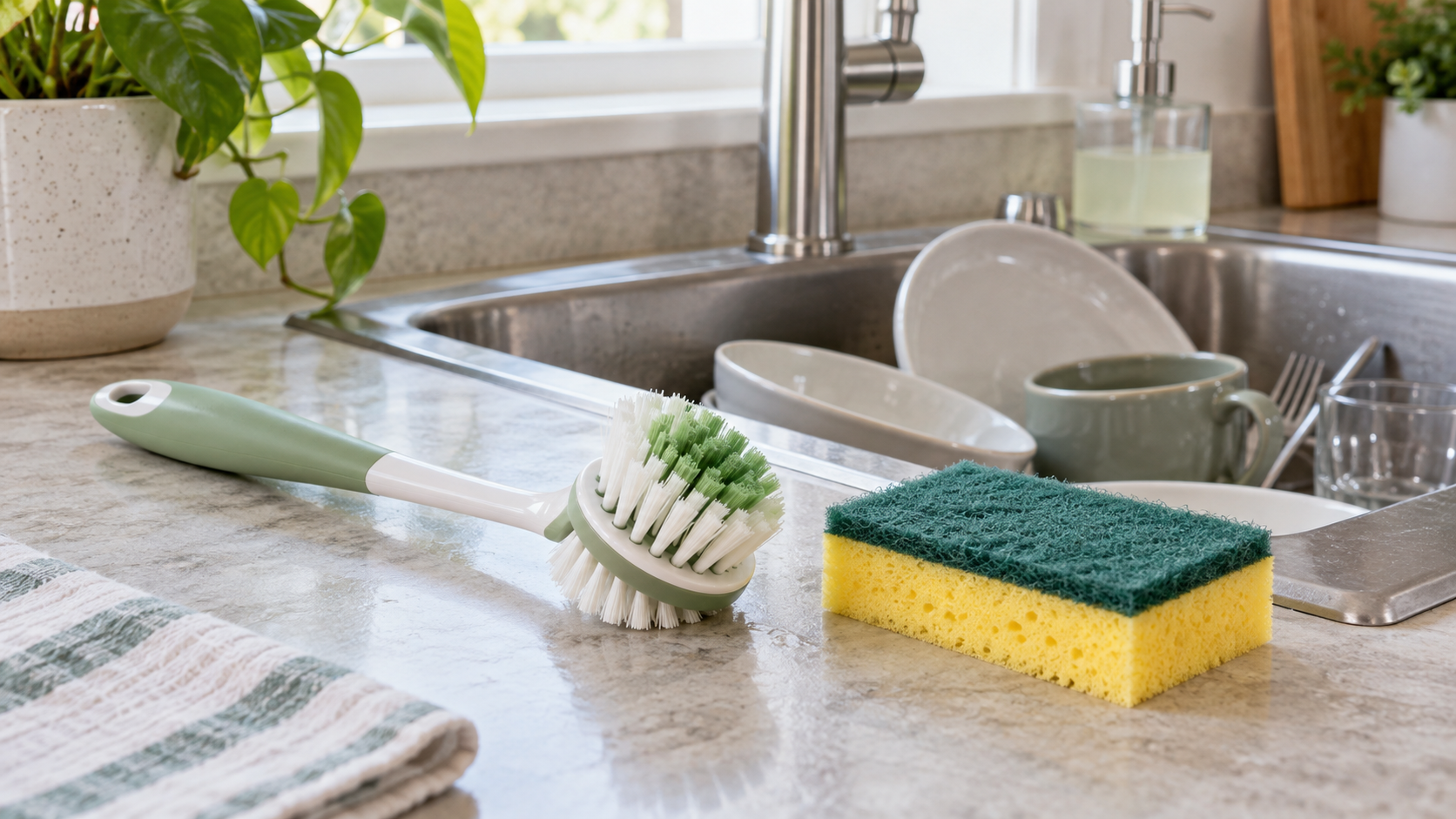
Quick decision before shopping
First measure the available space, identify the setup or surface constraints, and decide who will maintain the item. Skip the category if it blocks access, conflicts with the manufacturer's instructions or lease, or adds more upkeep than the problem justifies.
Compare the two everyday formats: Browse category: shop long-handled dish brushes or Browse category: shop cellulose kitchen sponges.
These are category searches, not tested winners. Confirm brush material, head shape, sponge construction, stated surface uses, care directions, complete dimensions, and replacement guidance before choosing.
The short answer
- Choose a dish brush when handle reach, less direct hand contact, and bristles around curved dishes fit the job.
- Choose a sponge when broad contact, flexible edges, and direct pressure are more useful on manufacturer-approved surfaces.
- Keep one of each only when they have genuinely different jobs and both have a ventilated drying place.
- Skip either tool when its scrub surface conflicts with cookware instructions or its shape makes safe, controlled cleaning harder.
Side-by-side comparison
| Decision point | Long-handled dish brush | Kitchen sponge |
|---|---|---|
| Best fit | Plates, bowls, curved interiors, and quick routine passes. | Broad flat areas, edges, corners, and jobs needing hand-applied pressure. |
| Control | Handle adds reach but can reduce feedback at the bristles. | Direct grip gives feedback but puts the hand closer to water and residue. |
| Surface check | Bristle stiffness and head hardware must suit the item. | Every layer, especially a scrub layer, must suit the item. |
| Drying | Needs an open holder or hanging point that exposes the head. | Needs a stable, ventilated spot without remaining compressed or pooled in water. |
| Main upkeep | Clear trapped debris and follow the maker's cleaning and replacement directions. | Rinse, remove debris, dry as directed, and replace when worn or damaged. |
Start with the dishes, not the tool
List what you actually wash by hand: narrow glasses, everyday plates, nonstick cookware, knives, baking dishes, or food-storage containers. Check each item's care instructions before choosing a scrub surface. A brush or sponge that is appropriate for one material may be too stiff, abrasive, bulky, or imprecise for another.
A brush head can reach around rounded interiors while the handle keeps fingers away from residue. A sponge can fold around rims and let you feel the contact pressure. For sharp blades, fragile glass, powered appliance parts, or items with special coatings, follow the manufacturer's washing method and avoid any grip or motion that puts your hand in a hazardous path.
Grip, reach, and setup
For a brush, compare handle length, wet-grip shape, head angle, bristle field, and whether a hanging loop or compatible holder fits the sink zone. A very long handle may be awkward in a shallow sink; a small round head may be nimble but slow across a large baking dish.
For a sponge, compare its full wet size with your hand, the thickness needed to bend into corners, and whether its layers are documented for the surfaces you own. A large, thick sponge may be hard to squeeze or use inside cups. If hand strength or sensation makes either format difficult to control, a different handle shape or a dishwasher-safe item may be a better route.
Cleaning, drying, and replacement
Neither format is maintenance-free. Rinse away visible debris after use and follow the current product instructions for cleaning, permitted sanitizing methods, drying, and replacement. Do not assume a brush or sponge is dishwasher-safe, microwave-safe, or compatible with a cleaning chemical unless its maker says so.
The drying setup matters as much as the tool. Store the brush with air reaching the head and without its handle blocking the faucet or prep space. Keep a sponge out of pooled water and avoid a holder that pinches most of its surface closed. Clean the holder and the counter beneath it; the related sink-side organizer comparison explains the drainage-versus-catch-tray tradeoff.
Cost and clutter tradeoffs
A brush may have a replaceable head or may be replaced as one unit; a sponge is usually a consumable supplied in multiples. Compare the full replacement system, storage for extras, and availability of the exact refill—not a promotional per-use claim. Buying both is not automatically better if one stays wet, gets forgotten, or duplicates the same task.
A small mixed setup can make sense when the brush handles routine dishes and the sponge has a separate, clearly defined surface-approved job. Keep the set modest and replace worn tools rather than accumulating specialty scrubbers without a drying or storage plan.
Who should skip each option?
Skip a dish brush if its head will not fit your narrow items, the handle reduces control, the bristles conflict with surface instructions, or the head cannot dry in your available holder.
Skip a sponge if direct hand contact is uncomfortable, the pad is difficult to grip, its scrub layer is unsuitable for your cookware, or your sink setup leaves it sitting in water.
Skip both as a pair if one approved, easy-to-maintain tool already handles the routine. For burnt residue, damaged coatings, sharp items, or valuable specialty cookware, use the item's documented care method rather than escalating pressure or abrasion.
Bottom line
A long-handled brush is usually the more practical choice for reach and quick routine scrubbing; a sponge is stronger where flexible contact and direct pressure matter. Match the working surface to the dish, make sure the grip is controlled, and choose a drying and replacement routine you can maintain. If wet handling is the next problem, compare reusable cleaning gloves by fit, cuff, grip, lining, and task instructions. For other product-format decisions, continue with the home product category buying framework.