Sink Caddy vs Countertop Tray for Kitchen Cleaning Supplies
Choose a ventilated sink caddy when a sponge and brush need upright separation and a clear drain path. Choose a washable countertop tray when bottles and a folded cloth need a stable, easy-to-lift landing zone. The better format is the one that fits the tools, keeps faucet controls and prep space clear, and can be cleaned without moving half the kitchen.
As an Amazon Associate, The Good Home Doc may earn from qualifying purchases.
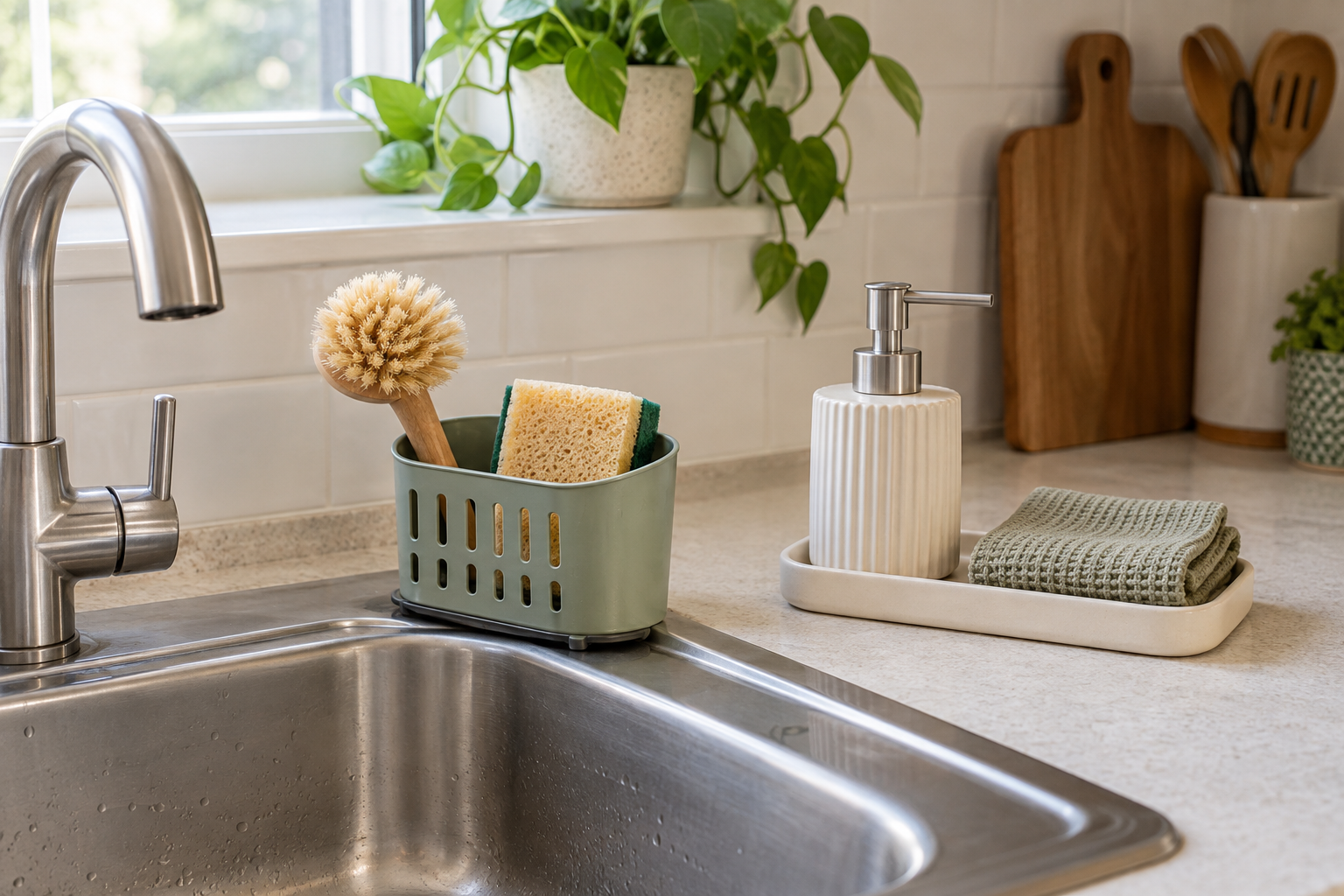
Quick decision before shopping
First measure the available space, identify the setup or surface constraints, and decide who will maintain the item. Skip the category if it blocks access, conflicts with the manufacturer's instructions or lease, or adds more upkeep than the problem justifies.
Compare the two sink-side formats: Browse category: shop ventilated sink caddies or Browse category: shop washable countertop trays.
These are category searches, not tested winners. Confirm complete dimensions, materials, drainage, feet or grip, care instructions, and compatibility with the counter and items you plan to store.
Before choosing the holder, decide whether your routine is better served by a dish brush, sponge, or small mixed setup; the working tool determines how much upright support, airflow, and drip space you need.
The short answer
- Choose a caddy for wet brushes, sponges, and scrub pads when open sides and a documented drain path fit the available ledge or counter.
- Choose a tray for pump bottles, a soap dish, or a folded cloth when you want one stable group that lifts away for wiping.
- Skip both if either organizer blocks a faucet handle, crowds food preparation, traps persistent water, or adds more seams and parts than your routine will clean.
Side-by-side comparison
| Decision point | Ventilated sink caddy | Washable countertop tray |
|---|---|---|
| Best use | Separating upright brushes, sponges, and scrub pads. | Grouping bottles, soap dishes, and folded cloths. |
| Water handling | Openings may drain or ventilate, but the outlet must lead somewhere useful. | A rim catches drips until the tray is emptied and washed. |
| Fit check | Tool height, slots, base, drain direction, and sink clearance. | Full bottle footprint, rim height, pump reach, and lift-out clearance. |
| Main upkeep | Clear openings, remove residue, and clean beneath feet or a drip insert. | Empty collected water and wash both tray and counter below it. |
| Main drawback | Narrow slots and hidden drain pieces can be awkward to clean. | A flat tray does not separate damp tools or provide much airflow. |
Measure the complete sink zone
Measure the usable counter strip or sink ledge, then subtract the space needed to operate the faucet, sprayer, soap pump, window, and nearby cabinet doors. Include the organizer's feet, handles, drain spout, and any part that projects over the basin. Mark the footprint with paper and wash a large pan before deciding that the remaining clearance is comfortable.
Measure the actual tools too. A bottle may fit inside a tray but become awkward to pump if the rim is high. A brush may fit a caddy slot but make the organizer tip when lifted. Compare product dimensions and stated uses with the tallest, widest, and heaviest item in the planned group.
Drainage and airflow are different jobs
Ventilation openings expose more of a sponge or brush to room air; they do not guarantee that the contents will dry on a particular schedule. Drainage openings only help when water can leave without collecting beneath the organizer or running onto a vulnerable surface. Check the product's intended orientation and place any drain outlet exactly as instructed.
A tray deliberately catches drips, which can protect the surrounding counter from scattered bottles but creates an empty-and-clean chore. Do not treat either format as a fix for an active leak, failing seal, or unexplained recurring water. Address the source first and involve the property owner or a qualified professional when the problem is outside ordinary surface cleanup.
Stability, surfaces, and materials
Look for a base wide enough for the planned items, plus feet or grip compatible with the counter. Product materials and coatings should be documented for their intended sink-side use; appearance alone does not establish corrosion resistance, dishwasher compatibility, or surface safety. Follow both the organizer's care directions and the counter manufacturer's guidance.
Lift the organizer during routine cleaning so trapped grit does not stay against the finish. Stop using it if feet detach, metal coatings change, edges become sharp, the base warps, or the organizer starts rocking. A lightweight tray can work well for small bottles but may slide when a pump is pressed unless its design and placement support that action.
Cleaning effort decides the long-term fit
Count the parts that must come apart: inserts, drip cups, dividers, silicone feet, and drain pieces. A simple caddy with broad openings may be easier to rinse than a highly divided one. A smooth tray may wipe quickly, but its corners and the counter underneath still need attention.
Use only cleaning methods allowed for the material. “Dishwasher-safe” should come from the current product instructions, not from a similar-looking material. Let washable parts dry as directed before reassembly, and keep sponge or cloth care separate from organizer care.
Who should skip each option?
Skip a caddy when the slots do not fit the tools, the base or drain route conflicts with the sink, or small openings would make your normal cleanup harder. A simple holder for one brush or sponge may be enough.
Skip a tray when you need upright separation for several wet tools, cannot lift it without disturbing nearby items, or are unlikely to empty collected water. Bottles stored inside a cabinet may preserve more working counter.
Skip both when reducing duplicate tools solves the clutter, when children or pets can pull down the contents, or when the proposed spot narrows a walkway or food-preparation zone.
Bottom line
A sink caddy is the stronger fit for separating a small set of wet tools when its ventilation, drainage, and dimensions work in the exact sink zone. A countertop tray is better for grouping bottles and a cloth when easy lift-out cleaning matters more than tool separation. Measure every item, verify the care instructions, and choose the simpler format you can keep clean.