How to Choose Washable Bath Mats for Small Bathrooms
A good bath mat for a small bathroom has to fit the whole routine, not just the empty floor. Measure the door sweep and the standing zone outside the tub or shower, then compare how quickly the mat can dry, whether its backing suits the floor, and whether it fits your washer and permitted drying method. The thickest or softest mat is often the wrong choice when a door has only a narrow gap.
As an Amazon Associate, The Good Home Doc may earn from qualifying purchases.
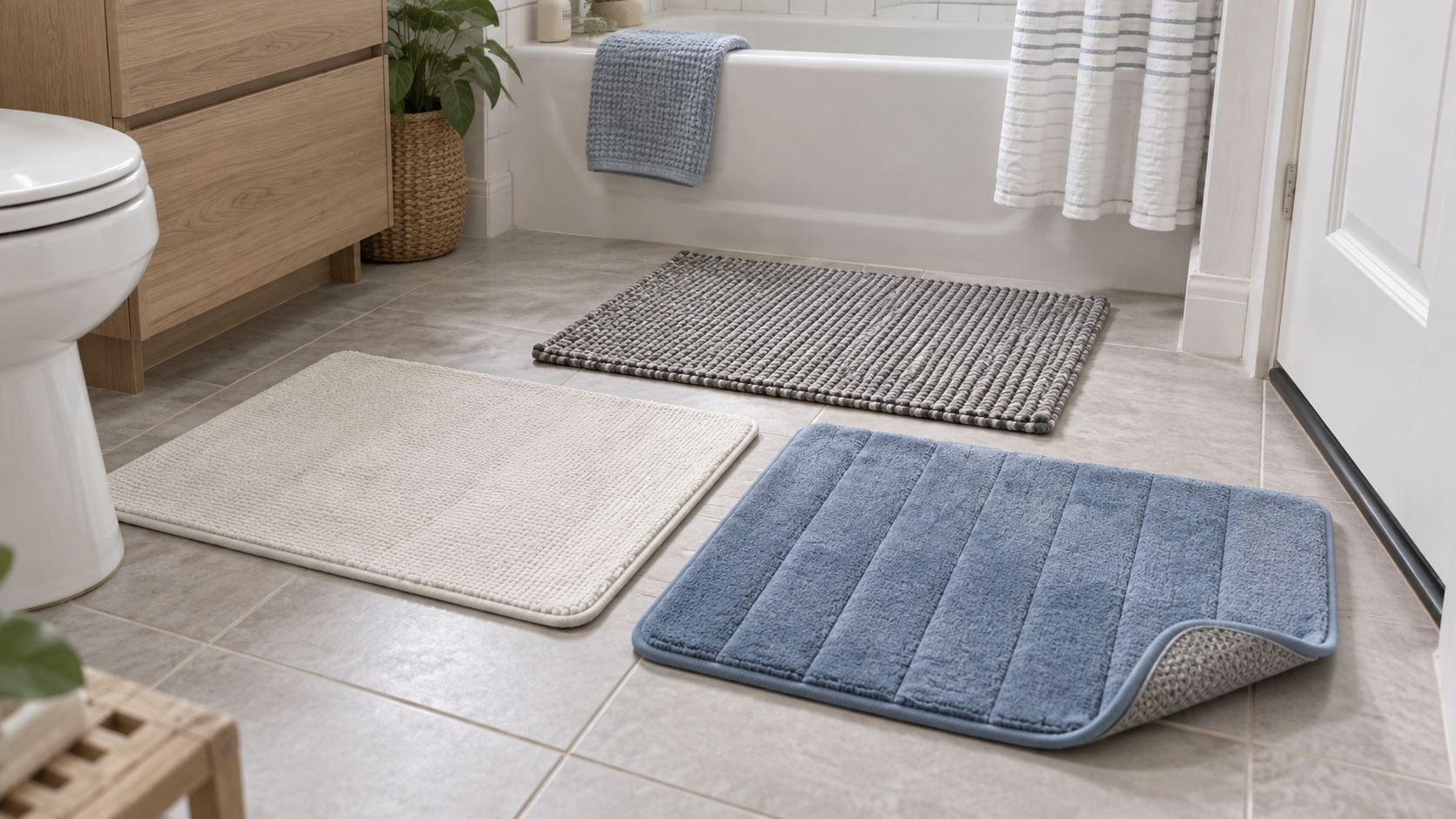
Quick decision before shopping
First measure the available space, identify the setup or surface constraints, and decide who will maintain the item. Skip the category if it blocks access, conflicts with the manufacturer's instructions or lease, or adds more upkeep than the problem justifies.
Compare the mat format after measuring your floor and laundry setup:
- Browse category: Compare low-pile washable bath matsStart here when door clearance and easier drying matter most.
- Browse category: Compare quick-dry woven bath matsCheck texture, floor contact, laundering, and whether a separate compatible pad is required.
- Browse category: Compare compact cushioned bath matsVerify total thickness, backing care, dryer limits, and space for the door to move freely.
These are category searches, not tested rankings. Confirm current dimensions, materials, backing, floor compatibility, wash and dry instructions, heated-floor limits, and return terms before buying.
Pick a format by the constraint it solves
| Format | Often fits | Check closely |
|---|---|---|
| Low-pile cotton or cotton-blend | Bathrooms with a low door sweep and households that launder mats often | Absorbency after repeated washing, edge curl, drying method, and whether a separate rug pad is allowed |
| Quick-dry woven or ribbed | Busy bathrooms where the mat needs airflow and a shorter reset between showers | Texture underfoot, bunching, floor grip, lint, and the maker's exact care directions |
| Cushioned mat with attached backing | Rooms with enough door and fixture clearance where a softer surface is preferred | Total wet thickness, backing deterioration, dryer restrictions, floor compatibility, and slower drying |
These are comparison formats, not ranked winners. Materials and construction vary. A listing's word “washable” does not tell you the water temperature, cycle, detergent, dryer setting, or whether the backing can tolerate repeated machine care.
Measure the working floor, door, and laundry path
Measure the dry standing zone where feet actually land, then mark the mat's proposed width and length with removable tape. Keep the mat out of the toilet base, vanity feet, floor vents, and any path where an edge would be repeatedly kicked. Open every nearby door fully. Measure the narrowest clearance instead of assuming a “small” mat is thin enough.
Plan the trip from floor to washer, drying location, and back. Check the mat's dry weight, your washer's instructions, and whether the mat can move freely in the drum. A mat that requires air drying needs a place where both sides can dry without blocking the room or trapping moisture against another surface.
Compare backing without treating it as a guarantee
Read both the mat maker's floor guidance and the flooring manufacturer's care instructions. Rubber-like, latex-like, adhesive, foam, and other backing materials can interact differently with finishes, heat, cleaning products, and long periods of damp contact. “Non-slip” language is not a promise that a mat cannot move.
Place the mat only on a clean, dry, level surface permitted by both manufacturers. Smooth it flat before use and stop using it if the backing cracks, flakes, becomes sticky, curls, or no longer lies evenly. Do not add an unapproved pad or tape beneath the mat; extra layers can change clearance and movement.
Drying speed is a routine, not a fabric label
A thinner woven mat may release moisture faster than a deep pile, but ventilation, shower frequency, room humidity, mat size, and hanging method all matter. Avoid unsupported “mold resistant” or instant-dry claims. Instead, ask whether you can hang or spread the exact mat after use and whether it is realistically washable at the frequency your bathroom needs.
If the mat or floor stays persistently damp, address the source and ventilation rather than relying on a new mat. Follow property rules and manufacturer instructions. Persistent moisture, visible damage, leaks, or musty conditions may need evaluation by the landlord or a qualified professional.
Must-haves and nice-to-haves
Must-haves
- Exact length, width, and total thickness that fit the wet zone and full door swing.
- Documented compatibility with the flooring and any heated-floor system.
- Wash and dry instructions your laundry setup can actually follow.
- Edges and backing that lie flat on a clean, dry floor.
- A size and wet-handling routine that one person in the household can manage.
Nice-to-haves
- A color or pattern that makes lint, residue, and wear easy to notice.
- A hanging loop when the maker permits hanging.
- A reversible construction when both sides are intended for floor contact.
- Care labels that remain readable after repeated laundering.
Maintenance and replacement checks
Follow the sewn-in label or current manufacturer instructions for cycle, water temperature, detergent, bleach restrictions, and drying. Wash mats separately when required, and never put a backing in a dryer unless the maker permits it. Clean and fully dry the floor before replacing the mat.
Inspect the mat after laundering and before returning it to the floor. Look for curled corners, stretched edges, tears, exposed layers, hardened or crumbling backing, odors that remain after approved cleaning, and a shape that no longer lies flat. Replace a mat that cannot be restored to its intended flat condition.
Who should skip a washable bath mat?
- Anyone whose door or mobility route cannot clear a mat without catching an edge.
- Households that cannot follow the required washing and drying routine.
- Bathrooms with persistent leaks or dampness that need the underlying problem addressed.
- Floors or radiant-heating systems whose maker does not allow the mat or backing.
- People who need a prescribed accessibility or fall-management product rather than an ordinary household bath mat.
- Shared spaces where a loose mat conflicts with building or facility requirements.
Bottom line
For a small bathroom, choose the thinnest practical mat that covers the real landing zone, clears every door, works with the floor, and can be washed and dried on a routine you will keep. Low-pile, quick-dry woven, and cushioned formats each solve a different constraint. The best fit is the one whose measurements, backing, care instructions, and replacement signs are clear before it reaches the floor.