How to Choose Tape Measures for Renters and First Home Toolkits
For most renters, the best first tape measure is a compact locking model long enough to check rooms, furniture, doors, closets, and storage products without becoming awkward to control. Add a flexible tape only when you regularly measure curved or soft items.
As an Amazon Associate, The Good Home Doc may earn from qualifying purchases.
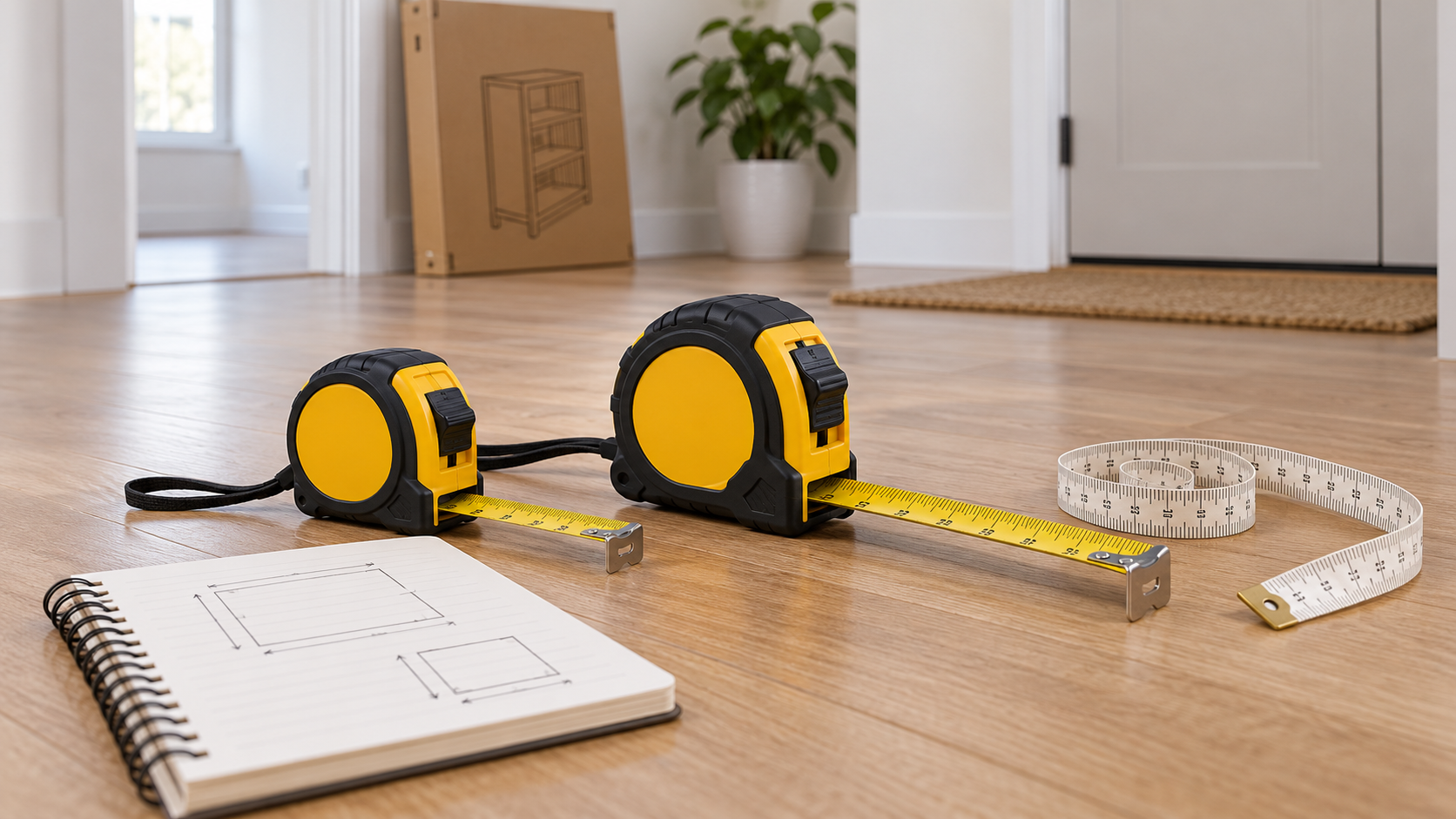
Quick decision before shopping
First measure the available space, identify the setup or surface constraints, and decide who will maintain the item. Skip the category if it blocks access, conflicts with the manufacturer's instructions or lease, or adds more upkeep than the problem justifies.
Pick the format that matches the measurements you actually take: These category routes are comparison starting points, not tested winners.
- Browse category: Compare compact home tape measuresUseful for furniture, shelves, drawers, windows, and easy one-hand storage.
- Browse category: Compare longer retractable tape measuresConsider the larger format when you often measure full rooms or long moving routes.
- Browse category: Compare flexible measuring tapesUseful for curved objects and soft goods, but not a substitute for a rigid blade across open spans.
Confirm current length, units, marking layout, case dimensions, lock style, hook design, care, and retraction instructions on the exact listing. This guide does not rank calibration, trade accuracy, standout, durability, or jobsite performance.
Quick comparison
| Format | Best fit | Main tradeoff | Skip when |
|---|---|---|---|
| Compact retractable tape | Furniture, cabinets, doors, curtains, storage | Easy to carry; shorter and usually less rigid | You routinely measure long rooms alone |
| Longer, wider retractable tape | Room spans and moving-route checks | More reach; bulkier case and stronger retraction | Grip, storage, or blade control feels awkward |
| Flexible cloth or coated tape | Curves, upholstery, textiles, bundled items | Wraps easily; needs support to measure straight spans | You need a self-supporting straight line |
What most renters should get
A compact retractable tape with clearly readable units, a lock you can operate comfortably, and a case that fits the junk drawer or tool bag is the practical default. Choose enough labeled length for your largest routine task. You do not need a long, heavy jobsite model merely to check a bookcase, closet opening, rug, or window treatment.
If the household switches between inches and centimeters, look for both scales without crowding that makes either one hard to read. A visible fraction layout can help occasional users, but only if the markings remain legible in the lighting where measurements happen.
Measure the whole route, not only the product space
For furniture and storage, record the destination width, depth, height, baseboards, trim, outlet projections, door swing, and any sloped ceiling. Then check every doorway, turn, stair, elevator, and hallway along the delivery or move-out route. Note whether the product must rotate from horizontal to upright.
For no-drill curtains, tension shelves, door organizers, or removable storage, measure at every contact point the maker requires. Older walls and trim may not be square, so take more than one reading rather than assuming one opening width describes the entire span. The product instructions—not a generic rule—decide which measurement controls.
Blade, markings, hook, and lock
A wider steel blade can be easier to read and may bridge a short span more readily, but it also increases case size and can retract with more force. Do not rely on a seller's standout or accuracy language unless it is clearly documented for the exact model. For ordinary product fit, repeat the measurement and write it down before ordering.
The end hook on a retractable tape is designed to support inside and outside measurements on many models, so slight movement is not automatically a defect. Follow the maker's explanation for the exact tool. Check that the hook is intact and that the blade starts where expected before using an important measurement.
Try the lock motion conceptually against your grip needs: a top slide, thumb brake, or auto-lock can each work, but none is universally easier. Keep fingers away from the blade edge and control retraction rather than letting the hook snap back into the case.
Rental constraints that matter
A measuring tape is portable and non-invasive, but the project it supports may not be. Measuring a wall does not grant permission to drill, paint, modify trim, remove blinds, change a door, or alter a fixture. Check the lease and ask the landlord or property manager before any restricted change. If a permitted cosmetic touch-up is the next step, the small-room paint-edger guide compares tool access, texture, refill fit, cleanup, and reasons to stop.
Measure surfaces gently. Keep a metal hook from dragging across paint, finished wood, appliance faces, glass, or soft flooring. Do not climb on improvised furniture to reach high points; use an appropriate household access method or get help. For electrical, plumbing, structural, gas, fire-safety, mold, pest, or code-related work, report the issue and use a qualified professional rather than treating measurements as a DIY go-ahead.
Storage, portability, noise, and maintenance
A compact case is easier to carry during apartment tours and moving-day checks. Measure the case itself if it must fit a shallow drawer or fitted pocket. A belt clip is optional for home use and can snag other stored items. A wrist strap may help with carrying, but it does not replace a controlled grip.
Retracting blades and metal hooks can be noisy against hard floors or walls, especially in shared buildings. Extend only what you need, maintain control, and avoid late-night room measurements when the blade or case may strike a surface.
Keep the blade clean and dry, wipe the case as directed, and store the tool away from children and moisture. Do not oil, disassemble, or repair the return mechanism unless the manufacturer specifically provides that procedure. Replace a tool with a cracked case, damaged blade, loose hook outside its intended movement, or unreliable lock.
Who should skip each type?
Skip a larger 25-foot-style tape when a bulky case, forceful return, or wider blade is difficult to control and your work is mostly furniture-sized. Skip a compact short tape when full-room spans are routine. Skip a flexible tape as your only tool when you need straight measurements across doorways, floors, or open space. If vision, hand strength, or dexterity makes a retractable blade hard to read or control, choose a simpler format with larger markings or ask another person to help.
Buying checklist
- List the largest routine span: object, doorway, or full room.
- Choose compact retractable, longer retractable, or flexible format.
- Check the labeled length and unit system.
- Favor markings you can read in ordinary room light.
- Compare case dimensions with the drawer or tool-bag pocket.
- Choose a lock style compatible with your grip.
- Review the maker's hook and retraction instructions.
- Plan to record width, depth, height, clearance, and route.
- Check rental permission before acting on the measurement.
Bottom line
A compact retractable tape is the best one-tool starting point for most renters because it handles common furniture, storage, doorway, and reversible-upgrade measurements without demanding much space. Buy by useful length, readable markings, manageable retraction, and storage fit. Add a longer or flexible tape only when a recurring measurement genuinely calls for it.