How to Choose Paint Edgers for Small Room Touch-Ups
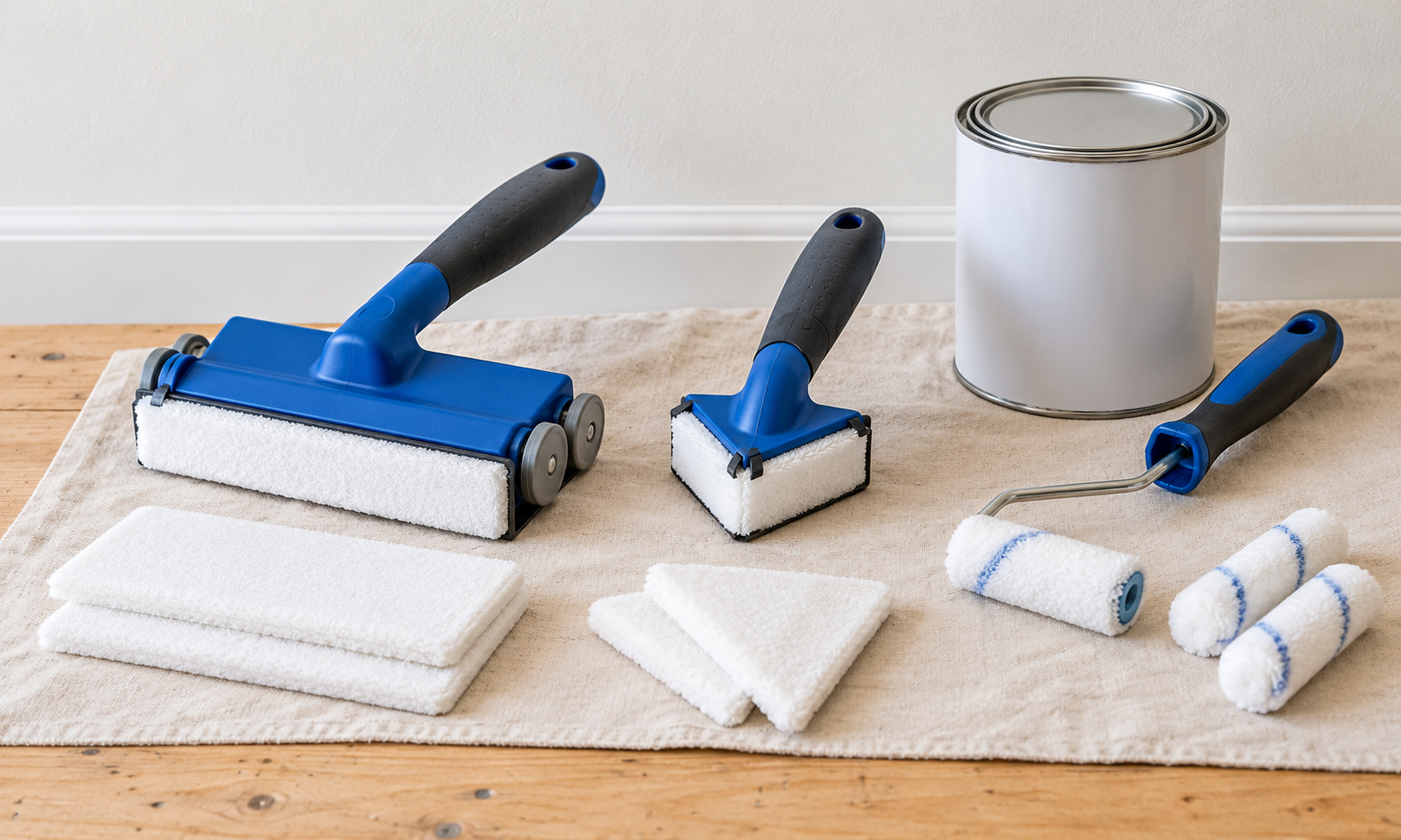
A paint edger can make a permitted, small interior touch-up easier to control, but it cannot compensate for the wrong paint, a rough or damaged surface, or an awkward working position. For a straight accessible edge on a smooth wall, start by comparing a guide-wheel pad with a narrow edging roller. Choose a corner pad only when inside corners are the recurring problem.
As an Amazon Associate, The Good Home Doc may earn from qualifying purchases.
Quick decision before shopping
First measure the available space, identify the setup or surface constraints, and decide who will maintain the item. Skip the category if it blocks access, conflicts with the manufacturer's instructions or lease, or adds more upkeep than the problem justifies.
Compare the edge tool only after checking the wall and paint instructions: These category routes are shopping starting points, not tested winners.
- Browse category: Compare paint pad edgers with guidesCheck pad width, guide design, wall-texture guidance, refill attachment, handle, loading method, and cleaning directions.
- Browse category: Compare paint-edger refill padsMatch the exact holder or model number; similar-looking pads are not necessarily interchangeable.
- Browse category: Compare small edging rollersCheck roller width, cover material, frame fit, edge clearance, paint guidance, cleanup, and replacement-cover supply.
Confirm current dimensions, included pieces, compatible refills, surface and coating guidance, loading, application, cleaning, drying, storage, warnings, and return terms on the exact listing. Follow the paint label and surface-preparation instructions; this guide does not promise a straight line, full coverage, texture matching, or a professional finish.
Quick comparison
| Format | Best fit | Main tradeoff | Skip when |
|---|---|---|---|
| Pad edger with guide wheels | Long, accessible edges on a compatible smoother wall | Built-in guide; wheels and pad need careful loading | Trim is uneven or wall texture prevents steady contact |
| Small edging roller | Narrow bands and texture closer to a larger roller | Simple refill system; edge control depends on clearance and technique | The frame or cover cannot reach the actual edge cleanly |
| Corner or trim pad | Short inside corners and small detail zones | Compact access; slower on a long perimeter | You need to cover a whole room edge efficiently |
First decide whether the touch-up is a sensible project
Identify the exact area and why it needs paint. A few scuffs on sound interior paint are a different job from peeling, bubbling, staining, recurring dampness, cracking, or a soft surface. Stop when the wall shows damage or an unexplained stain; a coating tool does not diagnose or repair the cause. Contact the property owner or an appropriate qualified professional where the condition calls for investigation.
Renters should obtain any required permission before painting, even when the area is small. Confirm the approved color, sheen, product, preparation, and move-out expectation in writing. A close-looking color is not proof of a match, and different sheen or aging can leave a touch-up visible after it dries.
Older coatings and unknown surfaces need extra caution. Do not sand, scrape, abrade, or disturb peeling or suspect old paint based on a generic article. Follow applicable property guidance and use qualified help for testing or remediation questions.
Map the edge before choosing the tool
Measure the straight runs, short returns, inside corners, trim projections, outlet or switch interruptions, and clearance around fixed objects. Record the narrowest access point, not just the length of the wall. A wide pad that looks efficient can be useless where a door casing, shelf, radiator cover, or fixed fitting leaves no room for its body or handle.
Work only from a stable position permitted for the task. This guide is limited to edges reachable safely from the floor or an appropriate household access product used according to its instructions. Skip the project when it would require overreaching, improvised climbing, work above stairs, or unfamiliar high access.
Pad edgers: check the guide and refill as one system
A rectangular pad edger typically holds a fibrous refill and may use small wheels or a rigid edge as a guide along trim or a ceiling line. Compare the complete head width and depth, the amount of pad exposed, and whether the guide must contact a clean, even adjacent surface. Thick texture, bowed trim, caulk ridges, and irregular corners can interrupt that contact.
Guide wheels need to remain free of paint if the maker's method depends on clean rolling contact. Verify how the tool is loaded and whether a shallow tray, transfer pad, or other accessory is specified. Dipping the entire head without regard to the instructions can load parts that should stay clean.
Treat the holder and pad as a system. Confirm the refill name, dimensions, attachment method, pack contents, and current availability before buying the handle. A low-cost holder is poor value if compatible pads are hard to identify or store.
Small edging rollers: favor a documented cover system
A small roller can be familiar to anyone already using a larger roller, and a compatible cover may leave a texture closer to the surrounding rolled area than a flat pad. That is a reason to compare it—not a guarantee of an invisible blend. Cover material, nap, paint, wall texture, pressure, loading, and the age of the existing finish all affect the result.
Check the roller frame's total reach into the edge and whether the end cap, frame, or handle interferes with trim. Some narrow rollers leave a small margin that still needs another permitted tool. Confirm the exact replacement-cover dimensions and frame compatibility instead of relying on a broad size label.
Corner pads solve a narrower problem
A shaped corner pad may help with short inside corners, but its useful face and pressure are different from a full-width pad. Check whether the shape matches the corner, how paint reaches each face, and whether the pad can be cleaned without pulling away from its holder. It does not replace the larger tool for broad wall coverage.
Skip a specialty corner tool when only one short corner needs attention and an already-approved brush or pad can perform the job under its instructions. Adding another refill system and cleaning step is worthwhile only when the access problem repeats.
Surface texture changes the decision
Smoother walls can make steady guide contact more practical. Pronounced texture can leave high and low points that a flat pad reaches unevenly, while an edging roller still needs a cover suited to the coating and surface. Read the edger and paint guidance for permitted surfaces. Do not infer compatibility from a marketing photo.
Test the approved setup in an inconspicuous place if the property rules and product instructions permit it. Let the paint dry for the stated time before judging color, sheen, and texture. Stop rather than repeatedly layering paint to chase a mismatch.
Handle, loading, and working clearance
Compare the handle angle with the direction of each edge. A fixed handle may feel controlled on a horizontal run but crowd a nearby wall in a corner. A pivoting or extension-compatible handle adds adjustment, yet more joints can add movement. Verify the maker's supported configuration and do not improvise an extension.
Plan where the tray, lid, cloth, and clean tool will sit before opening paint. Protect only surfaces the covering is intended to protect, keep the route clear, and follow the coating label for ventilation, personal protection, spill handling, and cleanup. Keep children and pets out of the work area.
Cleanup and storage can decide the better buy
Read the coating and tool directions before the job so you know whether the pad or cover is intended to be cleaned, reused, or replaced. Water-based and solvent-based are not interchangeable cleanup instructions. Never pour leftover paint or cleanup liquid into a drain unless the product label and local rules specifically allow it.
Clean the holder, guide, frame, and permitted reusable cover before residue dries, following the exact instructions. Let reusable parts dry fully in an appropriate location before enclosed storage. Store paint and tools according to their labels, away from children, pets, heat, and any incompatible conditions.
Count the real storage burden: holder or frame, refill pads or covers, tray, and protective supplies. A simpler tool that shares an existing documented refill system may be easier to maintain than a specialized kit with proprietary consumables.
Who should skip a paint edger?
Skip the category when the touch-up is not permitted, the existing paint cannot be identified, the edge is damaged or irregular, the work requires unsafe access, or the project involves peeling or suspect old coatings. Skip guide-wheel pads when there is no clean, even guide surface. Skip a small roller when its frame still leaves an uncontrolled gap. Skip a corner pad when the project is mostly long straight runs.
A permitted brush may be the simpler choice for one tiny detail, while a full wall repaint may be more consistent than scattered touch-ups when the existing coating has changed noticeably. Those alternatives still depend on the paint maker's directions, property permission, surface condition, and safe access.
Buying checklist
- Confirm permission, paint identity, and surface condition.
- Stop for peeling, bubbling, staining, dampness, cracking, or unknown old coatings.
- Measure every edge, corner, interruption, and access limit.
- Compare pad, small-roller, and corner formats for the actual route.
- Check wall-texture and coating compatibility in current instructions.
- Verify holder, refill, or roller-cover dimensions and attachment.
- Review guide clearance, handle angle, and permitted extensions.
- Plan label-compliant loading, ventilation, protection, and cleanup.
- Confirm reusable-part drying and the full stored footprint.
- Choose another method or qualified help when the project exceeds a low-risk cosmetic touch-up.
Bottom line
For a long, reachable edge on a compatible smoother wall, compare a guide-wheel pad edger with a narrow edging roller; refill fit and clean edge access matter more than a promise of speed. Use a corner pad for repeated short corner work, not as an all-room default. The best choice is the one that fits the exact surface, paint instructions, permission, cleanup routine, and safe working position—and sometimes the right choice is to skip the touch-up.