How to Choose Shower Stools for Shaving and Product Storage
A compact shower stool can provide a low perch for routine grooming or a place to keep bottles off the floor, but only when the manufacturer permits that exact use. Measure the wet footprint first, then compare molded plastic, slatted wood-look, and metal-frame formats by intended use, drainage, feet, assembly, and care.
As an Amazon Associate, The Good Home Doc may earn from qualifying purchases.
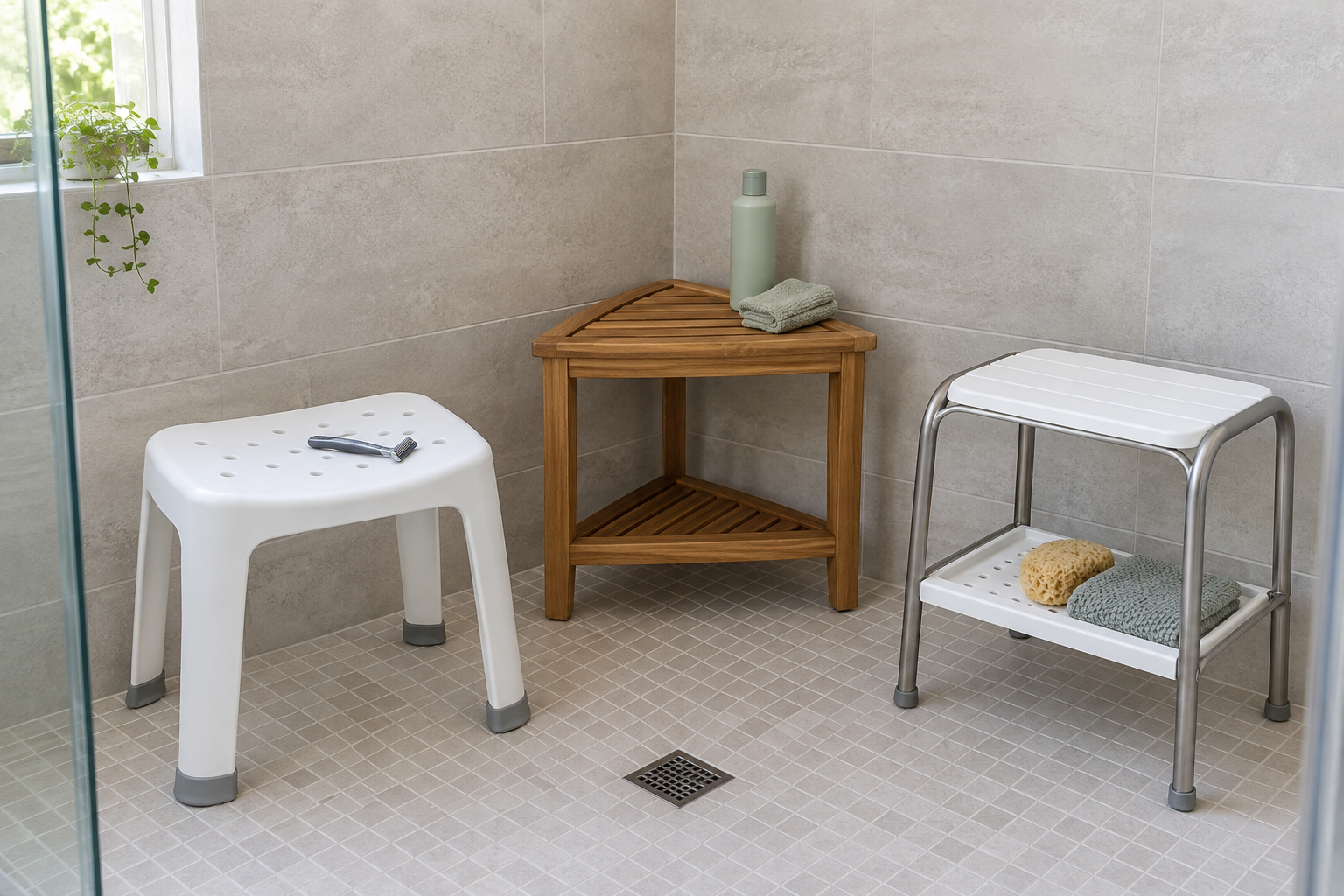
Quick decision before shopping
First measure the available space, identify the setup or surface constraints, and decide who will maintain the item. Skip the category if it blocks access, conflicts with the manufacturer's instructions or lease, or adds more upkeep than the problem justifies.
Compare the permitted use first: These affiliate category links are shopping starting points, not named winners, tested rankings, or accessibility recommendations.
- Browse category: Molded plastic shower stoolsCompare intended use, complete footprint, drainage openings, foot material, and cleaning access.
- Browse category: Slatted corner shower stoolsCheck corner geometry, material-care instructions, joints, drainage gaps, and the usable top.
- Browse category: Metal-frame shower stools with shelvesVerify wet-area use, assembly, fasteners, feet, shelf clearance, and documented load limits.
Read the current listing and manufacturer instructions for intended use, dimensions, stated load, floor compatibility, assembly, care, and warnings. Do not infer that a decorative stool is safe to sit on.
This guide covers ordinary grooming and product storage. It does not recommend mobility aids, transfer benches, fall-prevention equipment, or medical seating. Anyone who needs support entering, leaving, standing in, or sitting in a shower should use guidance from an appropriate clinician or accessibility professional and choose equipment specifically designed for that need.
Quick Picks by Job
- Best simple grooming format: a compact stool whose instructions explicitly allow sitting, with a broad usable top, drainage, intact feet, and a stated load above the intended user.
- Best product-only surface: a small corner stool or stand explicitly sold for wet-area storage; do not sit on storage-only furniture.
- Best for bottles plus a clear top: a wet-area-rated frame with an accessible lower shelf, provided the shelf does not interfere with feet or cleaning.
- Best for the tightest enclosure: no stool until its full footprint leaves room to enter, turn, reach controls, and keep the drain clear.
- Best when balance or mobility is part of the problem: skip this category and seek purpose-designed equipment and individual guidance.
Start With Intended Use
“Shower stool” can describe very different products. Some are decorative storage stands, some permit brief sitting, and some are regulated or purpose-designed accessibility equipment. Appearance does not establish the permitted use. The maker's current instructions should say whether the top is a seat, a foot perch, a storage surface, or some combination.
If sitting is allowed, check the stated load and every use restriction. A capacity number by itself does not prove fit for a particular person, floor, movement, or wet routine. If the instructions are missing, vague, or conflict with the seller description, skip the product.
Compare the Main Formats
Molded Plastic Stools
One-piece or simply assembled plastic formats are often easy to wipe and visually inspect. Openings in the top can shed water, while broad molded surfaces may feel less cluttered than slats.
Watch for: enclosed cavities that retain water, hard-to-reach undersides, flexing parts, narrow feet, and listings that never state whether sitting is allowed.
Slatted Wood or Wood-Look Stools
A slatted top lets water pass and can create a useful corner surface. Actual wood, composite, and wood-look plastic require different care, so the material must be clearly identified.
Watch for: finish wear, rough edges, swelling or splitting, joints that trap residue, and unsupported claims such as “naturally waterproof.” Follow the maker's drying and refinishing guidance, if any.
Metal-Frame Stools With Shelves
A frame can separate a sitting or grooming surface from bottle storage. It also adds fasteners, joints, caps, and interfaces that need inspection and cleaning.
Watch for: exposed fasteners, loose crossbars, corrosion, trapped water, shelf placement that crowds feet, and feet that do not sit flat after assembly.
Must-Have Features
- Explicit intended use: instructions must permit sitting if anyone will sit, or foot support if anyone will rest a foot on it.
- Complete dimensions: compare the widest feet and frame—not only the top—with the usable shower floor.
- Documented load: use the manufacturer's stated limit for the assembled product and never treat it as a safety guarantee.
- Wet-area materials: every top, frame, fastener, foot, coating, and adhesive should be intended for the stated environment.
- Drainage and drying: water should not remain trapped in the top, shelf, tubes, joints, or feet.
- Stable floor contact: all feet should contact the clean, compatible surface as the instructions require.
- Inspectability: you should be able to see and reach joints, undersides, fasteners, and feet during routine care.
Measure the Shower, Not Just the Stool
Measure the clear floor after accounting for the door swing, curtain path, drain, controls, curb, wall slope, and any built-in ledge. Mark the proposed footprint with removable tape outside the wet area, then check whether the same dimensions would block entry or force an awkward turn inside the shower.
For a corner format, compare the wall angle with the full back edges; rounded shower corners can push triangular furniture farther into the enclosure than expected. Check the usable top separately from the overall width. A stool can fit the floor yet provide too little flat space for the intended task.
Nice-to-Have Features
- A removable top or shelf that exposes joints for cleaning.
- Clearly identified replacement feet or hardware.
- Rounded, finished edges that are easy to wipe.
- A light enough assembled weight for removal and drying without making the product awkward to control.
Setup and First-Use Checks
- Read the instructions before assembly and confirm every part is present.
- Assemble on a dry surface with the specified tools and hardware; do not substitute fasteners.
- Check that the frame is square, the top is secure, and every foot contacts the floor.
- Place it only on a clean surface the manufacturer permits, away from the drain and entry path.
- Test the arrangement without water and without sitting or loading it beyond the instructions.
- After each use, rinse as directed, remove residue, and let all sides and joints dry.
Stop using the stool if it rocks, shifts, flexes unexpectedly, develops a crack, has a loose joint, exposes a sharp edge, loses a foot, shows corrosion or finish failure, or no longer dries fully. Repair only as the maker directs.
Storage Versus Seating
If the only need is bottle storage, wall-mounted or tension-supported storage may preserve more floor and turning space. Compare an adhesive shower shelf with the wall-surface and removal limits in mind, or use the tension-pole versus over-showerhead caddy guide for removable vertical options.
If the stool is for shaving, decide what it actually needs to support: products only, a resting foot where the instructions allow it, or a seated person where sitting is explicitly permitted. Those are different loads and movements. Never stand on a shower stool, improvise a step, or assume a storage shelf can serve as a footrest.
Who Should Skip This Category
Skip a stool that narrows the entry, covers the drain, rocks on the floor texture, conflicts with a door or curtain, or lacks clear instructions. Skip wood or coated material when its required drying and upkeep will not happen. Skip a lower shelf if reaching it would be awkward or if it crowds the usable foot area.
Also skip this consumer grooming category when dizziness, pain, weakness, impaired balance, recent injury, caregiving, transfers, or another medical or accessibility concern affects shower use. A decorative or general-purpose stool is not a substitute for assessed, purpose-designed equipment.
Bottom Line
For ordinary shaving or product storage, the best shower stool is the smallest format that the manufacturer explicitly permits for the job, that fits the complete wet footprint, drains and dries, and remains easy to inspect. Choose molded plastic for simple care, slatted material for a compact open surface, or a verified wet-area frame when a lower shelf genuinely helps. When support or balance is the real need, stop shopping this category and get appropriate individual guidance.