Adhesive Shower Shelf vs Tension Pole Caddy for Renters
Choose an adhesive shelf when you have a suitable smooth wall and want the smallest footprint. Choose a tension pole when the wall cannot take adhesive but the shower has two firm, flat contact points within the pole's stated height range. Neither option is automatically damage-free.
As an Amazon Associate, The Good Home Doc may earn from qualifying purchases.
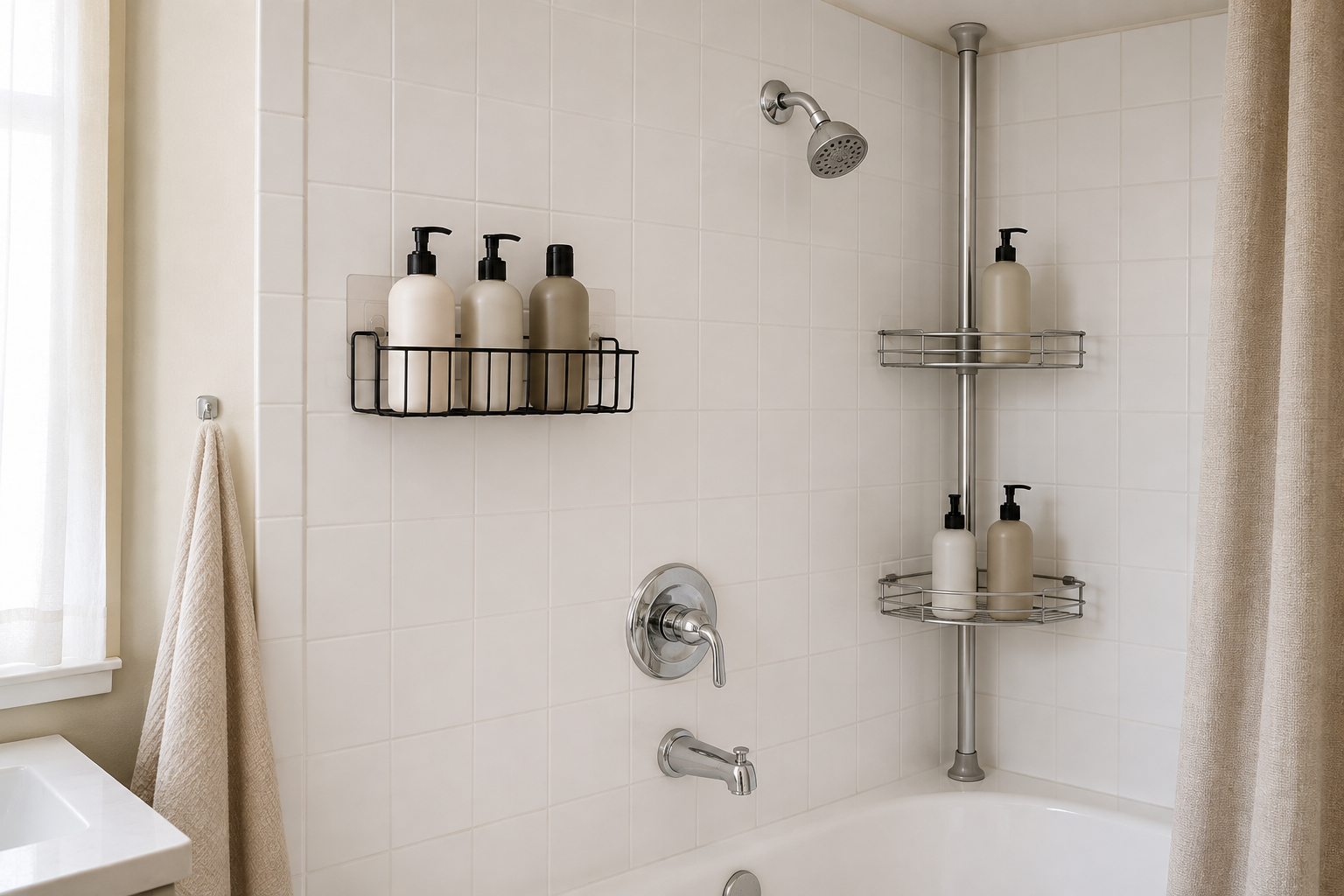
Quick decision before shopping
First measure the available space, identify the setup or surface constraints, and decide who will maintain the item. Skip the category if it blocks access, conflicts with the manufacturer's instructions or lease, or adds more upkeep than the problem justifies.
Compare the two storage formats: Use the measurements and surface checks below before shopping. These are category links, not tested winners.
- Browse category: Shop adhesive shower shelves on AmazonCompare mounting-plate size, approved wall surfaces, drainage, basket depth, stated load, cure time, and removal instructions.
- Browse category: Shop tension pole shower caddies on AmazonCompare adjustment range, contact feet, shelf spacing, drainage, assembly, stated load, and wet-area care.
This guide owns the choice between two mounting systems. For options within either format, continue to the adhesive shower shelf guide or the tension shelf guide. The broader renter-friendly home upgrades guide covers lease checks and reversible alternatives.
The short answer
If adhesive is already ruled out, use the separate tension-pole versus over-the-showerhead caddy comparison to decide between ceiling-and-floor compression and a compact fixture-hung format.
- Pick an adhesive shelf for smooth, nonporous tile or another surface specifically approved by the shelf maker, especially when floor and corner space are tight.
- Pick a tension pole caddy when adhesive is prohibited or the wall is unsuitable, provided the top and bottom contacts are firm, flat, permitted surfaces and the measured span sits comfortably inside the product's range.
- Skip both if the shower finish is loose or damaged, the only location blocks controls or access, the intended load exceeds instructions, or the lease does not allow the setup.
Side-by-side decision table
| Decision point | Adhesive shelf | Tension pole caddy |
|---|---|---|
| Critical fit check | Full mounting plate must fit an approved smooth surface without crossing grout. | Measured vertical span and both contact surfaces must match the instructions. |
| Space used | Uses wall area and little or no tub-ledge space. | Uses a corner plus a top and bottom contact point. |
| Setup | Surface preparation and full cure time matter. | Assembly, vertical alignment, and correct pressure matter. |
| Adjustment later | Usually limited once the mount has bonded. | Shelves may adjust, but moving the pole means reinstalling it. |
| Cleaning | The basket may lift off its mounting plates; adhesive edges remain on the wall. | More joints and pole surfaces sit in the wet area; the floor contact can collect residue. |
| Move-out concern | Residue or finish damage if the surface or removal method is wrong. | Compression marks, scuffs, or instability on unsuitable contacts. |
Start with the surfaces, not the bottle count
An adhesive shelf generally needs a clean, dry, smooth, nonporous area large enough for every mounting plate. Mosaic tile, deep grout lines, textured tile, porous stone, peeling coatings, and uneven fiberglass can prevent full contact. A label that says “for tile” is not enough; check the maker's exact surface list.
A tension pole replaces wall adhesion with compression, but that does not make it universal. The lower foot may be unsuitable for a narrow, rounded, sloped, or flexible tub ledge. The upper foot needs a sound, flat ceiling or other approved contact surface. Never compensate for a poor fit by forcing extra pressure.
Measure the real mounting zone
For an adhesive shelf
Measure the basket width and depth, then the complete mounting-plate footprint. Mark grout lines, curves, controls, doors, curtain movement, and the height of the tallest pump bottle. The plates—not just the basket—need a flat landing area. Leave room to follow the stated removal method later.
For a tension pole
Measure from the exact bottom contact point to the exact top contact point, not from the general tub area to the ceiling. Compare that number with the assembled adjustment range and any extension-piece rules. Also check corner squareness, shelf radius, curtain or door clearance, and whether the pole would narrow the standing area.
Loaded-bottle stability
Count products when full. Large pump bottles create both weight and sideways force when pressed. For an adhesive shelf, stay within the maker's stated load and allow the full cure time before loading or running the shower. Stop using it if a plate edge lifts, slides, or separates.
For a tension caddy, distribute weight as directed, keep heavier permitted items lower, and avoid adding hooks or bulk refills beyond the intended setup. Check whether shelves rotate, collars loosen, or the pole moves. A tall pole that looks secure while empty can behave differently after daily use.
Drainage, rust, and cleaning
Both formats benefit from open, draining shelves and enough clearance to wipe the wall and basket. “Rustproof” should not replace the care instructions: coated steel, stainless steel, aluminum, and plastic each have different weak points. Look for replaceable parts and avoid leaving metal joints buried under soap residue.
An adhesive basket with removable shelf hardware can be easier to wash, though its mounting plates remain. A tension caddy has more pole sections, collars, feet, and shelf connections to clean. If the bottom contact sits where water pools, routine drying may matter more than an extra shelf.
Renter and move-out checks
Read the lease and ask the property manager when fixtures, adhesives, or pressure-mounted products are restricted. Photograph existing damage before installation and keep the packaging, instructions, spare parts, and removal directions.
For adhesive, use only the documented removal method; do not pry against tile or improvise with solvents or heat. For a tension pole, unload it before releasing pressure and follow the disassembly sequence so it does not spring loose or scrape surrounding surfaces. If either product will not release normally, stop before damaging the finish.
Who should skip each option
Skip adhesive shelves on excluded, textured, porous, cracked, loose, or heavily grouted surfaces, or when the lease prohibits adhesive. They are also a poor choice where a falling basket could strike a person or damage a fixture.
Skip tension poles when the span falls outside the stated range, the contact points are sloped or flexible, the ceiling finish is questionable, or the pole would block a control, grab bar, door, curtain, or safe entry path.
Skip both when you need to store heavy bulk containers or the shower enclosure already shows loose tile, movement, leaks, or damage. Report building defects rather than covering them with storage. A stable freestanding caddy outside the wet area, a permitted showerhead caddy, or fewer refillable containers may be the better answer.
Bottom line
An adhesive shower shelf wins on compactness when the wall and lease clearly support it. A tension pole caddy wins when the wall cannot take adhesive and the shower provides a reliable measured span between suitable contacts. The deciding question is not which product claims to be stronger; it is which mounting system fits the actual surfaces, load, cleaning routine, and removal plan with fewer compromises.