Reusable vs Disposable Cleaning Gloves for Household Chores
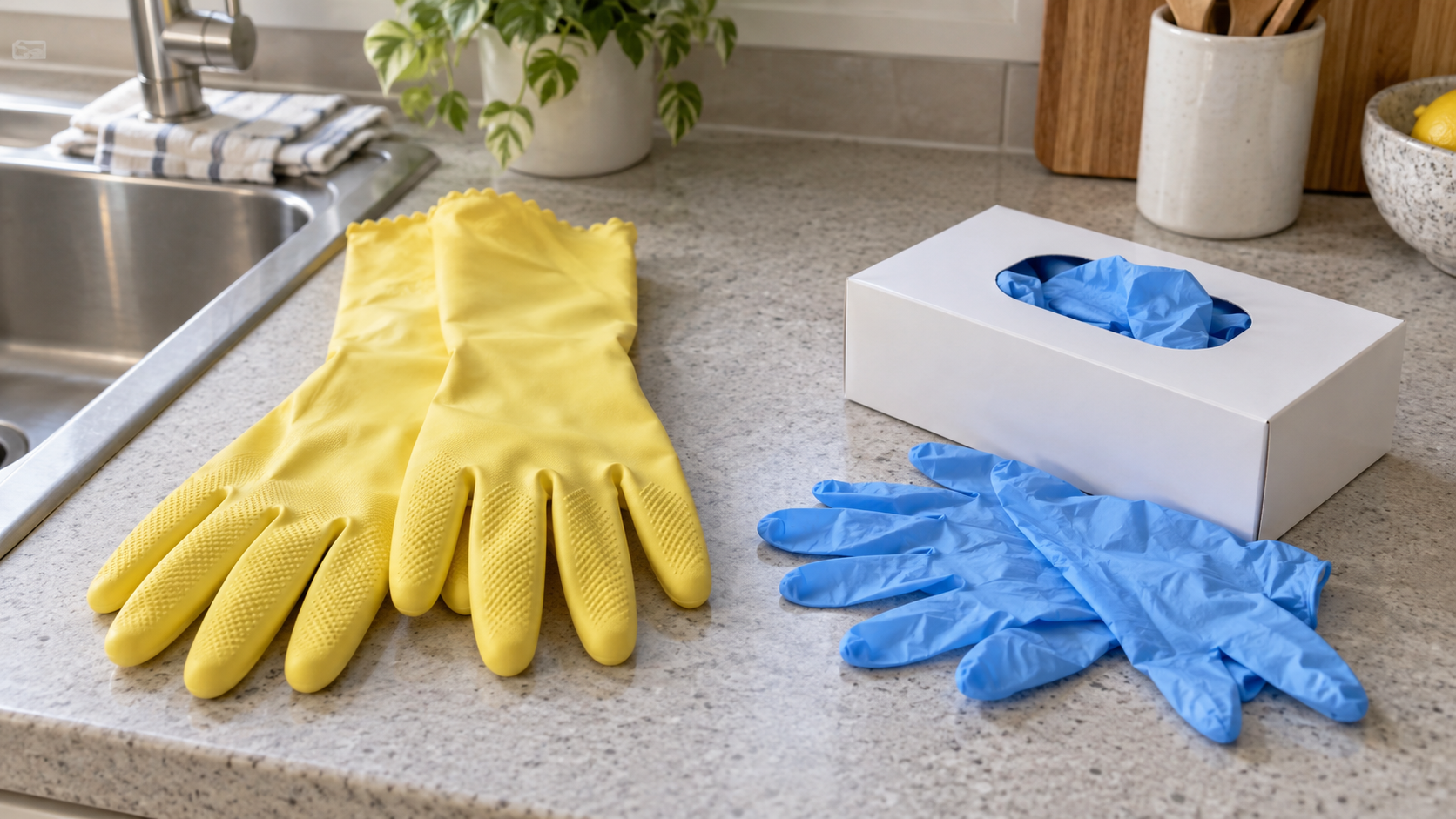
Reusable household gloves usually suit repeat sink, dishwashing, and bathroom routines when you can wash and dry them between jobs. Disposable gloves can suit occasional, short tasks when the product label permits them and you need a fresh pair. Neither format is universal protective equipment: the chore, cleaner label, glove instructions, material compatibility, and fit come first.
As an Amazon Associate, The Good Home Doc may earn from qualifying purchases.
Quick decision before shopping
First measure the available space, identify the setup or surface constraints, and decide who will maintain the item. Skip the category if it blocks access, conflicts with the manufacturer's instructions or lease, or adds more upkeep than the problem justifies.
Start with the chore and the product instructions:
- Browse category: Compare reusable household cleaning glovesCheck size guidance, material, cuff length, lining, texture, stated uses, cleaning, drying, and storage.
- Browse category: Compare disposable household cleaning glovesCheck size, material, powder status, stated household uses, exclusions, removal directions, and disposal guidance.
These are category routes, not tested winners. A household glove does not provide universal chemical, heat, cut, puncture, infection, or allergy protection. Follow the cleaner and glove labels; use task-specific protective equipment when instructions require it.
Quick answer
- Choose reusable gloves for recurring compatible chores when a durable cuff, repeat fit, and a dependable wash-and-dry routine matter.
- Choose disposable gloves for permitted occasional jobs when a fresh pair and no drying step fit the routine better.
- Use a mixed system only when each format has a defined job and separate storage; do not treat either as protection for every cleaner or hazard.
- Skip both if the task instructions require a different glove specification or professional handling.
At-a-glance tradeoffs
| Decision point | Reusable household gloves | Disposable cleaning gloves |
|---|---|---|
| Best fit | Repeat, label-compatible wet chores. | Short, occasional, label-compatible tasks. |
| Fit | Often thicker with longer cuffs; sizing and finger control still vary. | Often thinner; correct palm and finger fit matters because loose material can bunch. |
| After use | Clean, inspect, dry fully, and store as directed. | Remove as directed and dispose of according to the product, mess, and local rules. |
| Storage | Needs an open drying location plus clean storage. | Needs a dry dispenser location and replacement supply. |
| Replacement trigger | Tears, pinholes, hardened material, damaged lining, odor, or loss of grip. | After the stated single-use task, or sooner if torn, punctured, or contaminated. |
Who reusable gloves fit
Reusable household gloves make sense when the same ordinary chores recur and you can assign pairs by zone. A longer cuff may help contain routine splashes, while a textured palm may improve control only if it still lets you grip dishes and tools comfortably. Measure your hand using the maker's size chart rather than assuming one household size fits everyone.
The hidden requirement is upkeep. Rinse or clean the exterior only as directed, avoid transferring residue to the inside, and dry the pair in the permitted orientation before storage. If the lining remains damp or the fingers stay folded together, the reusable format may create more work than it saves.
Who disposable gloves fit
Disposable gloves can fit an occasional permitted task when storing and drying another reusable pair is unrealistic. They also let a household start with a fresh pair for a defined job. Thin material, however, does not mean universal dexterity or protection. Check the box for sizing, intended use, material, exclusions, and whether the cleaner label names an acceptable glove type.
Take only the pair you need with dry hands and keep the remaining supply away from splashes, heat, sunlight, and children. Do not wash or reuse a glove labeled single-use. A torn glove, poor fit, or missing material disclosure is a reason to stop rather than improvise.
Setup and handling
Give reusable pairs separate hooks or a ventilated rack, and label the storage area rather than writing on the glove unless its maker permits that. Keep kitchen and bathroom pairs distinct. For disposable gloves, measure the dispenser and choose a dry cabinet or drawer that does not crowd food, cookware, or a heat source.
Before each use, inspect for tears, pinholes, brittleness, damaged cuffs, or stuck-together material. Remove gloves without snapping or touching a soiled exterior more than necessary, following label directions. Wash hands as the task and product instructions require. Wearing gloves never makes it safe to mix cleaners or ignore ventilation directions.
Maintenance, supply, and replacement
Reusable gloves trade replenishment for maintenance. The pair must be cleaned as directed, dried completely, inspected, and replaced when the material or lining deteriorates. Disposable gloves remove the drying step but require a steady supply, dry storage, and appropriate disposal. Compare the number of chores—not just the box or pair price—when planning space and replenishment.
Do not flush either format. Local disposal rules and the substance on the glove determine the correct path. Gloves used for unusual contamination, strong chemicals, pest products, mold, bodily fluids, or regulated waste need authoritative task-specific guidance; this everyday household comparison is not the right decision tool.
Who should skip each option?
Skip reusable gloves if you cannot dry them fully, share an ill-fitting pair, or repeatedly use one pair across unrelated zones. Skip a lined pair if the lining stays damp or cannot be cleaned as directed.
Skip disposable gloves when routine chores would create a constant replenishment burden, the dispenser has no dry storage spot, or the available size bunches and reduces control. Do not choose thin disposable gloves merely because they look more precise.
Skip both general household categories when the cleaner, appliance, workplace, or task instructions specify chemical-resistant, heat-resistant, cut-resistant, electrical, food-service, medical, or other purpose-rated protection. Choose the exact specified equipment or use a qualified professional.
Bottom line
Reusable gloves fit repeat compatible chores when sizing, cleaning, drying, and inspection are easy to sustain. Disposable gloves fit narrower occasional chores when their label and the task instructions agree. Define the job first, confirm material and fit, and choose the format whose complete after-use routine your household will actually follow.