Renter-friendly kitchen storage
How to Choose Magnetic Spice Racks for Small Rental Kitchens
A magnetic spice rack can reclaim cabinet or counter space without drilling, but only when the exact appliance surface attracts a magnet and the shelf clears doors, walls, handles, vents, and walking paths. Treat this as a fit-and-placement decision—not a promise that every stainless-looking refrigerator will work. If you are still deciding whether this category fits at all, start with the magnetic spice rack buy-or-skip guide.

If the shelf solves placement but containers are still hard to identify, use the household label-maker guide to compare tape systems, surface fit, removal, refills, and shared-home workflows.
As an Amazon Associate, The Good Home Doc may earn from qualifying purchases.
Shop by the surface and jars you actually have
- Browse category: Magnetic spice racks for refrigerator sidesCompare full dimensions, required metal surface, magnet layout, rail height, and stated load instructions.
- Browse category: Single-tier magnetic spice shelvesA narrower starting point when door swing, wall gaps, or mixed jar heights make larger sets awkward.
Quick answer: get a shallow, single-tier shelf first
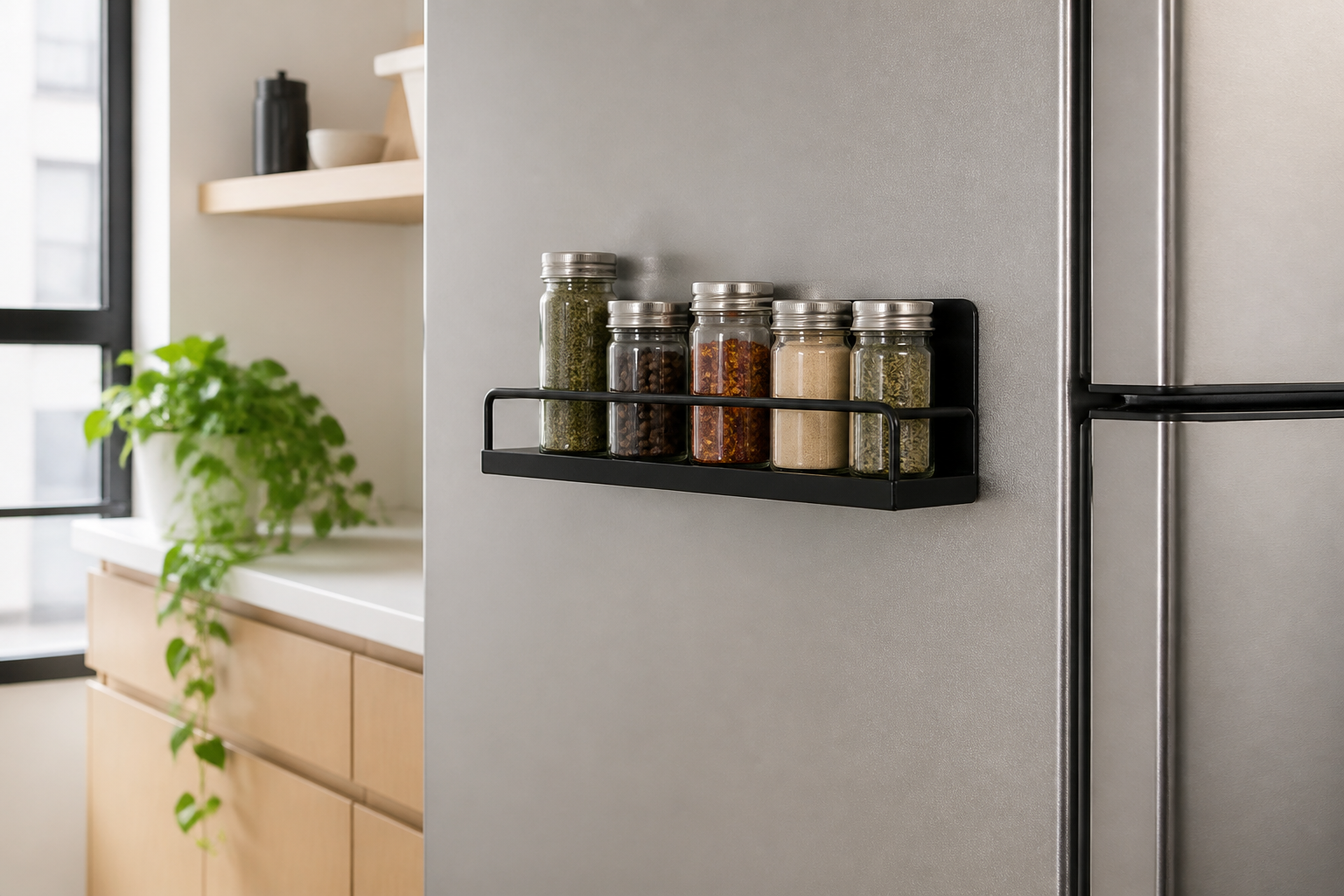
For most renters, the easiest format to evaluate is one shallow shelf with a front rail and a broad magnetic contact area. It is simpler to measure, less likely to crowd a passage, and easier to move than a tall multi-tier assembly. Choose only from listings that state the required mounting material, complete outside dimensions, shelf depth, and load guidance. If those basics are missing, skip the listing.
Verify the surface before shopping
“Stainless steel” describes an appearance or material family, not guaranteed magnetism. Test the intended spot with an ordinary magnet you already own. Test the side panel itself—not the door, handle, trim, or a nearby metal cabinet. A weak attraction is not enough evidence for a loaded shelf.
Check the appliance manual and lease before attaching accessories. Do not cover labels, seams, controls, condenser areas, air gaps, or ventilation openings. Keep the rack away from a range, toaster oven, steam, sink splash, or any location the appliance maker says to leave clear. Ask the landlord or property manager when appliance-accessory rules or required clearances are uncertain.
Measure the full operating space
- Available panel width: measure between the front edge, wall, cabinetry, hinges, handles, and any change in panel shape.
- Rack projection: add shelf depth to the deepest jar. Confirm it does not narrow a walkway or catch clothing.
- Door and drawer swing: open the refrigerator, freezer, nearby cabinets, and kitchen door through their complete travel.
- Jar fit: record the widest diameter and tallest container you plan to store; the front rail should retain it without making removal awkward.
- Move-out storage: decide whether the empty rack fits a box, cabinet, or suitcase without bending.
Compare the useful formats
Single shallow shelf
This is the best default for a short row of everyday jars. It keeps the load modest and can be placed around real clearances. The tradeoff is limited capacity, which is often useful discipline in a tight kitchen.
Deep basket-style rack
A deeper basket may hold grinders or mixed containers, but it projects farther into the room and can make labels harder to scan. Measure the biggest container and walking clearance before choosing it.
Stacked or multi-piece set
Separate shelves let you leave vertical space for tall jars and relocate one piece at a time. A connected multi-tier unit can simplify alignment but creates a larger fixed footprint. Do not assume the stated total capacity applies to your surface or jar mix; follow the maker's placement and load instructions.
Must-have features
- Complete rack dimensions and a clearly stated compatible surface.
- A retaining rail high enough for the containers you intend to store.
- Manufacturer load and placement guidance without relying on vague “heavy-duty” wording.
- A smooth, cleanable shelf and accessible corners where cooking dust cannot accumulate unseen.
- A back and edges that sit flat without trapping grit against the appliance finish.
Nice-to-have features
Removable liners, divided sections, and small label areas can help, but they matter less than surface compatibility and clearance. Hooks are useful only if hanging tools will not swing into the door, wall, or walking path. Avoid paying for extra pieces that have no measured destination.
Setup, maintenance, and removal
- Empty and clean the intended panel according to the appliance maker's care instructions; dry it fully.
- Place the empty rack, then operate every nearby door and drawer and walk through the space.
- Add the lightest containers first, staying within all product guidance. Recheck for sliding or movement.
- Lift the rack off rather than dragging it across the finish. Clean dust and grit from both surfaces regularly.
- Inspect after door slams, appliance movement, or reorganizing. Remove it if it shifts, rocks, damages the finish, or interferes with required clearance.
A magnetic rack is reversible in the sense that it can be lifted away, but that does not make every setup damage-free. Trapped grit, dragging, moisture, coatings, and finish condition can still matter. Follow both appliance and rack instructions.
Who should skip a magnetic spice rack
Skip this category if the intended panel is nonmagnetic, weakly magnetic, textured, curved, damaged, landlord-restricted, or needed for appliance ventilation. It is also a poor fit beside a hot cooking appliance, in a splash zone, along a narrow traffic path, or where children or pets can pull containers down.
Choose a shallow-drawer organizer, stable cabinet bin, or small freestanding rack instead when you have bulk bags, tall bottles, many heavy glass jars, or no verified steel surface. Renters who expect to move soon may prefer one compact shelf over a large set simply because it packs more easily.
Bottom line
The best magnetic spice rack for a rental kitchen is not the one claiming the most jars. It is the shallowest format that fits a verified magnetic panel, retains your actual containers, respects appliance and lease restrictions, stays clear of heat and movement, and lifts away cleanly for maintenance or moving day.