Is a Magnetic Spice Rack Worth It for a Rental Kitchen?
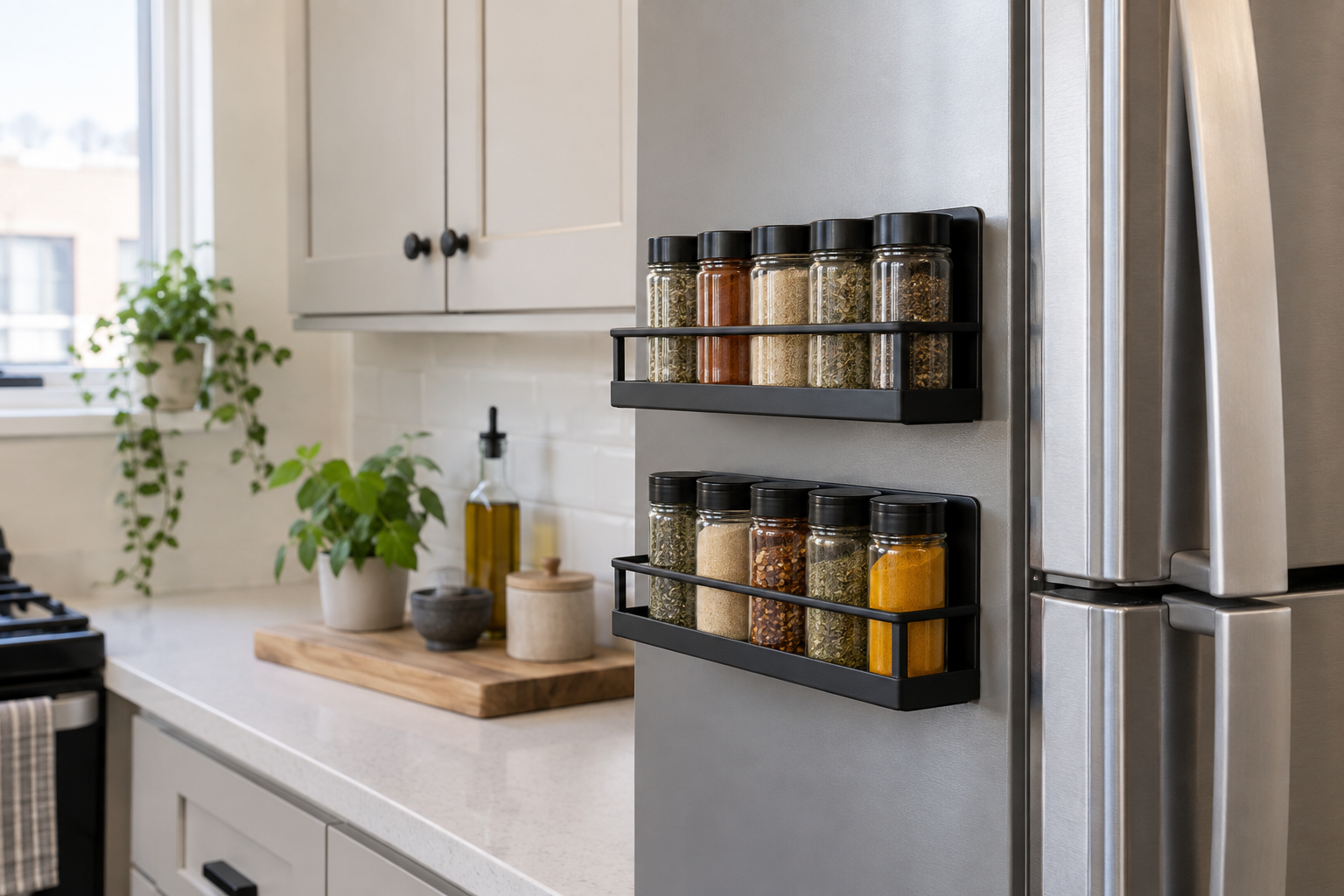
A magnetic spice rack can be worth it when a verified magnetic appliance panel sits near your prep area, the loaded shelf clears every door and walkway, and exposed jars make cooking easier. Skip it when magnetism is weak, the only location is hot or wet, the rack would crowd a narrow route, or a drawer already keeps spices easy to reach.
As an Amazon Associate, The Good Home Doc may earn from qualifying purchases.
Quick decision before shopping
First measure the available space, identify the setup or surface constraints, and decide who will maintain the item. Skip the category if it blocks access, conflicts with the manufacturer's instructions or lease, or adds more upkeep than the problem justifies.
Shop only after the surface and route checks: These are category comparisons, not tested winners.
- Browse category: Compare magnetic spice racks for refrigerator sidesCheck required surface, complete dimensions, jar clearance, front rail, stated load, care instructions, and magnet coverage.
- Browse category: Compare spice drawer organizers insteadA drawer insert may suit nonmagnetic appliances, narrow passages, or households that prefer spices out of sight.
Quick decision
| Your setup | Better choice |
|---|---|
| Strong magnetic side panel, clear prep-zone access, and a small set of daily spices | A shallow single-tier magnetic rack may be worthwhile |
| Nonmagnetic or weakly magnetic appliance finish | Use a drawer, cabinet bin, or freestanding organizer |
| Only open panel is beside heat, steam, sink splash, a vent, or a tight walkway | Choose another storage location |
| Large refill bags, heavy jars, or an oversized spice collection | Use supported cabinet or drawer storage |
| Lease or appliance instructions are unclear | Ask the property manager and follow the appliance maker's guidance |
First confirm that the exact panel works
A stainless-looking refrigerator is not necessarily magnetic. Test the exact planned spot with a simple magnet you already own; do not assume the door, side, trim, and handle behave alike. Then read the appliance instructions for required clearances and areas that must remain uncovered. A magnetic rack should never cover a label, seam, control, vent, air gap, or service access.
No drilling makes the category portable, but it does not guarantee approval or a mark-free finish. Check the lease and appliance rules. Photograph the panel before installation, keep the rack clean, and inspect contact points during the first few weeks. If the rack shifts, scratches, traps moisture, or changes the finish, remove it.
Measure the working route, not just the empty panel
Record the rack's full width, height, and projection, then add the deepest jar. Open the refrigerator, freezer, neighboring cabinet, dishwasher, and kitchen door through their complete travel. Walk past the planned location carrying a grocery bag. A rack that technically fits can still snag clothing, narrow a route, or stop a door from opening normally.
Measure the jars you actually use. A front rail should retain compatible containers without making labels or lids hard to reach. Keep heavier or breakable containers on a supported shelf unless the rack and appliance instructions clearly permit the intended setup. Treat any stated rack load as a maximum, not a target.
Match the rack to the cooking routine
The category makes the most sense for a compact set of frequently used, sealed spices near—but not over—the prep zone. It is less useful when you cook infrequently, buy large refill bags, want a visually quiet kitchen, or already reach a shallow drawer easily. Exposed storage also means more wiping around jars and rails.
Heat, steam, grease, and direct sun can make an apparently convenient spot a poor one. Keep the rack away from ranges, toaster ovens, kettles, sinks, and any clearance zone named by an appliance or product maker. Follow the spice maker's storage directions; a rack changes access, not the conditions a food product requires.
Setup, removal, and maintenance
Clean and dry the approved appliance surface and rack contact area as directed. Place the empty rack first, check that it sits level, then add compatible jars gradually without pushing or pulling on the shelf. Recheck door movement and the walking route after loading. Do not add adhesive, screws, improvised pads, or extra magnets unless the product and appliance instructions specifically allow them.
Remove jars before repositioning the rack. Wipe dust, grease, and spills using methods approved for both finishes, and dry contact areas completely before reattaching. Before moving, empty and clean the rack, protect its finish, and pack it so the rails do not bend. Portability only helps when the next kitchen also has a compatible surface and safe placement.
Who should skip a magnetic spice rack
- Renters without a clearly compatible magnetic surface or permission for appliance-mounted accessories.
- Households whose only placement blocks ventilation, appliance access, doors, controls, or a walking route.
- People storing large, heavy, fragile, or poorly sealed containers.
- Cooks whose spices already fit an accessible drawer or cabinet with less cleaning and visual clutter.
- Anyone tempted to use adhesive or hardware to make an incompatible rack stay attached.
Bottom line
A magnetic spice rack is worth considering when it converts an unused, verified magnetic panel into convenient storage without creating a clearance, cleaning, heat, or move-out problem. Confirm the surface, appliance rules, lease, complete loaded dimensions, jar fit, placement, and maintenance before buying. If any check fails, a drawer organizer or shallow cabinet bin is the more predictable choice.