How to Choose Hand Trowels for Container Gardening
A hand trowel earns its place in a container-gardening kit when its blade fits the pots you actually use and its handle stays controllable in a tight work area. Broad, narrow, and depth-marked trowels solve different planting jobs, so start with pot access and soil condition rather than a vague promise of toughness.
As an Amazon Associate, The Good Home Doc may earn from qualifying purchases.
Quick decision before shopping
First measure the available space, identify the setup or surface constraints, and decide who will maintain the item. Skip the category if it blocks access, conflicts with the manufacturer's instructions or lease, or adds more upkeep than the problem justifies.
Compare blade shape against your smallest pot: Browse category: browse hand trowels for container gardening.
This is a category search, not a tested ranking. Verify current blade and handle dimensions, intended materials, depth-marking units, care directions, warnings, warranty, and return terms for the exact tool.
Quick Comparison
| Format | Best fit | Main tradeoff | Skip when |
|---|---|---|---|
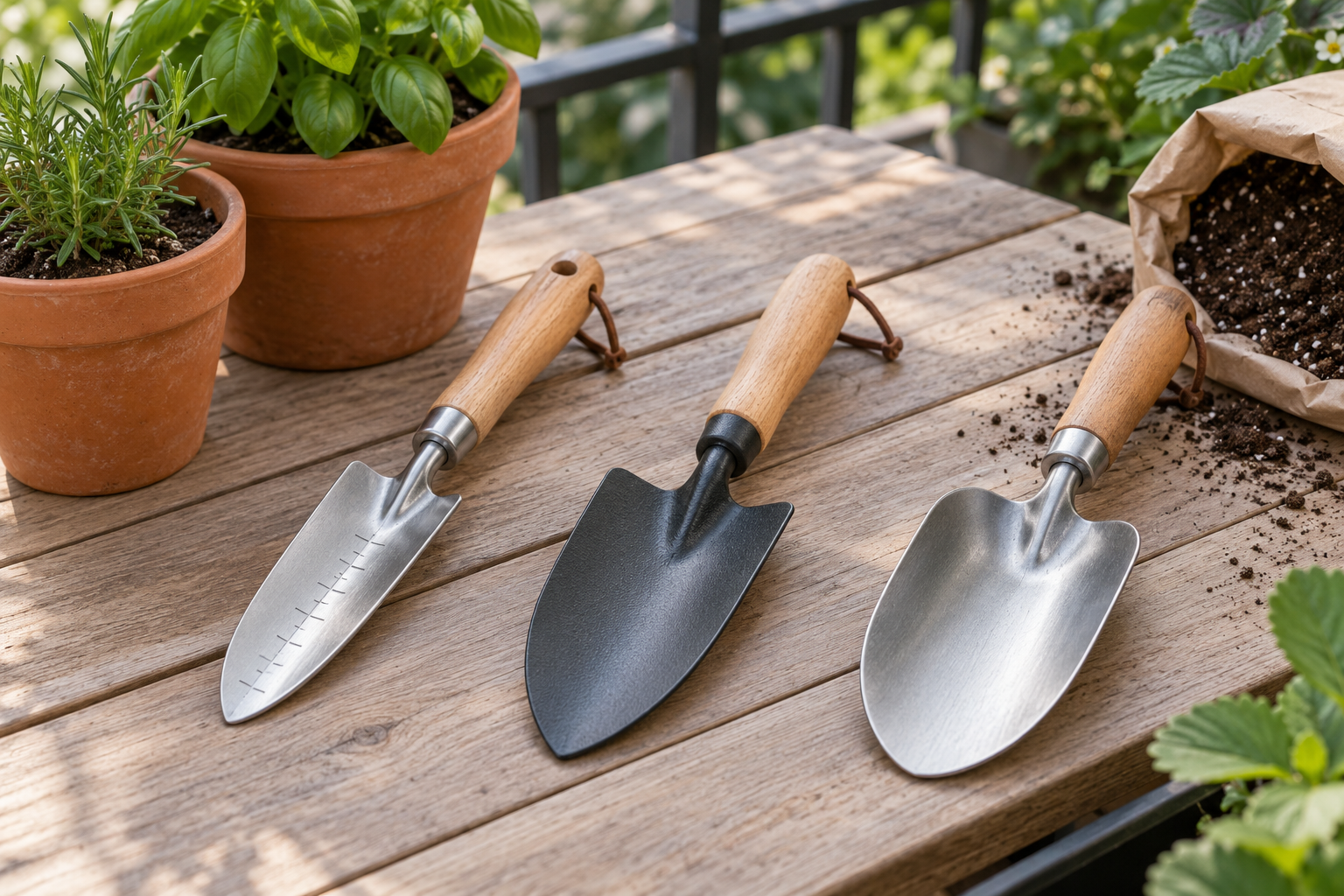
| Narrow transplanting trowel | Small pots, bulbs, seedlings, and working between established stems | Moves less soil and can feel slow in wide containers | You mainly open broad planting pockets or move larger amounts |
| Medium pointed trowel | General planting and repotting in medium or large containers | May be too wide for tight root zones and small openings | The complete blade cannot enter the pot without contacting the plant |
| Broad scoop-shaped trowel | Opening wider pockets and moving modest amounts within an open planter | Needs more clearance and offers less precise access | Your containers are narrow or densely planted |
Measure the Pot, Not Just the Tool
Measure the inside opening of the smallest pot where the trowel will work, then note the space between the plant stem and the pot wall. Compare that usable gap with the blade's widest point. A blade that technically enters the rim may still be awkward if the handle, ferrule, or working angle presses into leaves or the container edge.
Depth matters too. A long transplanting blade can reach into a deep container but may be clumsy in a shallow planter. A short broad blade may feel controlled near the surface yet lack useful access beside an established root ball. Choose for the recurring job, not the largest tool that fits in a storage bin.
Blade Shape Changes the Job
Narrow blades favor access
A narrow blade can make a small planting hole and work between existing plants with less surface disruption. Look at total blade width, length, curvature, and the transition into the handle. A slim point does not help if the shoulders of the blade immediately become too wide for the opening.
Medium pointed blades are the general-purpose choice
A conventional pointed blade is the practical starting format when you repot medium containers, loosen ordinary packaged potting mix, and open modest planting pockets. It still needs enough clearance to move without scraping the pot or forcing the wrist into an awkward angle.
Broad blades trade precision for capacity
A broader, more cupped blade can hold more loose material and open a wider pocket, but it is not a substitute for a soil scoop. If most of the task is carrying mix from a bag to a pot, a high-sided scoop generally contains material better. Keep the trowel for digging and placement.
Depth Markings Need a Reality Check
Etched or molded depth marks can be useful when a seed, bulb, or plant label specifies a planting depth. Confirm whether the marks show inches, centimeters, or both, where the zero point begins, and whether the marks remain visible after normal use and cleaning. Treat them as a placement aid, not a precision measuring instrument.
Container fill can settle, and the surface may be uneven. Follow the plant or seed supplier's current directions and judge depth from the relevant soil surface. Do not rely on decorative markings that are unlabeled or impossible to read while the blade is in the soil.
Must-Have Features
- Published blade dimensions: width and length are essential for judging pot and plant access.
- A secure handle connection: inspect the ferrule, tang, weld, fasteners, or molded joint according to the construction.
- A controllable grip: the handle should suit the intended hand position without requiring a forced wrist angle.
- A suitable intended use: choose a garden hand tool whose instructions cover ordinary container planting.
- Clear care directions: know how to remove soil, dry the tool, protect the finish, and store it.
Nice-to-Have Features
- Readable depth marks: useful for repeat jobs when the units and reference point are clear.
- A hanging hole or loop: helpful only if the complete tool can hang securely without obstructing a door or walkway.
- A high-visibility handle: easier to find among foliage and bags.
- A corrosion-resistant finish: useful when its care requirements match the household's cleaning and dry-storage routine.
Handle, Weight, and Control
Handle shape is personal, but listing adjectives such as ergonomic or comfortable are not measurements. Compare handle length, widest diameter, texture, end shape, and complete tool weight. If possible, hold the exact tool in a store and simulate the working angle without making unsupported strength or comfort assumptions.
A cushioned grip can add diameter and may trap soil around seams. A wood handle may have specific drying or finish-care requirements. Molded plastic and rubber-like grips vary in texture and construction. No handle material guarantees comfort, durability, or a secure grip when wet or dirty.
Setup and Care in a Small Space
Set the pot on a stable work surface with enough room for the full tool stroke. Keep the blade pointed away from people, pets, and the edge of a balcony. A trowel is not a knife, pry bar, hammer, root saw, or tool for unknown buried lines. If the material is too dense for ordinary hand-tool work, stop rather than forcing the tool.
Remove soil using the maker's method, dry the tool as directed, and inspect the blade, edges, finish, connection, and handle before storage. Store it where the blade cannot snag hands, clothing, or bags. Do not leave it loose on the floor, buried in a container, or exposed to weather unless its instructions explicitly permit that storage.
Who Should Skip Each Format?
Skip a narrow transplanting trowel if nearly every job involves wide, open planters and the small blade would add needless repetitions. Skip a broad trowel if the blade cannot clear your smallest pot, the plant spacing, or the working angle. Skip depth-marked models if you will not use the marks or cannot verify their units and reference point.
Skip buying a separate trowel when a suitable tool already covers the recurring work. If the real job is moving loose mix, choose a soil scoop; if it is pruning stems, use a cutting tool intended for the plant and stem size. People who cannot maintain a stable working position or controlled grip should choose a different setup or ask for help rather than relying on a product label to solve the mismatch.
Buying Checklist
- List the recurring jobs: transplanting, making planting pockets, loosening mix, or placing small amounts of soil.
- Measure the smallest pot opening and the tightest usable space beside an established plant.
- Compare complete blade width, length, curvature, handle dimensions, joint construction, and weight.
- Check intended-use limits and confirm that depth marks, if wanted, have clear units.
- Plan a stable work surface, safe carry route, cleaning routine, and dry storage location.
- Buy one versatile format first unless a second shape has a distinct, repeated job.
Bottom Line
A medium pointed trowel is the sensible first choice for varied work in medium and large containers. A narrow transplanting trowel is better when pot openings and plant spacing limit access, while a broad blade fits open planters where capacity matters more than precision. Measure the actual working gap, choose a handle you can control, and keep transfer, cutting, and heavy digging jobs with tools designed for them.