Removable rental-kitchen waste storage
How to Choose Cabinet-Door Trash Cans for Small Rental Kitchens
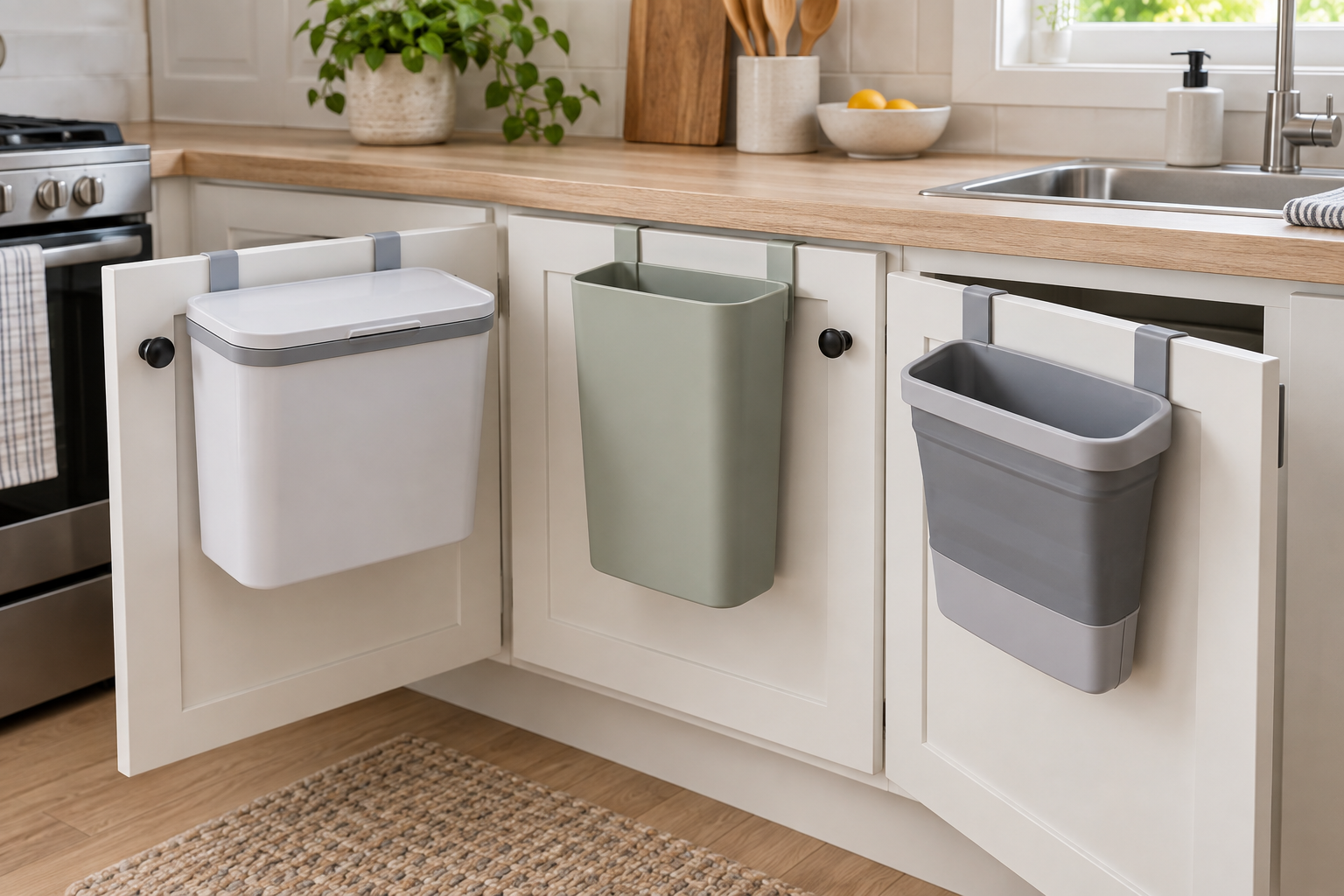
A cabinet-door trash can is useful when floor space is scarce and one compatible door sits beside the prep zone. The right type is a small, removable bin whose hanger fits the door without fighting the hinge, shelf, handle, or walkway. It is not a substitute for measuring—or for checking what the lease and cabinet maker allow.

As an Amazon Associate, The Good Home Doc may earn from qualifying purchases.
Shop by the cabinet and cleanup routine
- Browse category: Lidded over-cabinet-door trash cansCompare door-thickness limits, outside depth, lid clearance, liner retention, and cleaning access.
- Browse category: Slim hanging cabinet-door binsA simpler starting point for dry scraps or light routine waste when projection and door movement are tight.
- Browse category: Collapsible hanging kitchen binsCheck the open and collapsed depths, frame support, folds, cleaning instructions, and pinch points.
Quick answer: start with a small rigid over-door bin
For most renters, a rigid bin with padded hangers and a removable inner bucket or easy-access interior is the clearest first format to evaluate. It is easier to measure and wash than a folding body, and its shape stays predictable when loaded. Add a lid only if it can open fully without striking the counter, sink, drawer, or your hand during prep.
Reject listings that omit the supported door-thickness range, full outside dimensions, hanger geometry, or stated load guidance. A large capacity on paper is irrelevant when the filled bin pulls awkwardly on a lightweight cabinet door or blocks the aisle.
Measure the cabinet in both open and closed positions
- Door thickness: measure the top edge away from bumpers and hardware, then match the maker's hanger range.
- Outside projection: compare the bin's deepest point with the walkway, adjacent drawer fronts, appliance handles, and knees at the sink.
- Inside clearance: if the bin hangs inward, account for shelves, plumbing, stored items, hinges, and the door frame.
- Door travel: open it completely and check neighboring doors, dishwasher access, oven handles, and the standing position used for prep.
- Top clearance: confirm a lid or scraper edge can operate below the counter overhang.
- Waste route: make sure the filled liner can lift out without dragging against the counter or spilling through a narrow opening.
Use removable painter's tape to outline the listed width and depth before ordering. That exposes collisions a single width measurement misses.
Compare three useful formats
Rigid bin with a lid
This format keeps its shape and may visually contain the contents, but the lid adds height and moving parts. It fits best when the counter overhang leaves room for the stated opening motion. A lid does not guarantee odor, pest, or leak control.
Slim open-top bin
An open bin gives quick access during food prep and has fewer corners or hinges to maintain. It also leaves contents exposed and may need more frequent emptying. It is often the most practical choice for dry packaging or a short cleanup session rather than mixed waste stored for days.
Collapsible hanging bin
A folding body can reduce projection between uses, but only if collapsing it is genuinely part of the household routine. Check whether the folds trap residue, whether the frame stays supported, and where fingers go during opening and closing. Skip it if easy scrubbing matters more than compact storage.
Must-have features
- A documented door-thickness range and complete interior and exterior dimensions.
- Padded or smooth cabinet contact points that match the surface instructions.
- Clear stated load guidance and a capacity that encourages manageable liners.
- A rim, ring, or inner bucket that holds the intended liner without sharp exposed edges.
- Washable surfaces with corners, lid parts, and folds you can actually reach.
Nice-to-have features
A removable scraper, carrying handle, liner ring, or dual hanging and freestanding modes can be helpful, but each part creates another fit or cleaning question. Wall-adhesive hardware is not necessary for this category and adds surface-removal risk; renters should favor the over-door configuration when the cabinet is compatible.
Rental constraints and removal risk
“No drill” does not mean no risk. A tight hanger can mark paint or veneer, trapped grit can scratch a top edge, and a heavy or slammed bin can stress hinges or throw the door out of alignment. Check the lease, ask the landlord or property manager when cabinet accessories are restricted, and follow any cabinet-care instructions available.
Do not bend a hanger to force it over a door, add adhesive to stop movement, or use the bin on a damaged, loose, glass-fronted, unusually thin, or poorly aligned door. Stop using it if the door sags, rubs, no longer closes normally, or shows a finish change.
Setup and maintenance
- Clean and dry the door top and hanger pads according to the cabinet-finish guidance.
- Mount the empty bin, close and open the door slowly, and check every inside and outside collision point.
- Add an empty liner and test removal. Then begin with light waste within the manufacturer's instructions.
- Empty before the contents become difficult to lift or distort the hanger. Never use capacity as a substitute for stated load.
- Wash and fully dry the bin as directed. Clean grit from contact pads and inspect the door, hinges, rim, lid, and folding joints.
- Remove the bin for moving day rather than leaving it attached during transport; store hangers so they cannot scratch other items.
Who should skip a cabinet-door trash can
Skip this category if every available door is loose, delicate, obstructed, landlord-restricted, or in a narrow passage. It is also a poor fit for households producing heavy or bulky waste, anyone who cannot comfortably lift a liner from counter height, or routines that require a tightly contained outdoor-ready container.
A narrow floor can is better when a stable parking spot exists. A small countertop compost bin may fit a separate, frequently emptied food-scrap route. Neither alternative removes the need to follow building waste rules and clean spills promptly.
Bottom line
The best cabinet-door trash can for a small rental kitchen is a modest, cleanable bin that fits the exact door and its full swing, keeps the walkway clear, respects stated load and surface instructions, and lifts off without improvised hardware. If those conditions are not easy to verify, keep the cabinet working normally and use a freestanding option.