How to Choose Bathroom Drawer Organizers for Cosmetics and Toiletries
A bathroom drawer organizer should make small daily items easier to reach without turning the drawer into a tightly packed puzzle. The best layout fits beneath the drawer opening, separates leaky or messy items, and can be lifted out and washed without dismantling the whole vanity.
As an Amazon Associate, The Good Home Doc may earn from qualifying purchases.
Quick decision before shopping
First measure the available space, identify the setup or surface constraints, and decide who will maintain the item. Skip the category if it blocks access, conflicts with the manufacturer's instructions or lease, or adds more upkeep than the problem justifies.
Choose a format after measuring the usable drawer:
- Browse category: Compare modular bathroom drawer traysBest starting category when several tray sizes must work around mixed toiletries and grooming tools.
- Browse category: Compare washable cosmetic drawer organizersUseful when powder, drips, and residue make frequent lift-out cleaning important.
- Browse category: Compare adjustable vanity drawer dividersBetter for long tools and flexible compartments, provided the drawer walls can take the divider pressure.
These are category searches, not tested rankings. Confirm current exterior dimensions, tray height, material, non-slip features, divider mechanism, cleaning instructions, and return terms before buying.
This is a category comparison, not a list of named winners. It focuses on drawer fit, cleanup, and daily access rather than beauty-product advice or unsupported product performance claims.
Quick Best-Fit Guide
- Best for mixed small items: separate modular trays that can be rearranged as the contents change.
- Best for powders and drips: smooth, nonporous lift-out trays with few seams.
- Best for long brushes and grooming tools: adjustable dividers or long narrow trays.
- Best for deep drawers: a shallow top tray only when it does not hide frequently used items below.
- Best for an already crowded drawer: skip the organizer until expired, duplicate, and rarely used items are removed.
Measure the Usable Drawer, Not Just the Front
Measure the inside width, depth, and height with the drawer fully open. Then account for curved corners, screw heads, side hardware, a lower back wall, and any plumbing cutout. The key height is the clearance beneath the vanity frame as the drawer closes, not the height of the decorative drawer front.
Lay out the items you use most and measure the longest brush, widest compact, and tallest bottle that must stay in the drawer. Tall bottles may be safer upright in a cabinet; forcing them sideways into a shallow organizer increases spill risk.
Comparison Framework
Modular Trays
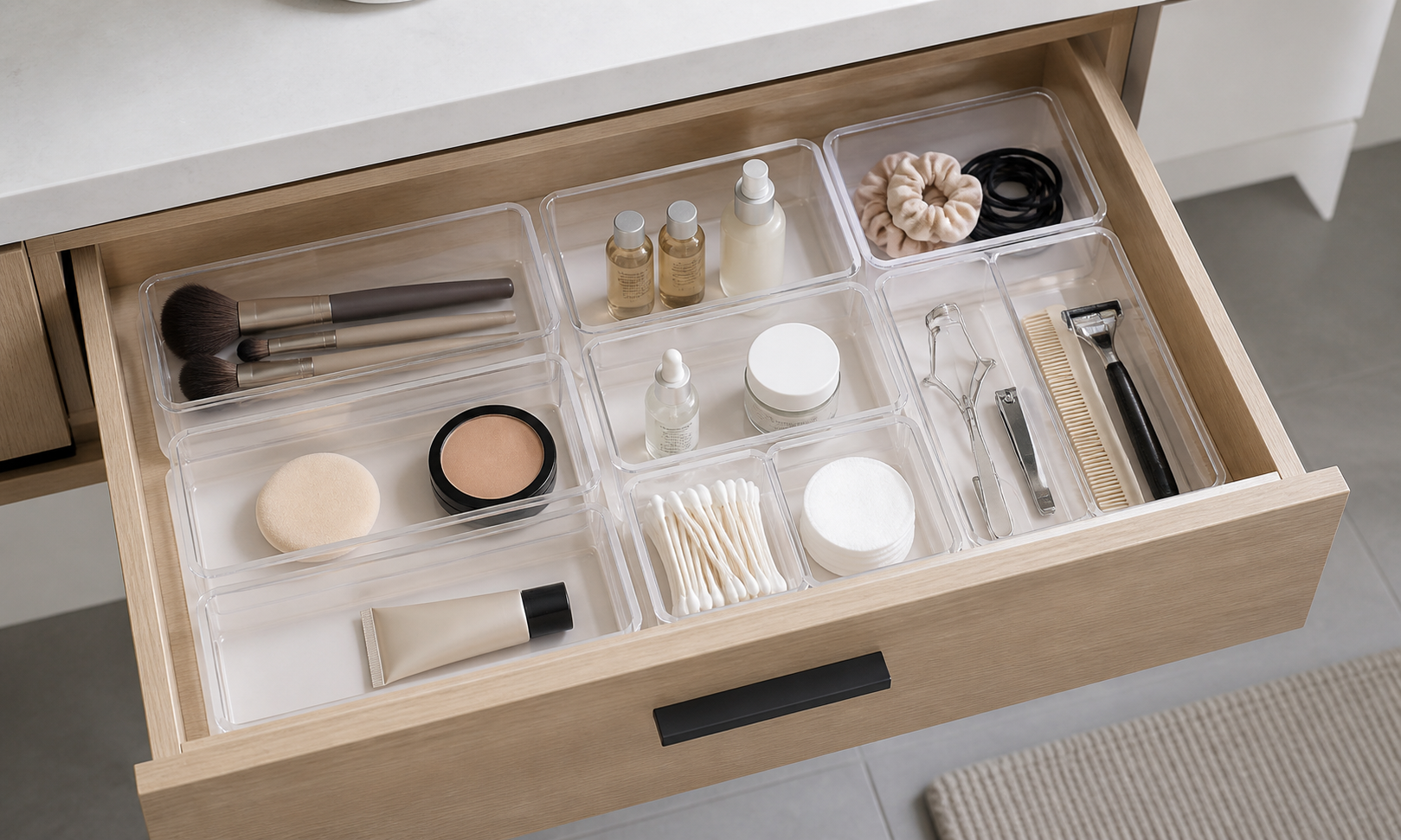
Separate rectangles and squares let you build around the drawer shape and change the layout later. Small gaps can collect debris, and loosely fitted trays may slide each time the drawer opens.
Choose them when: item sizes vary, the drawer has an awkward shape, or you want to lift out one messy category at a time.
One-Piece Divided Inserts
A single insert gives a tidy, stable layout with fewer shifting parts. Its fixed compartments waste space when your brushes, bottles, or tools do not match the molded sizes.
Choose one when: the drawer is a standard rectangle and your daily set is small and unlikely to change.
Adjustable Dividers
Spring-loaded or locking dividers create long flexible lanes without covering the drawer bottom. They contain spills less effectively than trays and can bow thin drawer walls or shift if the tension is wrong.
Choose them when: long items dominate and the maker's size range fits the drawer without excessive pressure.
Must-Have Buying Checks
- Verified dimensions: Add the organizer's external width, depth, and height and leave enough clearance to lift trays out.
- Washable surfaces: Prefer smooth materials and rounded interior corners that can be wiped or hand-washed according to the maker.
- Practical containment: Use separate trays for items likely to drip, leak, or shed powder.
- Slip control: Look for non-slip feet or use a drawer-safe liner that does not stain or damage the finish.
- Usable compartment sizes: Compare actual item measurements instead of choosing by compartment count.
- Dry storage: Let washed trays and damp grooming tools dry fully before returning them to a closed drawer.
Nice-to-Have Features
- Transparent sides: Make small items visible, though they also show residue quickly.
- Stacking ledges: Can add a second level in deep drawers if the lower layer remains accessible.
- Removable mini cups: Help corral hair ties, cotton swabs, and other pieces that migrate between sections.
- Matching replacement sizes: Useful if the layout needs to grow without replacing the entire set.
What to Avoid
Avoid buying a large set before drawing the layout to scale. An impressive piece count can leave unusable gaps or create compartments too small for the products you own. Skip fabric or deeply textured inserts when spills and powder are routine, and do not assume an organizer makes a damp drawer sanitary.
Keep medicines and items requiring controlled storage conditions where their labels direct, not automatically in a humid bathroom drawer. Persistent leaks, swelling drawer material, or moisture damage should be investigated rather than covered with trays.
Who Should Skip This Category
- Skip an organizer if decluttering alone restores easy access.
- Skip tightly fitted modular trays if you need to remove the whole layout often for cleaning.
- Skip adjustable pressure dividers in fragile, bowed, or unusually thin drawers.
- Skip clear trays if visible residue will bother you more than easier item visibility helps.
- Skip drawer storage for products that leak frequently, must stay upright, or have label-specific storage requirements.
Buying Checklist
- Measure usable width, depth, closing height, hardware, and obstructions.
- Sort items by daily use, shape, and likelihood of leaking or shedding residue.
- Choose modular trays, a one-piece insert, or dividers based on those item shapes.
- Sketch the layout and confirm every organizer's exterior measurements.
- Check material care, slip control, lift-out access, and return terms.
- Leave frequently used items visible and avoid packing every inch.
- Move bulk supplies to a measured cabinet or larger bathroom storage system.
Bottom Line
Modular washable trays are the most flexible starting point for mixed cosmetics and toiletries, while adjustable dividers suit long tools and one-piece inserts suit stable routines. The right organizer is the layout that fits the real drawer, contains everyday mess, and stays simple to empty, wash, dry, and rearrange.